

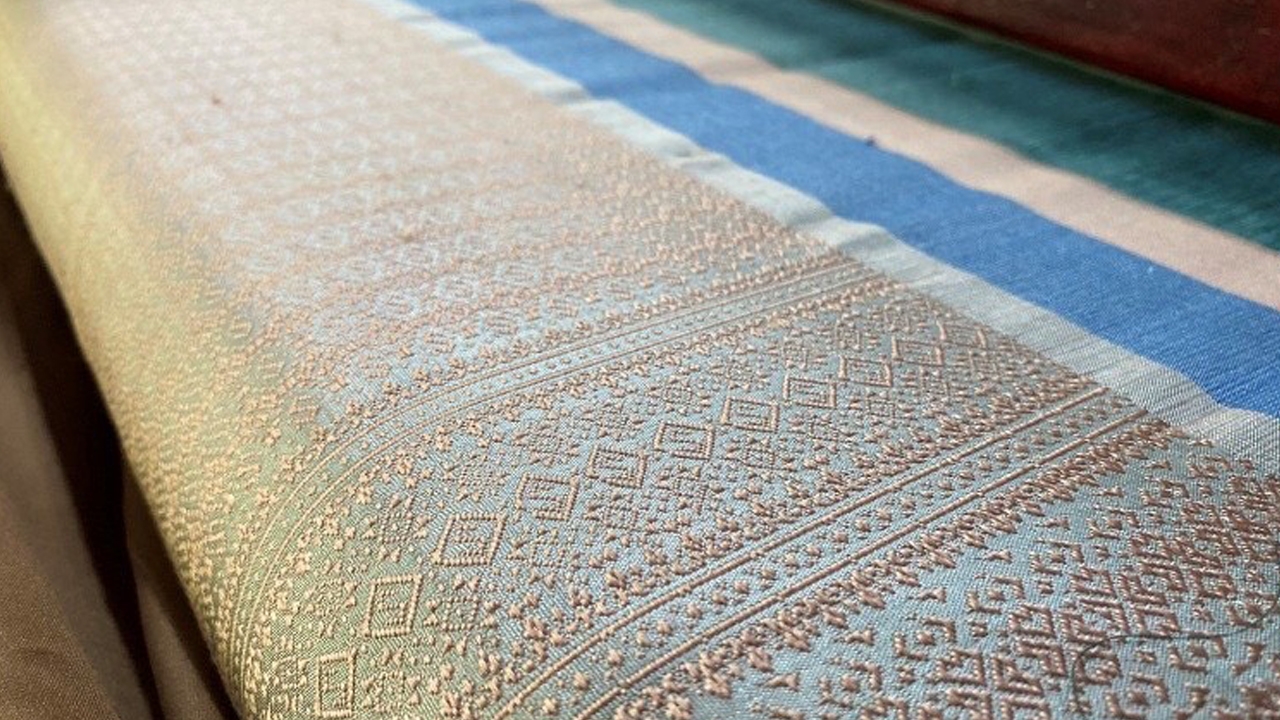
The Department of Intellectual Property highlights “Nong Bua Lamphu alternating khid-mee fabric” as a Thai GI product example that uses cultural capital and wisdom to boost competitiveness in the premium market. It currently generates over 41.50 million baht in economic value.

Mrs. Ornmon Sapthaweetham, Director-General of the Department of Intellectual Property, revealed that the department has registered about 20 indigenous woven fabrics nationwide as Thai GI products. Among these popular GI fabrics is Nong Bua Lamphu’s alternating khid-mee fabric, which combines two weaving techniques in one piece: the khid pattern weaving, which involves picking the warp threads and adding extra weft threads to create raised patterns, and the tie-dye (mudmee) weaving, where patterns are tied and dyed on the weft threads before weaving. The khid and mudmee patterns alternate to produce a beautiful, distinctive design with unique character.


Furthermore, Nong Bua Lamphu’s alternating khid-mee fabric is linked to geographic factors. The area is a basin surrounded by the Phu Phan mountain range, with natural water sources and soil suitable for mulberry cultivation, silkworm rearing, and growing high-quality cotton. It is also rich in natural plants used for dyeing, such as Pega, jackfruit, padauk, lotus, and golden shower, producing unique local color shades. This gives the fabric a distinctive identity that reflects the connection between nature, culture, and community wisdom.
“Nong Bua Lamphu’s alternating khid fabric originated in 1982 after Her Royal Highness the Princess Mother visited the people at Wat Tham Klong Phlo. She recognized the value of indigenous weaving wisdom and initiated the establishment of the Ban Tham Klong Phlo Special Artisan Center to transfer knowledge and develop weaving skills. This knowledge was then extended throughout the province, making it an example of Thai fabric that leverages cultural capital and wisdom to become an identity product with potential to compete in the premium market,” she explained.

Mrs. Ornmon added that the alternating khid-mee fabric is the province’s second GI product after Isan indigenous Thai silk threads. The GI certification covers various product types including fabric pieces, traditional skirt fabrics (pha sin), scarves, and shawls.
Textiles such as the pha sabai (shoulder cloth) or other woven products made from Nong Bua Lamphu’s alternating khid-mee fabric currently generate over 41.50 million baht in added economic value for the province.

“The department will continue to promote the use of GI products by controlling and maintaining production standards, encouraging the use of the Thai GI logo, raising consumer awareness, and supporting product development and marketing. This will increase trade opportunities and expand channels to premium markets domestically and internationally, helping to sustainably raise community income,” she said.
Read more " Government Policy " Additional