

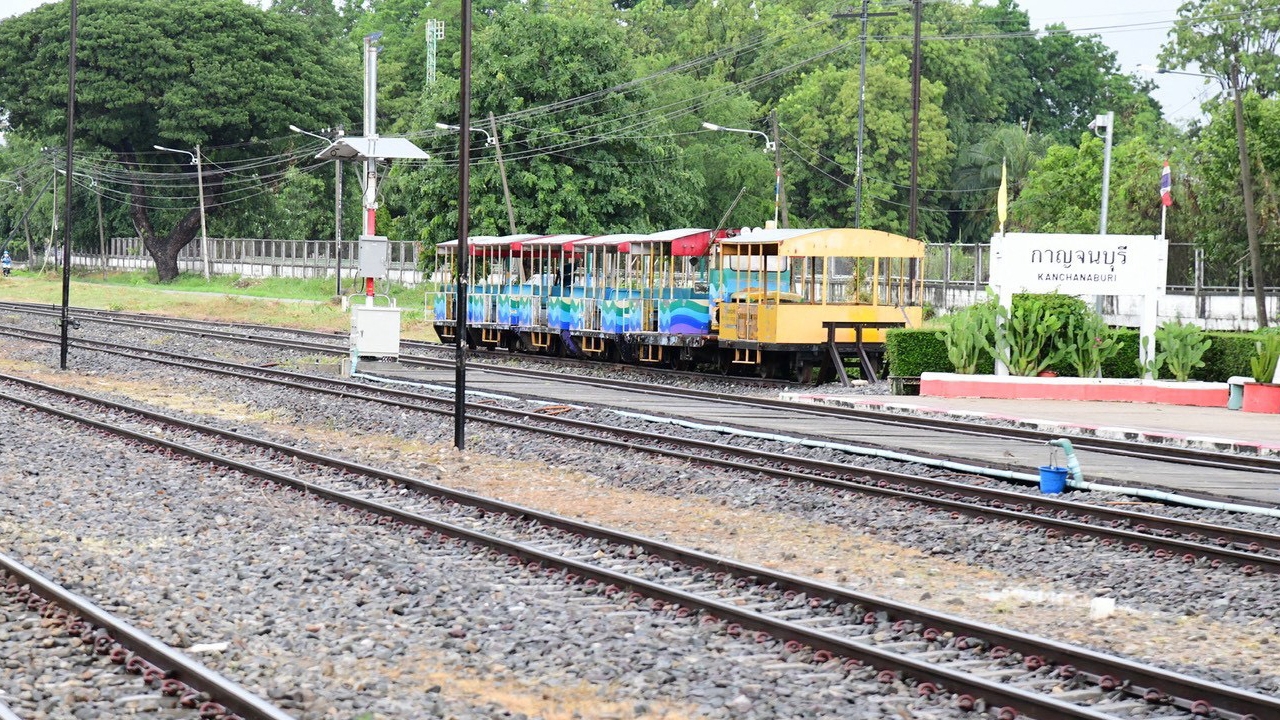
Sanpetch is promoting the use of State Railway of Thailand (SRT) land in Kanchanaburi, assigning SRTA to develop mixed-use projects and a container transport station to generate economic value, enhance tourism, improve logistics, and raise local residents’ quality of life.

Deputy Minister of Transport Sanpetch Boonyamanee disclosed after visiting and inspecting the utilization of State Railway of Thailand (SRT) land in Kanchanaburi province, accompanied by executives from SRT and SRT Asset Company Limited (SRTA).They jointly conducted the site visits.They inspected three key areas: Kanchanaburi Station district, Wang Yen Station, and the River Kwai Bridge railway halt. Following the Ministry of Transport’s policy emphasizing increased efficiency and value creation from SRT assets located in key economic zones nationwide, SRTA acts as the commercial developer managing these assets systematically to support SRT’s business revival, generate stable revenue, reduce government financial burdens, improve residents’ quality of life, and sustainably enhance the country’s competitiveness. This visit aimed to assess each site’s potential, current conditions, and set development directions aligned with Kanchanaburi’s potential and government policies.

Sanpetch added that the area around Kanchanaburi Station is a highly potential central urban site with over 126 rai of SRT land. This area is already planned for development by SRTA by 2027. The land is divided into three plots currently under lease negotiation with SRT. Planned future projects include a wholesale and retail market, rental residential buildings, and public parks. The surrounding area connects to city communities, commercial centers, government offices, educational institutions, transport stations, and natural and historical tourist sites of the province.[This part is a continuation fragment: "and historical"]The site is also within a zone accommodating urban expansion with diverse development potential, not solely dependent on railway passengers. Therefore, Sanpetch emphasized that agencies should integrate cooperation with the province and relevant organizations to quickly enhance land use efficiency and maximize the state asset value for the benefit of residents and local communities.

He then visited Wang Yen Station area in Wang Yen Subdistrict, Mueang Kanchanaburi District, which has potential to develop into an international rail container transport station. It can support containerized cargo handling and multimodal transport to facilitate international trade, especially the Myanmar-Malaysia route via Thailand. This station serves as a rail network hub and a central consolidation and distribution center for the central region. SRT promotes private sector participation in developing and managing container yards. Currently, SRT collaborates with private partners to upgrade the area toward an Inland Container Depot (ICD) project. He also inspected the River Kwai Bridge railway halt in Tha Makham Subdistrict, Mueang Kanchanaburi District, located along the railway by the River Kwai bridge. This area has high tourism potential and can generate long-term income.


"SRT and SRTA must accelerate developing areas around railway stations following the Transit-Oriented Development (TOD) concept, integrating cooperation with relevant agencies to transform unused land and assets into tangible results. This must align with national strategies and government policies through mixed-use development concepts, enabling seamless transport connections to drive the economy, tourism, and logistics in Kanchanaburi and neighboring areas, meeting the needs of local people and communities. The shared goal is to improve the quality of life for residents," Sanpetch said.
." State policies ."