

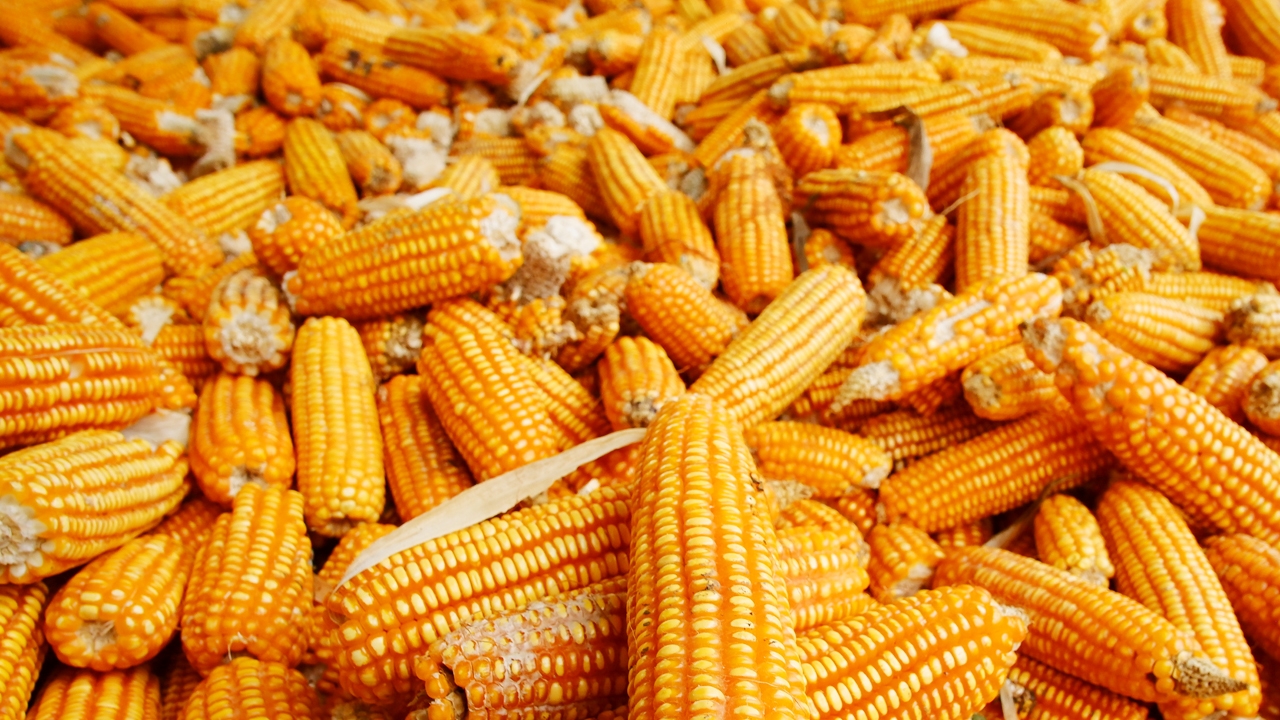
The Corn Policy and Management Committee (CPMC) approved extending the animal feed corn purchase price until 31 Aug 2026. Supachai assigned the Ministry of Agriculture to urgently review production costs for accuracy, stressing the need to support farmers from the beginning to increase production capacity and reduce costs, enabling farmers to compete and sustain their livelihoods.

Supachai Sutthumpan, Deputy Prime Minister and Minister of Commerce, serves as the chairman of the Corn Policy and Management Committee (CPMC). She chaired the committee meeting, attended by representatives from the National Farmers Council, animal feed producers, the Federation of Livestock and Aquaculture, and relevant agencies. The meeting aimed to consider management approaches for animal feed corn and appropriate purchase prices, focusing on farmer welfare while avoiding negative impacts on the production chain and consumers.
Supachai stated that supporting farmers must begin by addressing root causes, especially production costs and farmers’ competitiveness, which are key factors for their long-term income and survival. Therefore, purchase prices must be based on accurate cost data to establish reasonable and fair pricing.

“The main issue today is that cost data are inconsistent. Farmers report rising costs, while the Office of Agricultural Economics shows decreasing costs. Such discrepancies affect the animal feed and livestock industries and may ultimately impact consumer prices. Therefore, we must reconcile the cost data to reflect facts and gain mutual acceptance first,” Supachai said.
She added that solving upstream problems must go hand in hand. She assigned the Ministry of Agriculture and Cooperatives to promptly enhance farmers’ productivity, covering seed quality, production efficiency, production costs, and ways to increase yield per rai, so farmers can reduce costs and compete better without relying solely on higher purchase prices. The ministry should also consider support measures for the 2026/27 crop if production costs indeed rise, in coordination with relevant agencies, following Cabinet resolutions.

“If farmers’ costs truly increase and we want to help without passing impacts along the supply chain to consumers, the Ministry of Agriculture must propose direct cost support measures for farmers. At the same time, a strategic plan must be developed to tackle the entire animal feed corn system—a mandate given since the June meeting—to ensure sustainable solutions rather than annual price fixes,” Supachai said.
Regarding the purchase price issue, the meeting agreed toextendthe enforcement period of the Ministry of Commerce’s announcement on the domestic animal feed corn purchase price for the 2025/26 crop year until a new announcement is issued, maintaining the existing price structure and criteria to prevent a price vacuum and protect farmers from the expiration of the previous announcement on 31 July 2026.
The meeting assignedthe Officeof Agricultural Economics, together with the National Farmers Council, Thai Animal Feed Manufacturers Association, Federation of Livestock and Aquaculture, and related agencies, to review production cost data to reflect factual and mutually accepted information by 31 August 2026. The review should cover farmer costs, yield per rai, producer costs and burdens, market conditions, demand, and substitute raw materials to inform future price strategies.

Additionally, the National Farmers Council and Federation of Livestock and Aquaculture were tasked with explaining and clarifying the corn purchase price announcement criteria to farmers to ensure they receive accurate information for proper production and sales planning. Meanwhile, the subcommittee monitoring market conditions and substitute raw materials will closely track price trends, production volumes, demand, and substitutes to guide appropriate import measures.
Supachai said this meeting could not set a new purchase price yet because the essential cost data still show discrepancies. Therefore, relevant agencies must first clarify the data. Extending the current announcement is intended toavoidimpacting farmers during the period while conclusions are being reached and to allow time to prepare accurate cost data and suitable support measures.
“Our goal is to ensure farmers can sustain themselves, earn income, and compete long-term. Helping farmers requires addressing both price and costs, especially by improving production efficiency from the start. If we can optimize costs, ensure quality yields, and strengthen farmers’ competitiveness, we will tackle root problems and enable the whole system to continue sustainably,” Supachai said.
Read more news on " Government Policy " here.