

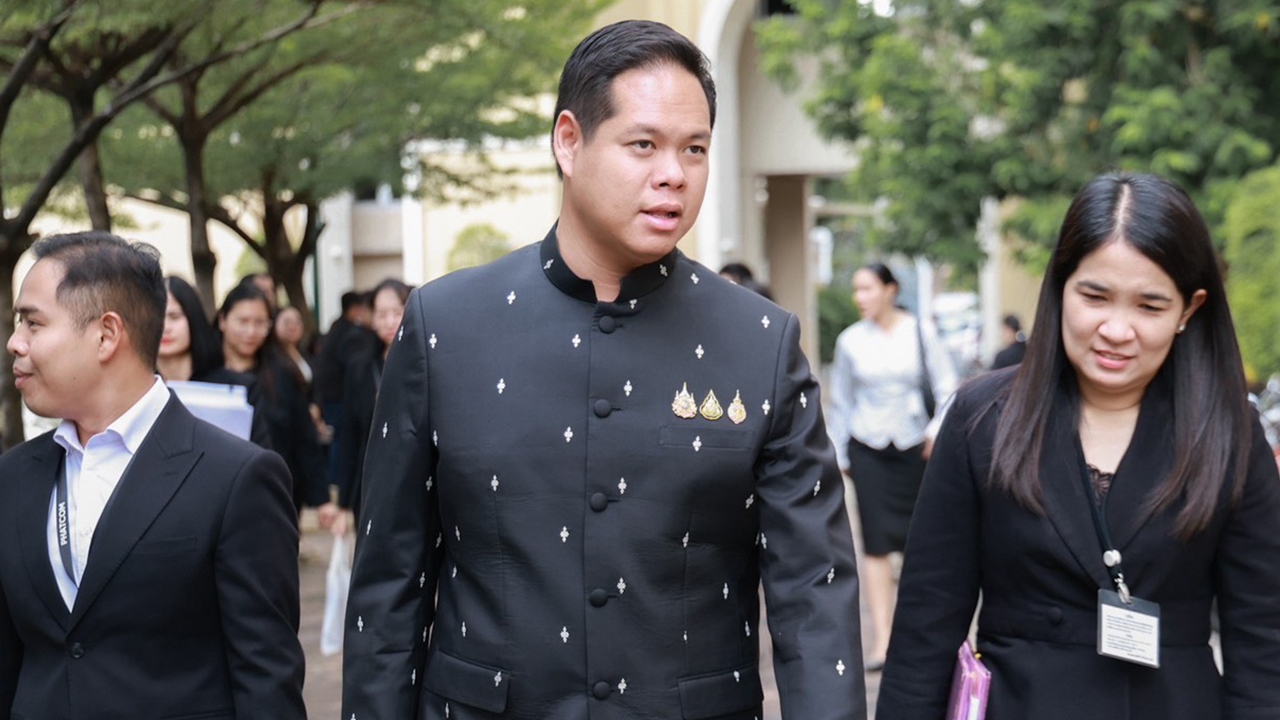
Deputy Minister of Transport Sanphet Boonyamanee said the Cabinet meeting in Songkhla is an opportunity to create a new economy for Hat Yai and the southern border provinces. He emphasized that the 843-million-baht flood recovery budget for five provinces has already been approved and urged people not to view the issue solely through a political lens.
Mr. Sanphet Boonyamanee, Deputy Minister of Transport, commented on the upcoming official offsite Cabinet meeting in Songkhla that this meeting is an important opportunity for the government to simultaneously address "today's problems" and "the future of the area." This is especially relevant for Hat Yai, Songkhla Province, and the five southern border provinces, which face urgent issues and have significant economic potential that requires support.
Mr. Sanphet stated that regarding flood recovery alone, the government did not wait for the Cabinet meeting to act. The Cabinet has already approved a central budget of over 843 million baht allocated to the Ministry of Agriculture and Cooperatives, through the Royal Irrigation Department, to repair and restore irrigation structures damaged by floods across 67 projects in Songkhla, Satun, Pattani, Yala, and Narathiwat provinces. Important projects in Songkhla include repairs to the R.1 drainage canal. The government approved the central budget on 21 July 2021 GMT+7; the Budget Bureau approved it on 27 July 2021 GMT+7; and the funds were transferred to the Royal Irrigation Department on 31 July 2021 GMT+7. Procurement processes are currently underway in each area.
“This is a clear example that for urgent matters, the government moves forward without waiting for the Cabinet meeting. However, the benefits of the offsite Cabinet meeting are even greater. When the entire Cabinet is present in the area, we can raise issues and opportunities requiring decisions from multiple ministries for simultaneous consideration. Previously, matters might have been handled separately by different ministries, but now we can view them as a unified picture to determine the area's future direction.” Mr. Sanphet added,
Mr. Sanphet said that for Hat Yai, lessons from the floods should lead to establishing systems that make the city more prepared and resilient, not just restoring damaged infrastructure to its previous state. It is necessary to consider water management, infrastructure, transportation, urban development, economy, commerce, and tourism, so Hat Yai can regain its status as a key economic hub in the south, ready for future changes.
“If asked what Hat Yai needs, I believe it requires both resolving existing problems and creating new opportunities simultaneously. Essential recovery budgets must be secured, and flood prevention systems must be expedited. At the same time, we need to ask what kind of city Hat Yai will be in 5 to 10 years, how to attract investors, how to connect transportation with other areas, and how to generate new income for residents. These issues can be promoted through the offsite Cabinet meeting.”
Mr. Sanphet continued that this meeting should not be limited to just Hat Yai or Songkhla Province because the government is considering development across the five provinces—Songkhla, Satun, Pattani, Yala, and Narathiwat—as a whole. These areas are interconnected in terms of economy, trade, tourism, agriculture, transportation, and border commerce. The approval of over 843 million baht for 67 projects across these five provinces reflects the government’s approach to solving problems regionally, not by individual provinces. The offsite Cabinet meeting will advance discussions on the next stage of development, including investment, infrastructure, job creation, income growth, and economic linkage with neighboring countries.
“The southern border area has great potential, but we must acknowledge that many places still face limitations in income, economic opportunities, and infrastructure. Therefore, we should not be satisfied with merely restoring everything to its previous state. We must use the government's presence now as an opportunity to move the area forward beyond before. This is the true benefit we should gain from the offsite Cabinet meeting.”
Mr. Sanphet also said that expressing opinions about the government's work is positive, but the Cabinet’s efforts to develop the area should be evaluated based on the benefits to the public rather than political criticism.
“If the Cabinet's presence helps projects that were stalled to proceed faster, allows issues requiring coordination among ministries to be decided at one table, or creates investments and new opportunities locally, I believe that is what the public should receive. We should not diminish the value of these opportunities simply because we view everything through a political lens.”
Mr. Sanphet emphasized that what must be done now is to ensure the offsite Cabinet meeting produces tangible results for the public. Urgent approved matters must be implemented promptly, while new proposals from provinces and the private sector should be seriously considered. This will make the government’s visit both a solution for current problems and a foundation for the future of Hat Yai, Songkhla, and the five southern border provinces.
Read more news " State Policies " additional