

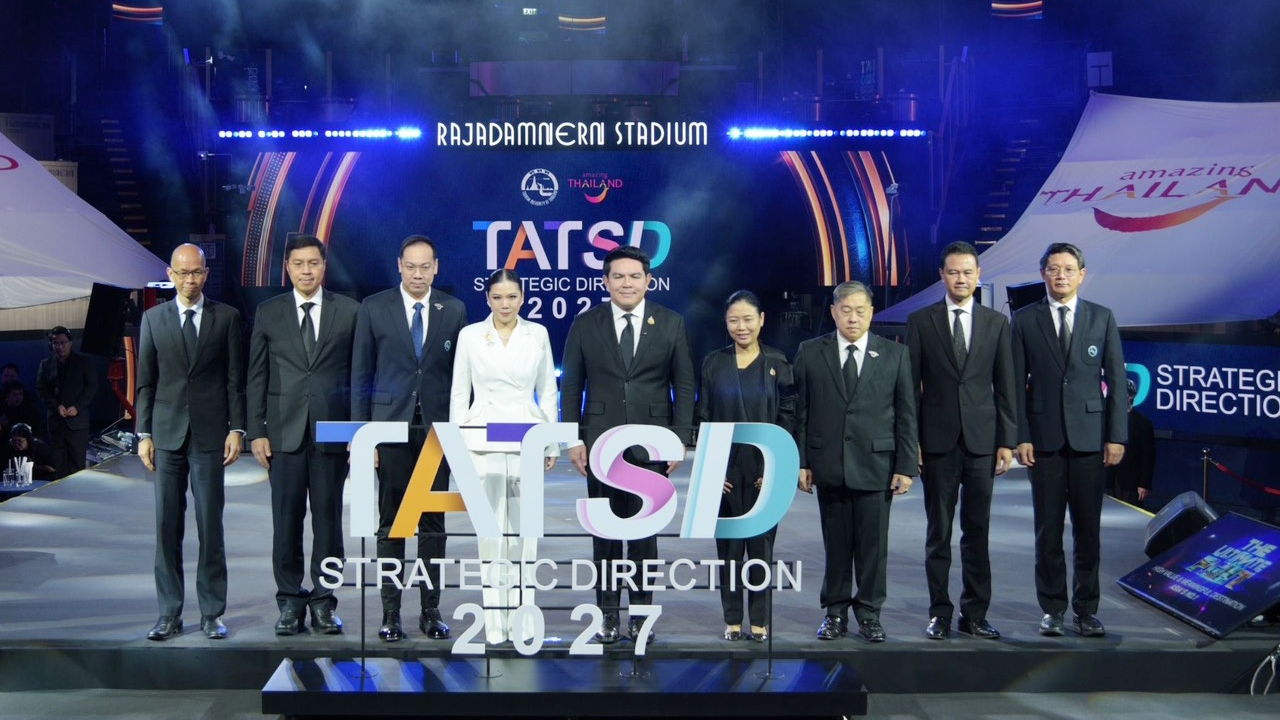
The Tourism Authority of Thailand (TAT) unveiled its sharp 2027 plan featuring “4 Core Strategies” to transform Thai tourism, aiming for a 5% surge in revenue. It targets drawing 40% of tourists to secondary cities and pushing tourist loyalty into Asia’s top three, boldly announced at Ratchadamnoen Boxing Stadium with the goal of becoming Asia’s No.1 high-value and meaningful destination.

On 24 August 2026, the Tourism Authority of Thailand (TAT) held a press conference to present its 2027 marketing action plan under the theme “The Year of Transformation” at Ratchadamnoen Boxing Stadium. The event symbolized the shift from a battleground of fighters to a stage marking a major turning point for Thai tourism. TAT aims to drive the economy with the “4 Core Strategies,” targeting at least a 5% revenue increase from 2026. It plans to distribute tourists between primary and secondary cities at a 60:40 ratio and boost the tourist loyalty index into Asia’s top three, striving to become Asia’s leading high-value and meaningful destination.

Ms. Thapanee Kiatphaiboon, Governor of TAT, revealed that TAT will initiate a significant transformation to elevate Thai tourism from growth based on volume to growth based on value. The agency aims for victory by launching a strategic offensive with four powerful core strategies.
Ms. Thapanee Kiatphaiboon, Governor of TAT, disclosed that the agency is ready to begin a major transformation to raise Thai tourism from volume-driven to value-driven growth through four main operational approaches:
Core Strategy 1 Balance market structure by adjusting across market dimensions, customer groups, and destination areas to reduce reliance on any single market. The strategy divides markets into groups for growth maintenance, transition to new quality segments, and accelerated confidence restoration. It also expands into new markets such as Eastern Europe, Latin America, and new source cities in key markets, alongside a goal to spread income to 19 new tourism areas through the “The Link Plus” project, aiming to increase foreign tourists in these areas by 10%.
Core Strategy 2 Elevate the experience platform by shifting from value-for-money to meaningful destinations under the concept “Healing is the New Luxury.” Launching characters “Nong Sukjai” and “Nong Rakyim” as travel companions to showcase Thai charm. Additionally, expanding the UNESCO network and over 55 community tourism sites, and advancing city branding pilots in five provinces: Chiang Rai, Ubon Ratchathani, Songkhla, Trat, and Samut Songkhram.
Core Strategy 3 Create new growth engines by linking tourism with lifestyle economy, offering nine new experience groups and unseen experiences for premium travelers. Elevate Thailand as a global wellness and healing destination. Upgrade Thai identity festivals to international levels, including the Ubon Ratchathani Candle Festival, Nakhon Phanom Boat Procession, and Sakon Nakhon Christmas Star Festival. Expand sustainable tourism pilot areas to Nan province and promote low-carbon hotels.
Core Strategy 4 Transform Together: lead all sectors in collective change using tourism data intelligence combined with TAT’s domestic and international network. Enhance the capacity of the upcoming tourism leadership institute launching in 2028. Support innovations from startups to create impressive travel experiences throughout the journey.


The TAT Governor emphasized that the tourism world is rapidly changing. Choosing Ratchadamnoen Boxing Stadium as the venue reflects the need to change mindsets and communication methods, focusing on transforming existing assets into what tourists desire. Winning this challenge requires cooperation from all sectors based on honesty, safety, quality, and experience to drive Thai tourism toward sustainable, quality growth.
, Government policy . Additional