

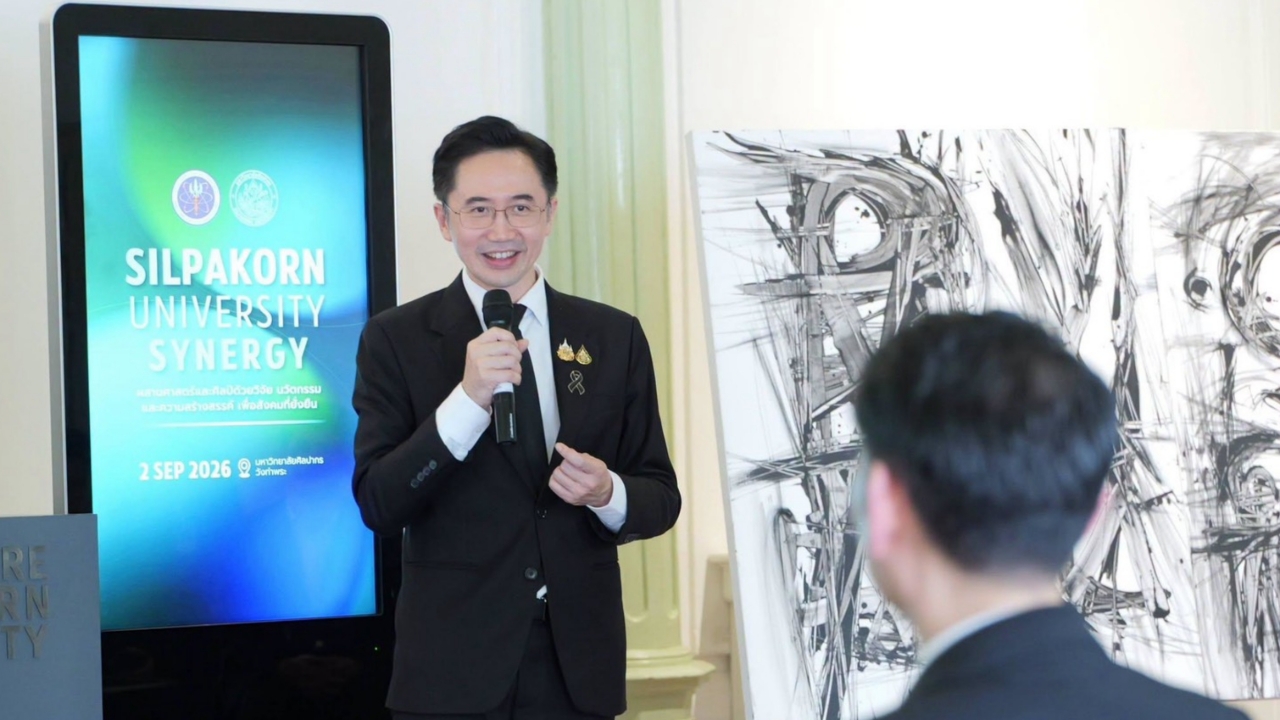
Yotsanan visited Silpakorn University at Wang Tha Phra, stressing that art remains a vital core of national development. He aims to use storytelling to increase the value of Thai arts and culture while promoting an incubator system for the younger generation to transform creative works into the creative economy and global markets.
On 2 Sep 2026 GMT+7, Prof. Dr. Yotsanan Wongsawat, Deputy Prime Minister and Minister of Higher Education, Science, Research and Innovation, toured Silpakorn University's Wang Tha Phra campus. He reviewed the university's capabilities in research, innovation, and creative works and listened to approaches for integrating artistic knowledge with other disciplines to benefit society and the economy.
Prof. Dr. Thanaset Ngowhiranphat, President of Silpakorn University, along with administrators, faculty, researchers, and staff, welcomed him. The event featured presentations under the concept of integrating science and art through research, innovation, and creativity for a sustainable society, reflecting the university's direction in connecting diverse fields of knowledge.

Prof. Dr. Yotsanan highlighted the role of arts and culture in national development, noting that progress in science, technology, and innovation should not be separated from the arts, as both fields can support and complement each other.
"Art holds value not only as creative works or cultural products but also as knowledge that helps society deeply understand the nation's history, roots, and identity. Preserving pure artistic knowledge is as important as advancing art economically. Thailand's rich cultural capital—including visual arts, architecture, traditions, and local wisdom—can be developed into new value through proper research and storytelling."
One key initiative the Ministry of Higher Education, Science, Research and Innovation aims to push is enabling Thai arts and culture to communicate more effectively with global audiences. The focus is not only on showcasing works but also on storytelling, which conveys the background stories to help people understand the meaning, origins, and value of what Thailand offers. This approach shifts the perception of Thai arts and culture from purely historical value to a vital asset that can create economic, social, tourism, and creative industry opportunities.
This effort aligns with the country's soft power development strategy. Silpakorn University has the potential to serve as a key mechanism due to its expertise and personnel in art, design, architecture, culture, and creative works.

Additionally, fostering collaboration between science and the arts is essential, as modern national development requires knowledge from multiple disciplines. A clear example is wellness, where Thailand has strong potential and can integrate artistic elements to enhance quality of life.
Examples include art therapy and research in history, art, and culture that can connect with other sciences. This perspective reflects that technological advancement alone is insufficient; development must proceed alongside arts, music, culture, and creativity to achieve balance and sustainable growth.
Beyond enhancing the value of arts and culture, the ministry prioritizes creating career opportunities for students, artists, researchers, and art professionals. They plan to develop an incubator system to support creators from concept development through practical application, aiming to provide clearer career paths for art students.
Simultaneously, this knowledge can be extended into various industries such as design, media, entertainment, tourism, culture, branding, and creative businesses. There is also a plan to establish Living Labs in regional areas to enable students, researchers, artists, and communities to collaborate in experimenting, developing, and creating works based on local cultural capital. Silpakorn University took this opportunity to present research, innovations, and creative works from various disciplines.
The exhibition, titled "Silpakorn University Synergy: Integrating Science and Art through Research, Innovation, and Creativity for a Sustainable Society," showcased the university's efforts beyond art creation to emphasize connecting knowledge with research, design, conservation, and social problem-solving.
Presented works ranged from architecture and visual arts to projects related to religion, history, and cultural heritage, such as the architectural and artistic design expansion of the Pathipat Chedi of the Forest Meditation tradition of Luang Pu Mun Puritatto at Wat Pa Na Kham Noi, Nayung District, Udon Thani Province, designed by Professor Wanida Peungsunthorn.
Another project involved consulting on the design of royal monuments at the Phatramaharajanusorn Medical Center, Chulabhorn Royal Academy, Bangkok, created to honor and commemorate the royal family’s contributions.
Other works included architectural and artistic expansions for the Tham Chedi Museum, the Phra Dhamma Wisutthimongkol (Luang Ta Maha Bua Yannasampanno) at Wat Kesorn Silakhun or Wat Pa Ban Tat in Udon Thani, as well as life-size expansions of metal copper doors for the vihara.
These projects were collaborations between the Thai Institute of Art and Architecture in Honor of the Monarchy, Silpakorn University, and the Department of Architecture, Faculty of Architecture, under the guidance of Professor Wanida Peungsunthorn, National Artist, and university faculty members.

Besides the exhibition, the meeting served as a forum for exchanging views on expanding the benefits of research and creative works, especially their commercial development and application. It also emphasized using knowledge to revitalize and empower communities. Silpakorn University aims to enhance the capabilities of staff and students to work effectively in the creative industries.
The university is building networks with various agencies to improve education quality and research competitiveness internationally. This approach supports workforce development for the new economy, where creativity and cultural capital play increasingly significant roles. The university acts as a knowledge producer, talent developer, and creator of works aligned with societal needs.
Ultimately, integrating science and art is not just about producing beautiful works or advanced technology but about creating new societal value while preserving Thailand's cultural foundations. This approach ensures Thai arts and culture can progress alongside the modern world and proudly occupy space on the international stage.