

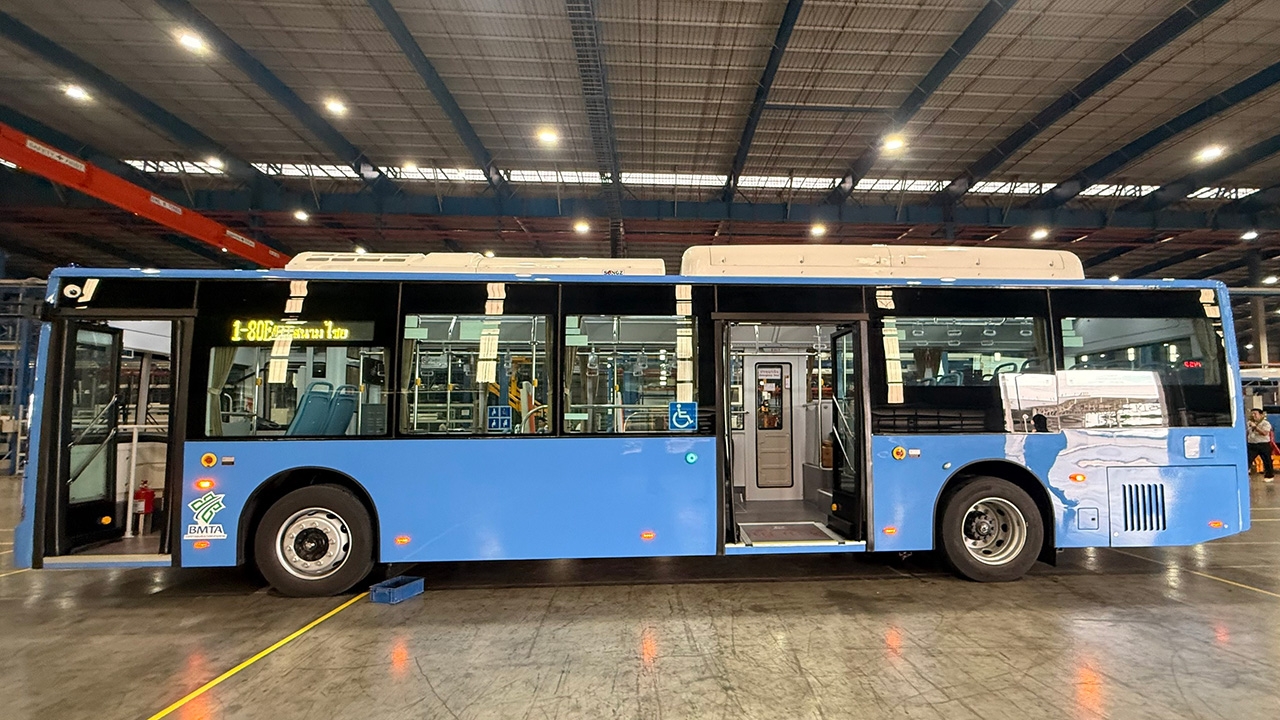
The Ministry of Transport is moving forward with a revival plan for the BMTA, preparing to replace buses with 2,320 electric vehicles (EVs) by 2027. The starting fare is set at 15 baht, with plans to discuss support measures for low-income groups with the Ministry of Finance. Confidence is high that this will reduce energy and maintenance costs, aiming to resolve accumulated debt of 150 billion baht.
Phiphat Ratchakitprakarn, Deputy Prime Minister and Minister of Transport. He revealed progress on the plan to convert the Bangkok Mass Transit Authority's buses from internal combustion engines, both oil and gas, to electric buses (EVs). The first batch of 1,520 EV buses will be delivered gradually in 2027.
The timeline for delivering the first batch of 1,520 BMTA EV buses and the transition targets are as follows.
They will push to procure an additional 800 buses to fully transition BMTA to 100% EV buses by 2027, which will reduce air pollution and lower energy costs that are less volatile than oil.
Switching to EVs will not only cut emissions but also reduce BMTA's cost burden, especially maintenance and energy expenses. Since some buses are leased, BMTA won't have to bear repair costs in the traditional way. Moreover, electricity costs are less volatile than oil and gas prices.

The shift to air-conditioned EV buses will lead to a fare restructuring. The starting fare will be 15 baht, up from 8 baht for non-air-conditioned buses. However, to avoid burdening the public's cost of living, Mr. Phiphat stated that the Ministry of Transport is in talks with the Ministry of Finance to design mechanisms to assist low-income groups. BMTA is gathering user data to develop targeted support measures.
"BMTA's role and public transport systems are not to seek profit from the public but to provide services and reduce travel costs. At the same time, reducing operating costs will lessen the government's future subsidy burden," Mr. Phiphat said.
Regarding this, Kittikan Jomduang Jaruworapongkul, BMTA Director. He said BMTA plans to open a tender for 2,320 new buses in the fiscal year 2027, approximately from October 2026 to January 2027, with a budget of about 8.4 billion baht. This is to gradually replace old buses with high maintenance costs, including the cream-red, cream-blue, and orange Daewoo buses.
However, not all old buses will be retired. BMTA will continue to operate buses still in good condition, such as 323 orange NGV buses and 486 Hino buses, while the system's bus demand is around 3,000 units.

According to BMTA’s assessment, once the new buses are fully operational, the organization’s expenses will significantly decrease, including:
Maintenance contract costs. These will drop from about 1.8–2 billion baht per year to approximately 1.5 billion baht annually.
Fuel costs. These are expected to decrease by about 60%, from nearly 2 billion baht a year to around 800 million baht annually.
Overall, operating costs are forecasted to fall by nearly 4 billion baht per year, easing the current average annual loss of 7 to 8 billion baht.
Besides fleet adjustments, BMTA plans to restructure staff by upskilling and reskilling fare collectors to become bus drivers, supporting new service models and reducing personnel costs long-term.
Financially, BMTA still carries about 150 billion baht in debt and is managing debt restructuring by issuing sustainability bonds to lower interest burdens. The goal of adjusting fleet, costs, personnel, and debt structure is to reduce financial strain and bring EBITDA—earnings before interest, taxes, depreciation, and amortization—back to zero by 2030.
For the new bus auction, BMTA said anti-corruption representatives will be allowed to observe to ensure transparency, aiming for assembly and phased delivery by late 2027.
Read more news " Government Policy " updates