

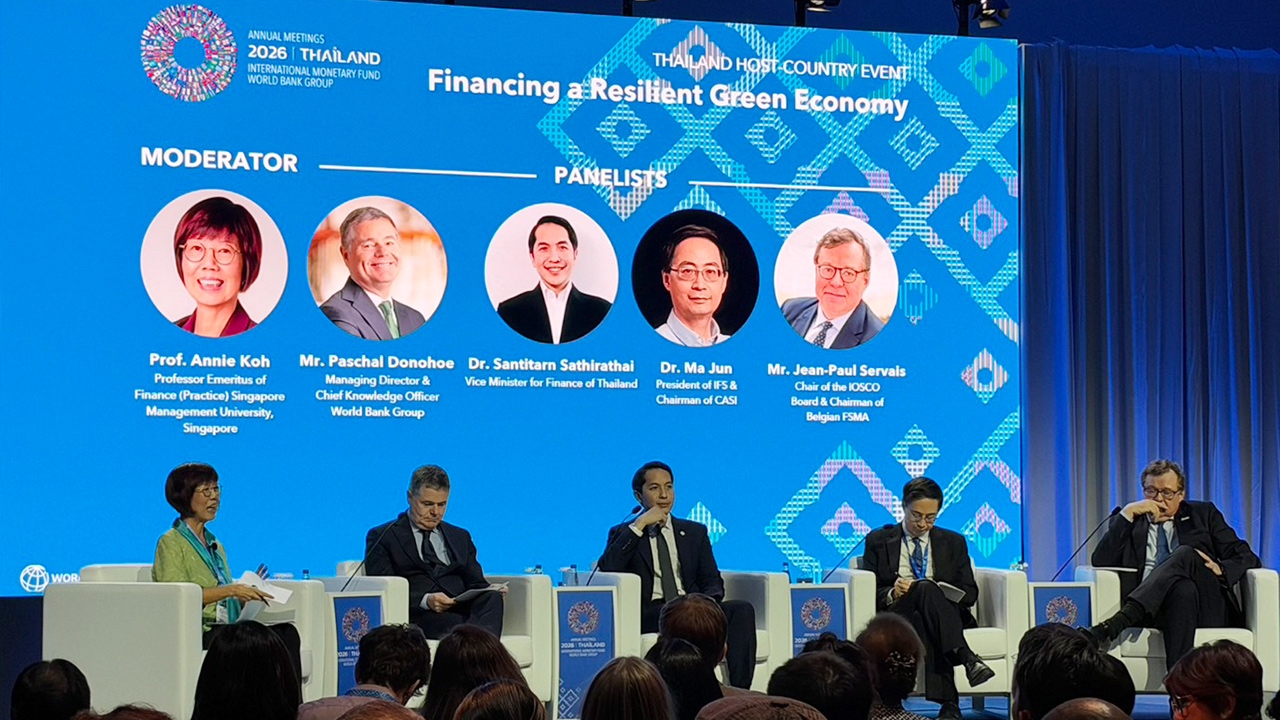
Thailand partners with the World Bank to sign an MOU releasing green funding to support low-carbon city projects, accelerating the transition to solar energy to reduce the impact of volatile energy prices at the IMF World Bank 2026 conference.
At the seminar titled “Financing a Resilient Green Economy” held during the IMF World Bank 2026 meeting hosted by Thailand, Dr. Santithan Sathienthai, Assistant Minister of Finance of Thailand, said that the green economy involves preparing for, responding to, and adapting to energy volatility. Thailand imports oil amounting to 10% of its GDP, mostly from the Middle East. This impact has prompted Thailand to prepare for a transition to a green economy using clean energy.

Thailand has undertaken efforts in three areas:
1. Establishing energy stability nationwide to reduce the impacts.
2. Transitioning from oil to clean energy or solar power by promoting and incentivizing greater solar energy use.
3. Investing in infrastructure and modernizing energy grids through fundraising and collaboration with multiple sectors.
Tomorrow, Thailand will sign cooperation agreements with Thai banks and the World Bank to release green financing for low-carbon city projects involving solar panel installation. Further development will support both buyers and sellers to enable exporting this energy abroad.

Mr. Pascal Donohoe, Managing Director and Chief Knowledge Officer of the World Bank Group, stated that widespread interest and collaboration in developing the green economy not only facilitates the transition and reduces energy price shocks impacting the global economy but also helps protect up to 250 million energy-sector jobs worldwide.
Read more news " Government Policy " here.