

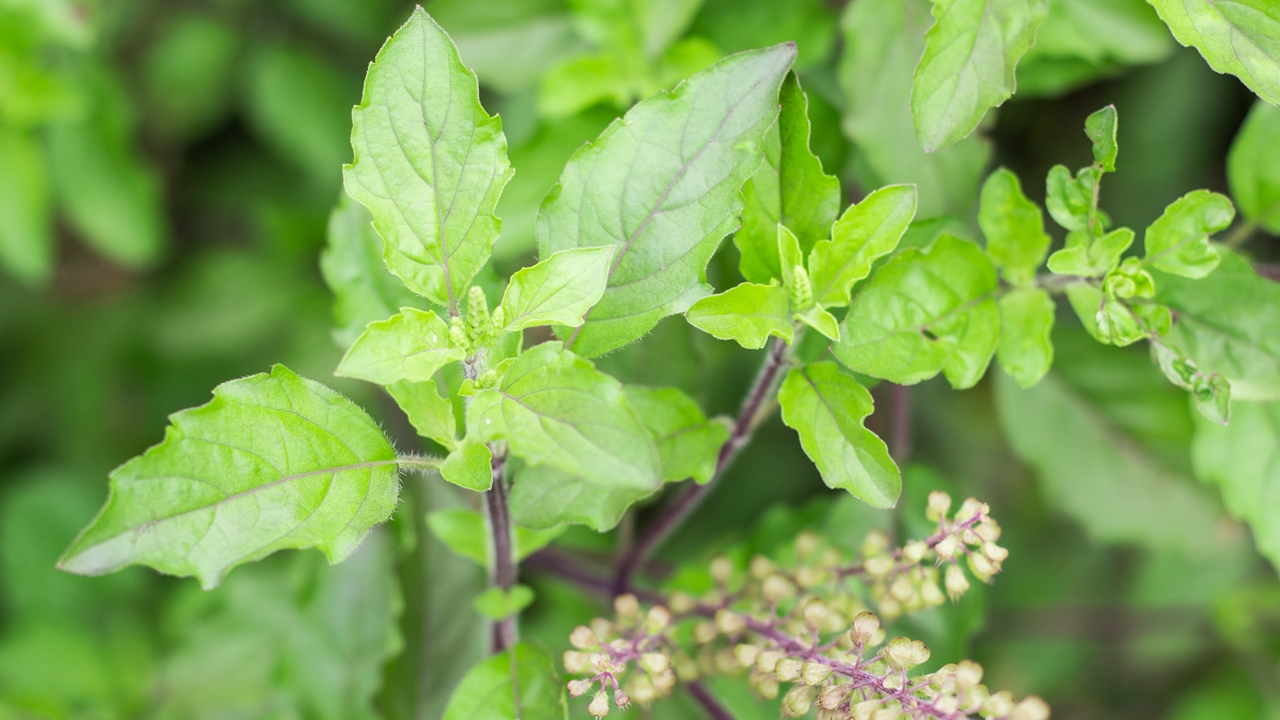
The Department of Agricultural Extension clarified the facts about "protected holy basil varieties," stating that only four varieties are registered and that other holy basil varieties are unaffected. They emphasized that people can eat and distribute holy basil freely but are prohibited from commercially selling the propagating materials.
The Department of Agricultural Extension addressed rumors and social media information about the registration and protection of holy basil varieties, which caused misunderstandings that "holy basil has been privately protected" and that growers or sellers of ordinary holy basil might be committing offenses. This is untrue as widely portrayed. The plant variety protection applies only to newly researched and developed varieties registered under the law, not covering all holy basil varieties in Thailand.

Mr. Krit Uttamavetin, Acting Director-General of the Department of Agricultural Extension, said that currently four new holy basil varieties have been registered for protection with the Department of Agriculture. These are results of research and development of new plant varieties, entering the process under the Plant Variety Protection Act B.E. 2542 to legally protect varieties meeting criteria. This protection applies only to the specified varieties and does not mean all holy basil in Thailand become private property or are monopolized.
"We assure the public and farmers that registering for plant variety protection does not make the commonly grown and consumed holy basil private property. Existing other holy basil varieties can still be planted, sold, cooked, and used normally. The protection scope is limited to the registered varieties and is subject to legal conditions," said Mr. Krit.
Regarding protected plant varieties, the law does not prohibit people from consuming or using their products, nor does it forbid distributing products for consumption. The key point is the propagating materials, such as seeds, cuttings, or other parts that can propagate the plant. Using these protected propagating materials, especially for commercial production or sale, must comply with the rights and conditions set by the plant variety protection law.
Therefore, growing holy basil for consumption, using its leaves in cooking, or selling holy basil products for consumption are not prohibited just because some varieties are protected. What matters is whether the variety is protected and if the activity involves propagating materials within the legal rights of the rights holder.
Regarding concerns that if seeds or propagating materials of protected holy basil spread into other farms or mix with crops, making those plants "private property" is incorrect. Plant variety protection does not grant owners rights over all similar plants or those that arise naturally in other areas. Rights and law enforcement must follow the conditions and limits set by the Plant Variety Protection Act B.E. 2542.
Mr. Krit added that the Department of Agricultural Extension urges the public to verify information from relevant agencies before sharing or spreading it, especially on plant variety rights, which involve detailed legal provisions and clear protection scopes. Having some holy basil varieties protected does not mean "all holy basil is registered" or that people lose the right to grow, eat, or use other unprotected holy basil varieties.
The Department of Agricultural Extension confirmed that plant variety protection aims to promote research and development of new plant varieties, incentivize breeding improvements, and protect breeders' rights within the legal framework. At the same time, it considers farmers' and the public’s use of plant varieties. Exercising plant variety rights must operate within legal limits and does not monopolize the entire species.
." State Policy ."