

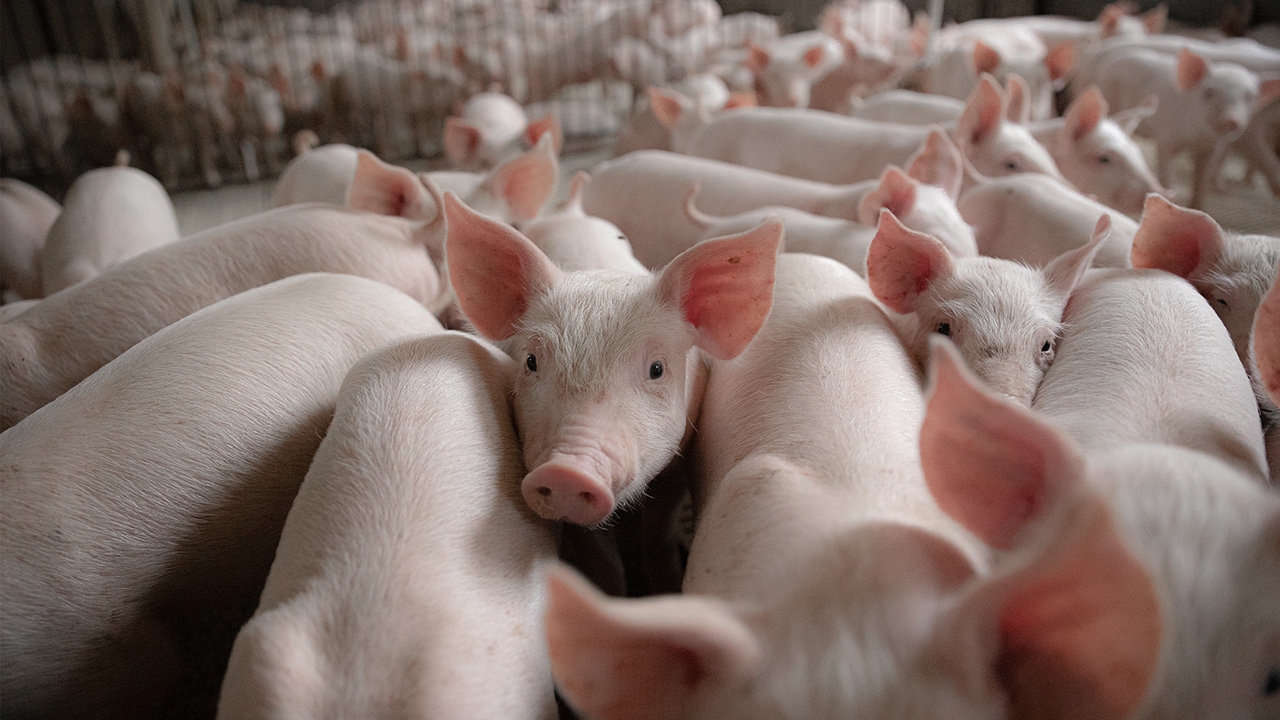
The National Pig Farmers Association issued a statement opposing the opening of the U.S. pork import market under ART trade negotiations, citing impacts on farmers who have suffered accumulated losses for three years, and urging the government to file a reservation banning the use of growth promoters.
On 19 Nov 2026 GMT+7, reporters at the Ministry of Commerce reported that the National Pig Farmers Association opposed opening the market to U.S. pork imports under the Thai-U.S. Agreement on Reciprocal Trade (ART). This followed the signing of a joint statement on ART trade progress on 17 Nov 2026 GMT+7 by Thai Prime Minister Anutin Charnvirakul and U.S. President Donald Trump.
In the statement, the National Pig Farmers Association, representing pig farmers nationwide, outlined four key points explaining their opposition to opening the pork import market as a trade concession.
1. The livestock sector had initially proposed alternative agricultural products for trade concessions that would not disrupt domestic production stability. These include items with insufficient domestic supply such as animal feed corn and products largely imported, like soybeans and soybean meal. Currently, Thailand imports over 90% of these from Brazil, but could consider sourcing them from the U.S.
2. Thailand's pig production capacity and industry standards have been upgraded to mandatory levels, resulting in internationally comparable quality. Domestic supply exceeds consumption, and export markets to neighboring countries are expanding. Allowing pork imports could inevitably disturb domestic supply-demand balance.

3. Thai pig farmers face high production costs and continuous losses. Feed ingredient costs remain elevated, with domestic animal feed corn prices among the highest globally and soybean meal prices set high due to government oil price controls to protect consumers’ living costs. Meanwhile, the Department of Internal Trade requests farmers to keep pork prices near production cost, leading to three consecutive years of accumulated losses from 2023 to 2025, with losses expected to continue into 2026.
4. Regarding legal compliance and the right to file reservations at CODEX, under current Thai law pig farmers must strictly prohibit growth promoters and contamination in feed. However, following the 2012 CODEX meeting which set maximum residue limits (MRLs) for ractopamine as proposed by the U.S., the association has urged the government to file a reservation to maintain domestic standards but action has yet to be taken. This issue has been used continuously as a trade pressure against Thailand.
For these reasons, the National Pig Farmers Association requests the government to reconsider not using U.S. pork as a trade concession in ART tax negotiations. They also urge the government to resolve the 2012 maximum residue limit issue by filing a reservation to unconditionally maintain Thailand’s law as a sovereign right of member countries.
The National Pig Farmers Association calls on the government to clarify the agreement details, trade conditions, and relevant agricultural product lists that could affect the domestic supply chain and the broader socio-economic context.
Read the news " State Policy " for more information.