

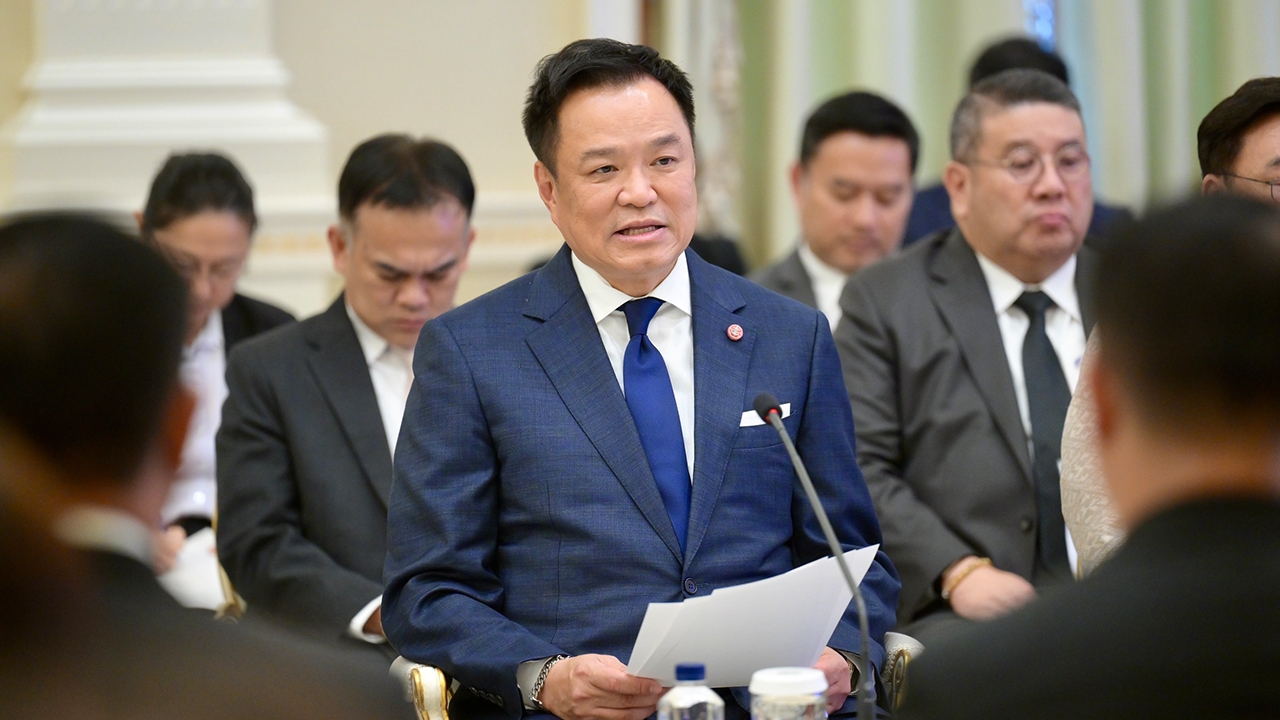
Car manufacturers have proposed a 'half-subsidy down payment' model to exchange old cars for new ones. The Prime Minister urges caution against premature headlines suggesting government acceptance, noting it is merely an initial idea. The proposal is being sent to multiple agencies for detailed discussions, with plans to develop policies supporting all clean energy types including EV and biofuel. He emphasized that global automakers remain anchored in Thailand and are not moving their production bases elsewhere.
25 Nov 2026 14:30 GMT+7, Government House. Anutin Charnvirakul, Prime Minister and Minister of Interior. He revealed during a meeting with representatives of the Thai automotive labor network that there is a notable new proposal from the private sector regarding managing old cars by replacing them with new ones to support the use of B20 and E20 fuels. Car manufacturers stated that vehicles made since 2015 are eligible.

"Automakers have approached and proposed a cooperative concept with the government involving joint support. They indicated readiness to assist, like a half-subsidy with the government, to bring cars into circulation or further management cycles. I have taken this proposal seriously for consideration, though no immediate agreement has been made. It aligns with changing energy and environmental behavior," he said.
The Prime Minister added that the internal combustion engine automotive industry must continue alongside clean energy use. The government aims to boost Thailand's agricultural output, such as palm oil and sugarcane residues, to produce renewable energy to reduce pollution from burning, stabilize agricultural prices, and help the country reach its Net Zero goals under global agreements. Furthermore, following meetings with global investors, major automakers continue production lines for both EV and combustion engines, with no plans to relocate from Thailand due to the country's strong infrastructure and skilled workforce ready to serve export markets across ASEAN's 700 million people and India’s 1.5 billion.
Representatives of the automotive labor network, led by Piyarach Samatha, President of the Toyota Labor Union, along with representatives from Isuzu, Honda, Ford, and Mitsubishi, thanked the government for a clear decision to adjust excise tax measures to build tariff walls. They stated that Thai workers do not reject electric vehicles (EVs) but want fair competition, especially protecting the supply chain, supporting 50-60% domestic parts content, and safeguarding Thai employment. The labor group is ready to upskill and reskill to keep pace with new technologies.

Later, the Prime Minister further explained that the 'half-subsidy' model proposed by carmakers initially involves providing financial support to help with down payments for new car purchases. However, the government must carefully consider whether it would share ownership of old car wrecks and how these old vehicles could generate revenue or benefits that return to the public.
"This is just an initial idea. Do not run headlines claiming the government has accepted the half-subsidy model. It is merely a concept entering the consideration process. It will now be sent for discussion and feedback from multiple agencies, including the Office of the National Economic and Social Development Council, Ministry of Finance, Revenue Department (excise, revenue, customs), Ministry of Industry, and Ministry of Energy."
Regarding improving old cars aged 15 years to support alternative fuels like E20 or B20, Anutin said the policy framework is being developed, focusing on all non-polluting energy sources, including EVs and biofuels derived from Thai agricultural products. If the government supports and accelerates this transition, it will significantly reduce public health costs from air pollution. He expressed confidence that carmakers will transfer new technology to Thai workers, as happened during the pioneering Detroit of Asia era 30 years ago.
. Ekapol Upatha, President of the Automotive Labor Union, added at the end of the interview that if the half-subsidy car measure is implemented, it would greatly stimulate the economy. However, labor also wants to propose simultaneous care for the entire supply chain by setting a domestic raw material and parts usage quota of 50-60% for car manufacturers investing in Thailand to ensure stable and sustainable employment and income for Thai workers.
Read more news on " government policy " here.