

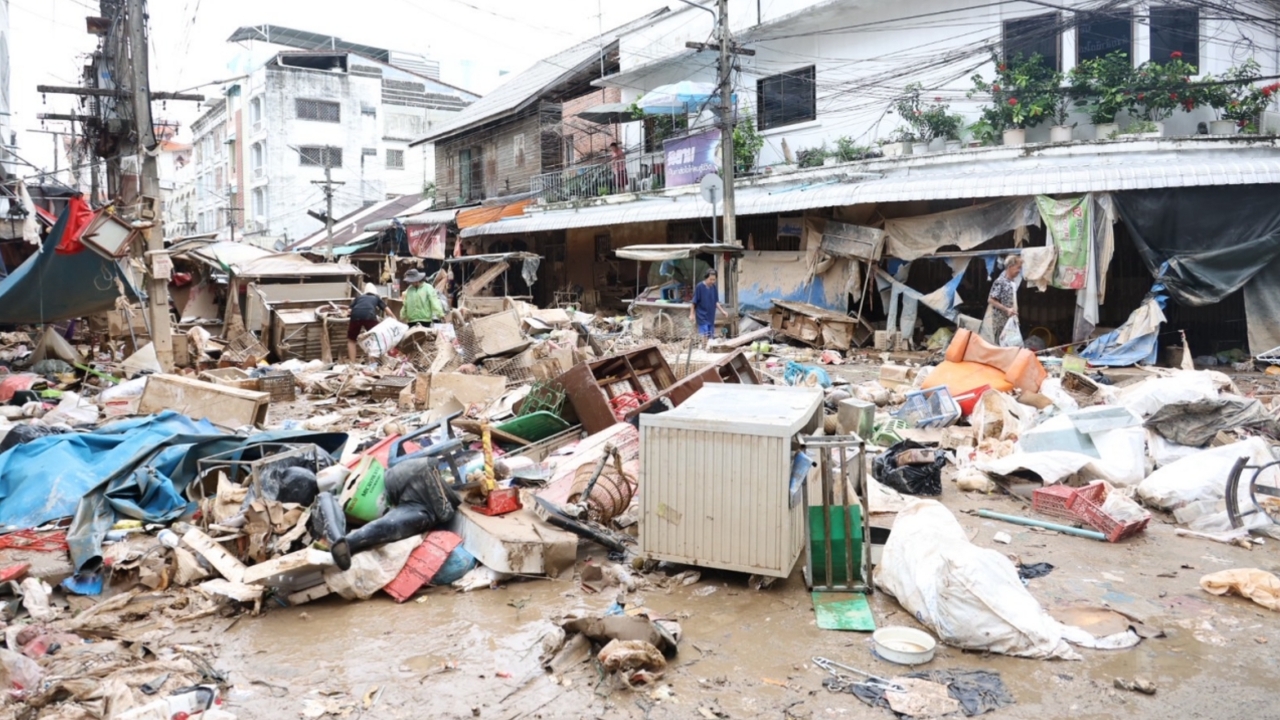
The Department of Disaster Prevention and Mitigation (DDPM) reported on the flood situation in nine southern provinces, with water levels dropping across all areas. Recovery efforts are being accelerated following the water recession. The disaster has affected 1,143,364 households and 3,174,404 people.
On 29 Nov 2025 GMT+7 at 10:30, the Department of Disaster Prevention and Mitigation (DDPM) reported a summary of the flood situation across nine southern provinces, noting that water levels have decreased in many areas. The DDPM will closely monitor the situation and coordinate ongoing assistance to the affected population, while speeding up restoration efforts to return conditions to normal as soon as possible.
Mr. Theerapat Kachamat, Director-General of the Department of Disaster Prevention and Mitigation, revealed that as of 29 Nov 2025 GMT+7 at 06:00, flooding persists in nine southern provinces: Surat Thani, Nakhon Si Thammarat, Trang, Phatthalung, Satun, Songkhla, Pattani, Yala, and Narathiwat. The flood affects 97 districts, 656 subdistricts, and 4,585 villages, impacting 1,143,364 households and 3,174,404 people, detailed as follows.
In Surat Thani province, flooding remains in seven districts: Tha Chang, Kanchanadit, Khian Sa, Phra Saeng, Mueang, Wiang Sa, and Ban Na San. This covers 37 subdistricts and 254 villages, affecting 16,891 households, with water levels decreasing.
In Nakhon Si Thammarat province, flooding persists in 20 districts: Chawang, Mueang, Tha Sala, Phrom Khiri, Ron Phibun, Na Bon, Chawang, Thung Song, Chaloem Phra Kiat, Hua Sai, Lan Saka, Bang Khan, Phra Phrom, Chang Klang, Pak Phanang, Chulabhorn, Thung Yai, Pipun, Chian Yai, and Tham Phannara. This covers 148 subdistricts and 1,335 villages, affecting 233,787 households, with water levels receding.
In Trang province, flooding continues in nine districts: Na Yong, Huai Yot, Ratsada, Yan Ta Khao, Wang Wiset, Kantang, Mueang, Sikao, and Palian. This involves 64 subdistricts and 423 villages, affecting 16,092 households, with water levels declining.
In Phatthalung province, flooding remains in five districts: Mueang, Khuan Khanun, Khao Chaison, Bang Kaeo, and Pak Phayun. This includes 12 subdistricts and 33 villages, affecting 152 households, with water levels lowering.
In Satun province, flooding persists in seven districts: Khuan Don, La-ngu, Tha Phae, Manang, Khuan Kalong, Mueang, and Thung Wa. This covers 31 subdistricts and 229 villages, impacting 30,162 households, with water levels decreasing.
In Songkhla province, flooding continues in 16 districts: Rat Phum, Mueang, Chana, Khlong Hoi Khong, Ranot, Krasae Sin, Sathing Phra, Hat Yai, Kuan Niang, Nathawi, Singhanakhon, Na Mom, Bang Klam, Sadao, Thepha, and Saba Yoi. This encompasses 127 subdistricts and 992 villages, affecting 543,768 households, with water levels receding.
In Pattani province, flooding remains in 12 districts: Sai Buri, Mae Lan, Khok Pho, Mayo, Yarang, Mai Kaen, Yaring, Panare, Thung Yang Daeng, Kapho, Nong Chik, and Mueang. This involves 115 subdistricts and 648 villages, impacting 192,503 households, with water levels declining.
In Yala province, flooding persists in eight districts: Mueang, Raman, Betong, Bannang Sata, Than To, Krong Pinang, Yaha, and Kabang. This covers 54 subdistricts and 332 villages, affecting 59,878 households, with water levels decreasing.
In Narathiwat province, flooding remains in 13 districts: Bacho, Yi-ngo, Mueang, Ra-ngae, Tak Bai, Su-ngai Padi, Si Sakhon, Rueso, Su-ngai Kolok, Cho-airong, Sukhirin, Chalanae, and Waeng. This includes 67 subdistricts and 336 villages, affecting 45,307 households, with water levels receding.

The Department of Disaster Prevention and Mitigation (DDPM) has implemented proactive measures to mitigate the ongoing flood impacts in the southern region. These focus on integrating cooperation with various agencies to alleviate daily hardships faced by residents. Efforts include establishing numerous volunteer and royal field kitchens to prepare and distribute boxed meals to flood victims; mobilizing and distributing survival kits, drinking water, boxed meals, and essential items like medicines and medical supplies across all affected provinces; setting up temporary shelters; and deploying various water pumps, long-distance water pump trucks, and water pushers from DDPM regional centers to multiple locations to expedite water drainage. Additionally, temporary wooden bridges have been constructed to facilitate community mobility.