

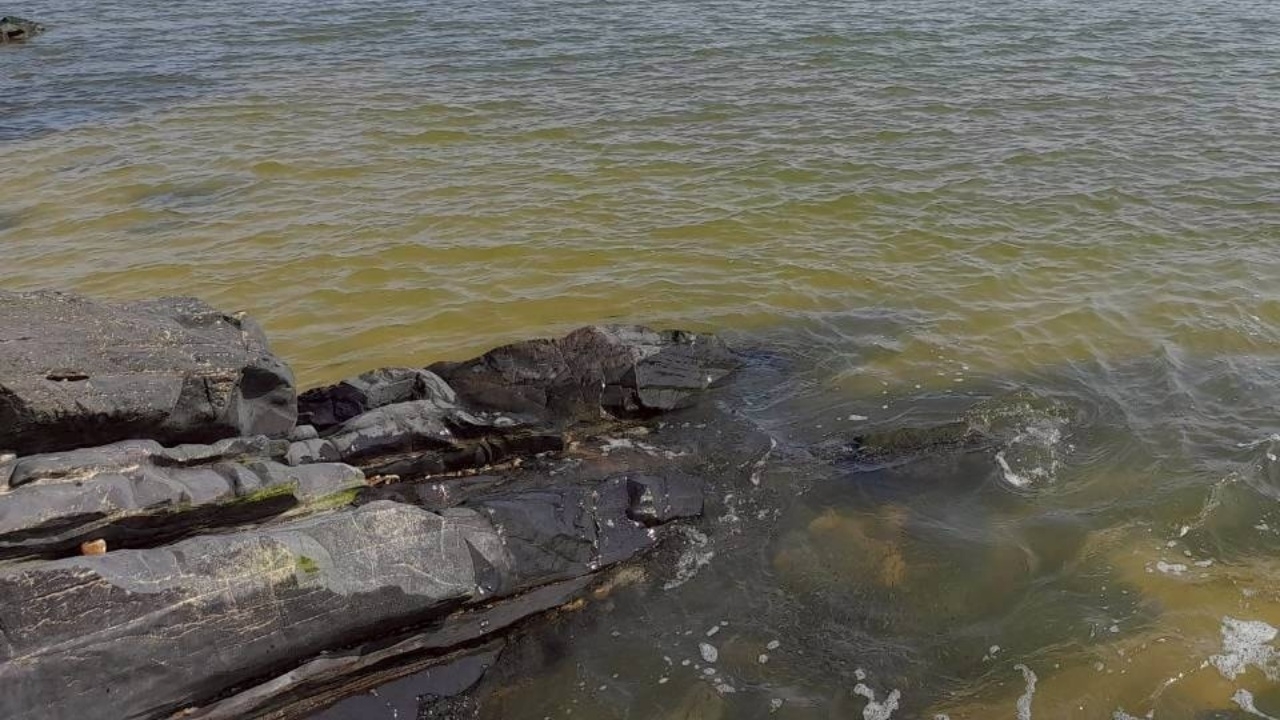
"Sea water color change " at Samila and Chalatat Beaches in Songkhla province, the Marine and Coastal Resources Research Center confirmed it is not harmful. The color change results from a bloom of the phytoplankton species Chaetoceros spp. They are preparing to closely monitor the situation.
On 5 Dec 2025 GMT+7, the Marine and Coastal Resources Research Center of the Lower Gulf of Thailand, through its Oceanography and Environment division, received reports of "sea water color change" at Samila and Chalatat Beaches in Mueang District, Songkhla province.
Initial field inspections found no impact on aquatic animals in the area. The sea water showed a brown color along about 2 kilometers of coastline. Analysis revealed the cause to be a bloom of the diatom phytoplankton species Chaetoceros spp., with an average density of 66,400 cells per liter. This phytoplankton species does not produce toxins, so it is harmless to humans and aquatic animals. Preliminary sea water quality tests showed:
pH (acidity–alkalinity): 7.09–7.88
Salinity: 10.3–12.7 ppt
Sea water temperature: 29.9–30.6 °C
Dissolved oxygen: 6.35–6.62 mg/l
Sea water samples were stored at 4 °C for nutrient analysis in the laboratory to identify factors triggering this phytoplankton bloom. The research center will continue to monitor the situation and inform the public of any changes.
The phenomenon of sea water color change is caused by an abnormal increase in phytoplankton or zooplankton populations. Not every "plankton bloom" is harmful.
The Chaetoceros spp. found in this case is a non-toxic phytoplankton. The bloom may be related to environmental factors such as high temperature or increased nutrients in the water. While it can cause water discoloration, it does not necessarily harm aquatic animals.
Information courtesy of the Facebook page of the Department of Marine and Coastal Resources