

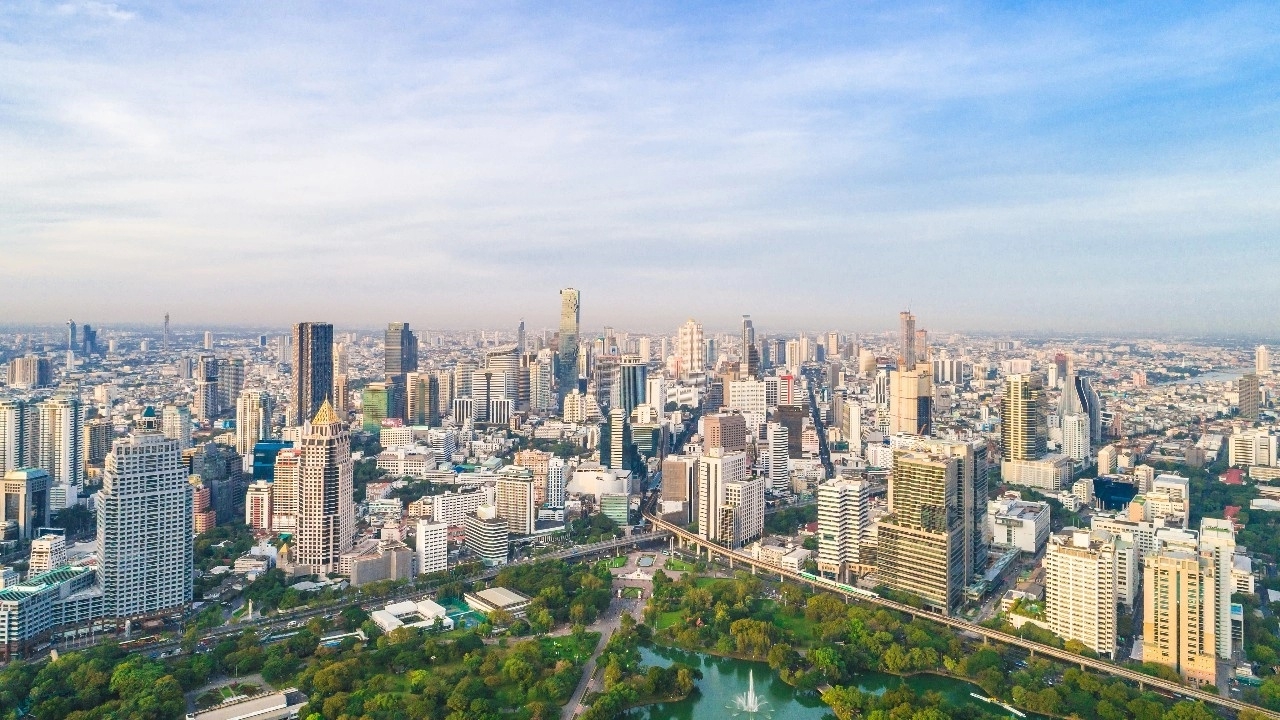
This morning in Bangkok, PM2.5 levels are generally within good air quality standards, not exceeding limits in any monitored area, with many districts showing green zones.
On 15 December 2025, the Bangkok Air Quality Information Center reported the PM2.5 situation from the city's air quality monitoring stations as of 07:00 local time on Monday, 15 December 2025.
The 24-hour average concentration of fine particulate matter (PM2.5)
was measured between 13.8 and 28.6 micrograms per cubic meter (µg/m³), remaining below the standard limit across all monitored areas (standard limit is 37.5 µg/m³).
The Air Quality Index from Bangkok's monitoring stations
mostly indicates good air quality levels.
The Meteorological Department forecasts weather conditions in Bangkok
to be cool in the morning with strong winds, and temperatures expected to drop by 1-2 degrees Celsius .

Related factors (weather trends affecting PM2.5 levels based on meteorological conditions)
From 15 to 21 December, ventilation is generally "weak," with the atmospheric layer near the surface alternating between open and closed conditions. On 15 December, rain and strong winds are possible, so PM2.5 concentrations are expected to be moderate to low. Today’s forecast includes a cool morning with strong winds and a temperature drop of 1-2 degrees Celsius.
NASA satellite hotspot data shows no abnormal heat points detected over Bangkok, indicating no unusual heat signatures on the earth’s surface in the area.
The Environment Office has coordinated with all related agencies to intensify actions under the dust control plan to mitigate the severity of the PM2.5 situation and its potential health impacts on the public. They also encourage community participation and sector cooperation by changing behaviors and reducing dust-producing activities, promoting “5 Ways to Reduce Dust You Can Do”: 1. Regularly clean your home by dusting; 2. Avoid burning garbage and incense; 3. Plant trees to absorb pollution and trap dust; 4. Use public transportation; and 5. Turn off vehicle engines when parked and maintain engines to prevent excessive black smoke emissions.