

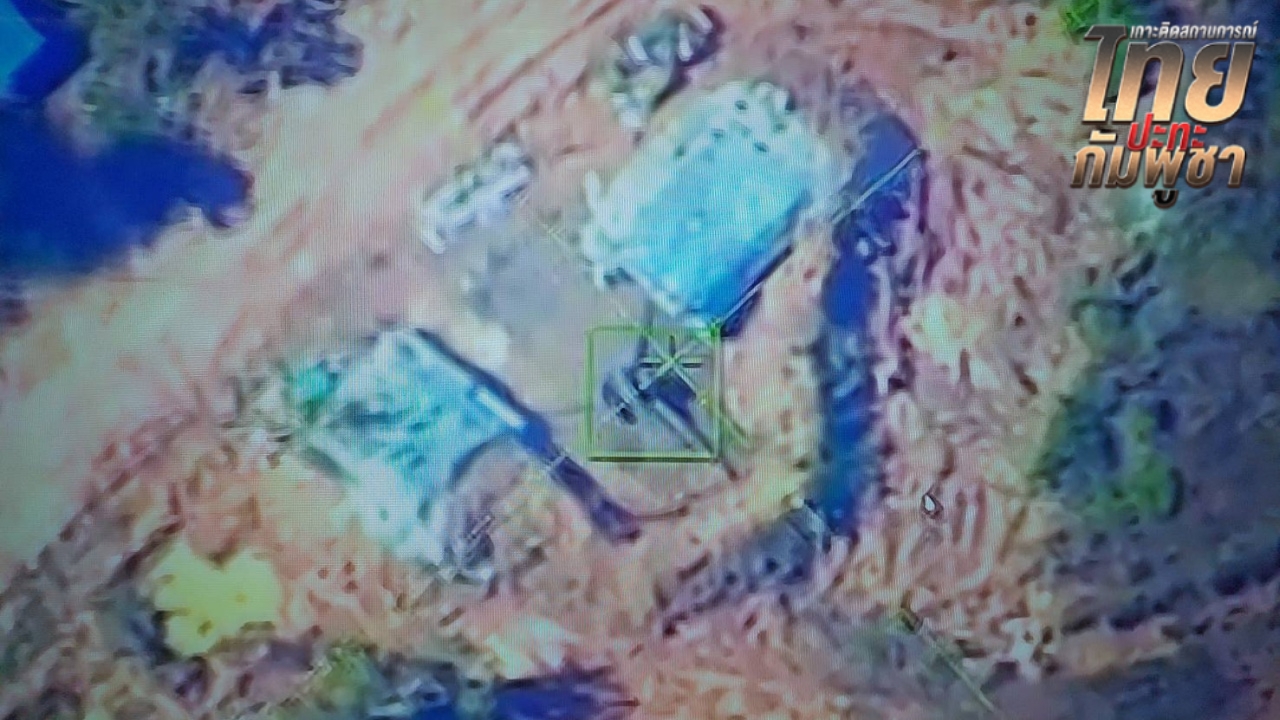
The Second Army summarizes the Thai-Cambodian border frontline, highlighting intense clashes at the 'Ta Khwai' and 'Chong An Ma' areas. Thailand has advanced to control key strategic positions, reducing the capability of Cambodia's BM-21 rocket launchers, and affirms that Thailand remains in command of the battle. Troop morale remains good.
On 16 December 2025 GMT+7, the Second Army reported the status of the Thai-Cambodian border frontline on 15 December. Cambodia began firing on Thai positions from 02:13 until 22:00. Along the border in Ubon Ratchathani Province at the Chong Bok frontline, the situation was mostly stable throughout the day, with only occasional detection of enemy drones in the evening and night. Thai forces conducted aerial patrols and close surveillance but found no major clashes.
At the Chong An Ma frontline, fighting was intense. Thai forces launched continuous offensive operations, especially attacking and clearing objectives. Both sides exchanged fire using rifles, artillery, and recoilless rifles continuously. Thai forces succeeded in securing objectives as planned and deployed reinforcements to strengthen security.
Along the border of Sisaket Province, the frontline areas include Sam Tae, Don Traw, Phu Phi, Satta Som, Phanom Phra Sit, and Chong Ta Thao.
Intelligence reports indicate that Cambodia authorized the use of RM-70 rocket launchers targeting Pham Mo Ei Daeng, Sa Trao, Tamaria, and Phu Ma Khuea.
Thai forces destroyed 12 Cambodian vehicles at the Sway Charum junction, causing fires and multiple explosions. Additionally, Thai F-16 jets bombed the 371st Support Battalion headquarters and struck the Cambodian Border Patrol Police 795 base, causing approximately 80% damage.
At the Pham Mo Ei Daeng-Huai Tamaria frontline, both sides engaged in sporadic small arms fire.
At the Phu Ma Khuea-Don Ao frontline, Thai forces destroyed Cambodian military signal towers near Chong Don Ao and continued to exchange sporadic small arms fire. Thai artillery intermittently countered Cambodian artillery fire.
In the evening, Thai forces detected numerous drones flying over multiple areas, reflecting Cambodia's efforts to conduct aerial reconnaissance and exert pressure.
At the Chong Sangam frontline, there was no fighting; the situation remained under surveillance.
Along the Surin Province border at Chong Chom, Chong Pero, and Chong Raya frontlines, Thai forces pursued proactive strategies, continuously bombarding and destroying key targets of the Cambodian military. They fully secured objectives in the Chong Ray area and reinforced position security.
Thailand employed bombing drones and artillery to destroy Cambodian military bases and several suspicious sites, assessing that the enemy suffered heavy damage.
At the Kana frontline, Thai forces seized objectives, controlled the area, and bolstered security.
At the Ta Khwai frontline, Cambodian troops continuously fired machine guns and BM-21 rocket launchers intensively.
Furthermore, Cambodian forces launched BM-21 rockets targeting Ta Khwai temple area and Hill 350, as well as firing BM-21 at military bases. They also repeatedly used FPV drones to attack Thai bases and the Ta Khwai temple area.

Thai forces managed to capture key objectives, maintain control, and urgently reinforce security.
A notable observation is that each time the enemy fired BM-21 rockets, multiple FPV drones followed closely, indicating systematic coordination between rocket fire and unmanned aerial vehicles.
At the Chong Krang frontline, both sides intermittently exchanged artillery fire. BM-21 rockets landed in the Chong Krang and Area 255 zones. Cambodian troops also fired BM-21 rockets from south of Chong Krang into Chong Samed and Ta Meun temple areas. Thai forces advanced to seize Ta Khwai temple and established security. Although occupied, Ta Khwai temple remains under heavy attack by Cambodian forces using dense BM-21 rocket fire.
At the Ta Meun Thum frontline, early morning detected enemy vehicle movements and curved trajectory weapon fire targeting Thai forces. Thai troops returned fire, causing the Cambodian side to cease shooting.
Along the Buriram Province border at the Chong Sai Taku frontline, intermittent exchanges of small arms and machine gun fire occurred, with periods of dense machine gun and artillery fire.
In summary, clashes along the border occur intermittently in key areas, notably at Ta Khwai and Chong An Ma. The enemy relies heavily on BM-21 multiple rocket launchers, artillery, mortars, and FPV drones.
Meanwhile, Thai forces emphasize systematic offensives using artillery and ground assaults, employing bombing drones to destroy enemy bases and communication structures.
Overall, Thai forces have secured multiple key target areas, significantly reducing the enemy’s command and firing capabilities. Troop morale remains generally good. By evening, many areas returned to normal conditions, but vigilance against drones and long-range attacks continues for the foreseeable future.