

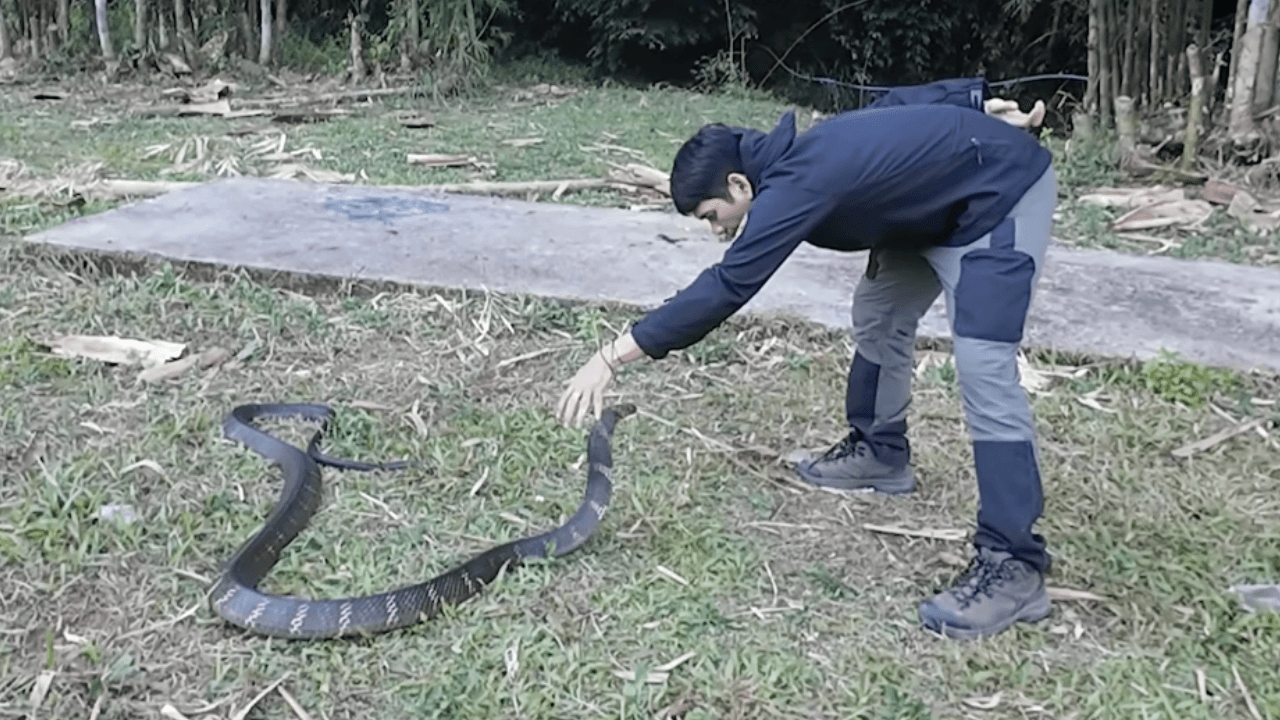
"Nick the Herpetologist" clarifies the mystery after being bitten by a king cobra with full fang marks but barely harmed, and thanks everyone for their support
Following the case reported on the Facebook page Nick wildlife posted a video about "Nick the Herpetologist" being bitten by a 3-meter king cobra, stating: "Breaking news: Nick was bitten by a king cobra but is now safe." The video showed Mr. Nirut Chomngam, or Nick the Herpetologist, an expert on snakes, bitten on his left index finger with the fangs sunk in and clear orange venom oozing out, as previously reported.(Watch the clip of "Nick the Herpetologist" helping to catch a 3-meter king cobra before being bitten deeply)
Most recently, on 16 Dec 2025 GMT+7, the Facebook pageNick wildlifeposted another video of Nick the Herpetologist with the caption "Bitten fully by a king cobra, but why was Nick almost unharmed?"
In the video, Mr. Nirut Chomngam, or Nick the Herpetologist, a snake expert, expressed thanks for all the support and addressed the common question of why he was bitten by a king cobra yet unharmed. He himself was surprised because king cobra venom affects the nervous system, causing paralysis and possibly heart failure; survivors might suffer tissue necrosis from the venom's damage. Yet he was almost unaffected, so he sought hypotheses to explain the event.
At first, he thought the king cobra might have recently used much of its venom hunting prey, so the bite might have been venomless. He then milked the snake's venom to check its potency.
He found the king cobra still had a large amount of venom, so perhaps he was lucky the bite was off-handed and the prompt, proper first aid helped: rinsing the wound with water, removing rings and bracelets immediately because swelling would make that impossible and cause blood vessel compression. Then, they wrapped the arm with an elastic bandage, splinted it with a stick or hard object, and controlled breathing slowly.
Thanks to the Facebook page Nick wildlife