

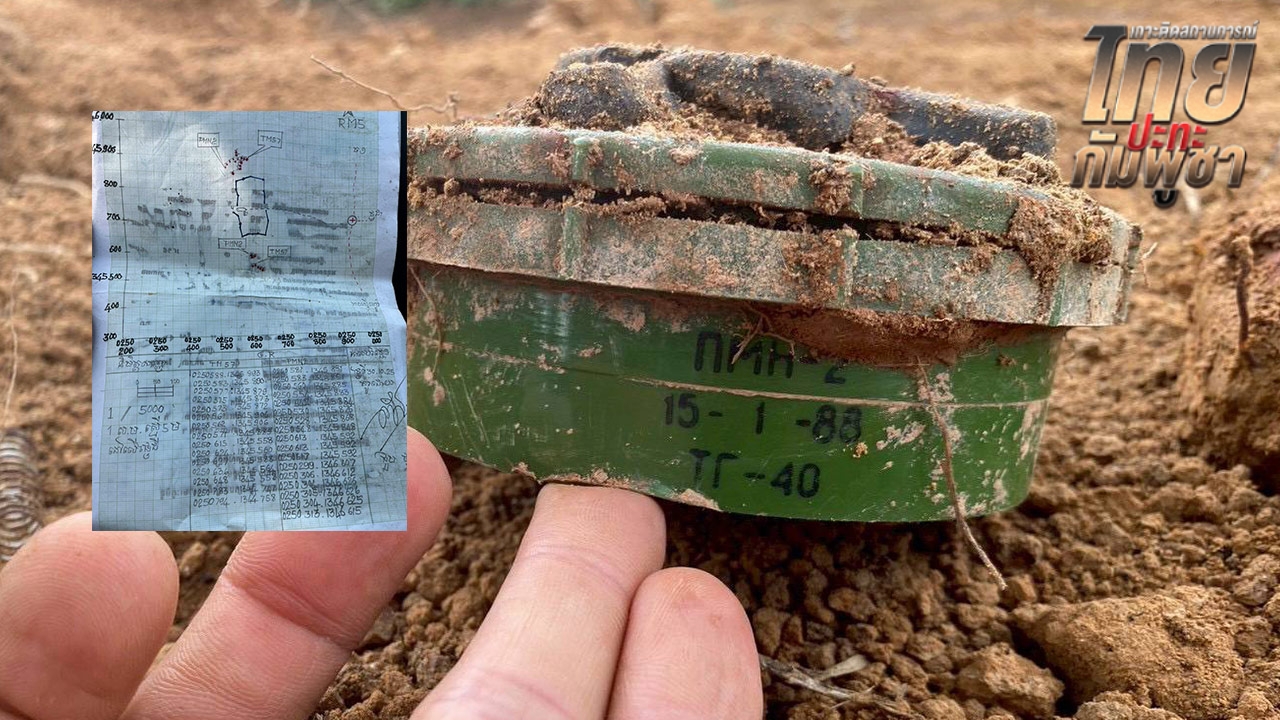
The Navy spokesperson revealed key evidence: a paper map showing the locations of anti-personnel mines buried at Ban Nong Ree. He pointed out that Cambodia violated the Ottawa Convention, using dirty tactics and premeditated plans aimed at killing Thai soldiers.
In the latest development along the Thai-Cambodian border on 21 Dec 2025 GMT+7, Rear Admiral Parach Rattanachaiphan, Navy spokesperson, disclosed the discovery of crucial evidence—a map detailing the placement of mines by Cambodian troops in Ban Nong Ree, Chamrak Subdistrict, Mueang District, Trat Province. After the Navy reclaimed three houses and the Tha Sen area, which Cambodia had encroached upon, military engineers were sent to clear the area. The Navy had been cautious, suspecting Cambodia might use underhanded tactics, so they inspected the area for any anti-personnel mines.
This led to an incident this morning when a marine engineer from a special task force stepped on a mine, sustaining severe injuries including the loss of his right leg. His condition is now out of danger.
The Navy continued clearing the area and found PMN-2 anti-personnel mines and several improvised mines made from artillery shells. They also discovered crucial evidence: a handwritten map by Cambodian soldiers indicating where mines had been placed. Everything matched the map—Cambodia had laid mines around Ban Nong Ree.
The evidence clearly shows Cambodia had premeditated plans: if Thai forces reclaimed the area, anti-personnel mines would be triggered. This confirmed the Navy’s expectations. In addition to buried mines, they found artillery-shell-based improvised explosives attached to bunkers and trees, connected by detonating cords, suggesting remote detonation if Thai soldiers entered. The Navy condemned Cambodia’s actions as severely unethical and dirty, violating international norms.