

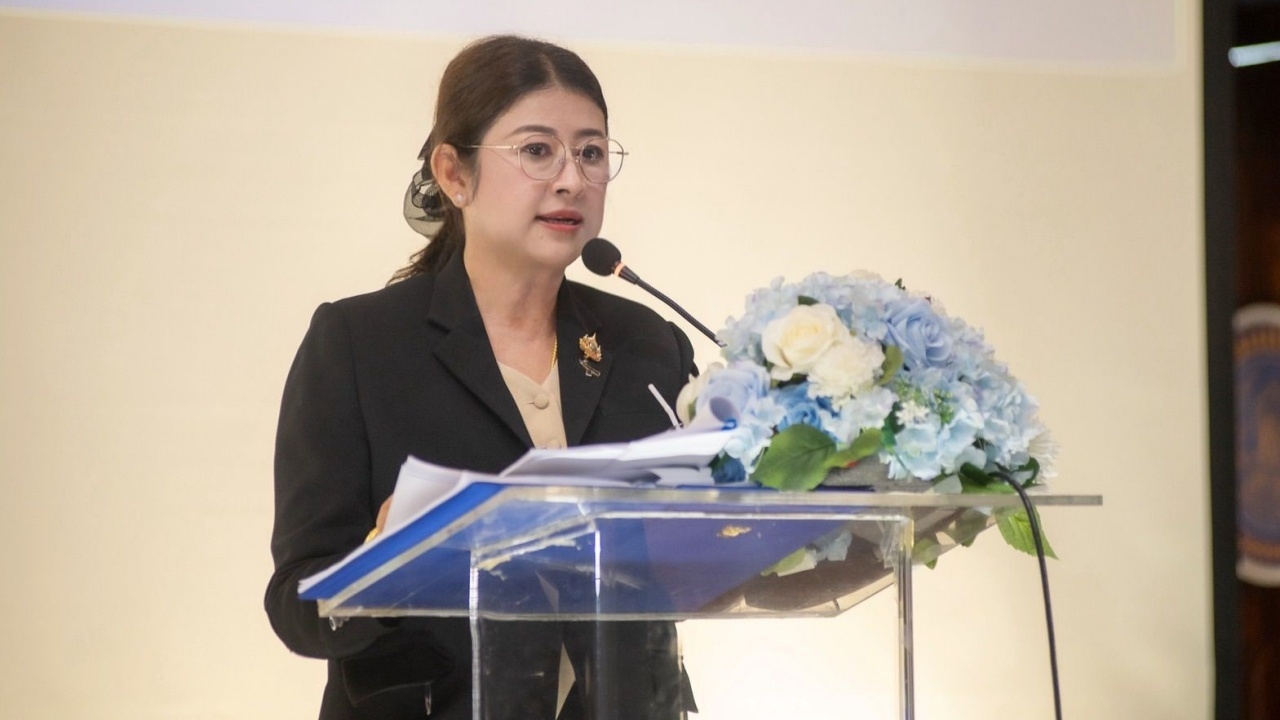
“Thitiporn” unveils driving policy of the Department of Fisheries toward a modern organization, while linking Thailand's fisheries sector toward sustainability
Mrs. Thitiporn Laoprasert, Director-General of the Department of Fisheries, revealed after presenting the policy and operational guidelines for the fiscal year 2026 to over 600 executives and staff at the Anon Conference Room of the Department of Fisheries that, under the vision “Enhancing Thai fisheries' competitiveness through balanced resource use and promoting research and innovation to create prosperity for farmers,” the Department, as the main regulatory agency overseeing the country's fisheries sector, continuously drives work across all dimensions. These include conserving balanced fishery resources and the environment for stable yields, supporting technology and innovation to add value and increase farmers’ prosperity, developing quality, safe, and standardized fishery products to boost competitiveness, pushing research to meet Sustainable Development Goals (SDGs), and enhancing workforce capabilities and government operations to meet international standards.

To elevate the Department of Fisheries’ administration into a modern organization under the concept FISHERIES CONNECT FOR SUSTAINABILITY, strategies have been established to integrate the fisheries sector toward sustainability in three dimensions:
1. Linking resource management by connecting data, knowledge, and collaborative work to ensure responsible and sustainable resource use.
2. Connecting marketing and production by linking producers with market demands to increase income and promoting fishery products to meet standards with full traceability throughout the production chain to build consumer confidence domestically and internationally.
3. Connecting personnel and policy by fostering cooperation between agencies and staff within the Department and aligning policies with public needs, supported by a 5 Plus 1 Framework for implementation:
Continuing royal initiatives related to fisheries projects by conserving and restoring aquatic animal resources, especially native fish species, transferring aquaculture knowledge, and developing fisheries professions to sustainably improve people’s quality of life.
1. Building cooperation in fisheries across all sectors by linking government, local authorities, farmers, fishers, private sector, related industries, academia, educational institutions, civil society, and international partners to drive Thailand's fisheries sector toward tangible sustainability.
2. Enhancing balanced and equitable fisheries resource management by fairly allocating access rights based on accurate, up-to-date scientific data, promoting participation from communities and local administrative organizations, and upgrading control, prevention, suppression, and monitoring of illegal fishing to ensure balanced and sustainable resource use.
3. Increasing the value of aquatic animals and products by developing quality, safe, internationally standard-compliant fishery products, promoting production aligned with domestic and export market demands, supporting processing to add value, and creating product identity through branding and local stories to enhance image, build trust, and raise competitiveness sustainably.
4. Advancing research and innovation through information technology and digital tools by developing efficient digital infrastructure to support modern research, including raw data collection systems for easy access and use, real-time digital dashboards to monitor research status and budgets, applying AI technology in research and innovation, and enhancing digital skills among personnel to modernize research management and practical use.
5. Developing environmentally friendly production systems (GREEN FISHERIES) by promoting production of economic aquatic animals using quality breeds, advancing aquaculture and high-value fishery products, developing local fishery product identities, encouraging group formation to boost competitiveness and bargaining power, and pushing for sustainable, eco-friendly production.
The Director-General added that to achieve clear, tangible results quickly, the Department is accelerating urgent work under the 5 Plus 1 Fast Track Projects. These include organizational and personnel development to strengthen mission execution; enhancing volunteer fisheries networks targeting one volunteer per district; improving food security in schools by expanding school fisheries projects to one school fisheries project per district; developing digital system operations; and promoting women's roles and gender equality in fisheries by enhancing women's capabilities throughout the production chain—from aquaculture to processing and marketing—and fostering leadership and community group cohesion to increase economic opportunities, resource access, and equal participation leading to a strong and sustainable fisheries sector.
Moreover, the Department prioritizes driving operations according to the Ministry of Agriculture and Cooperatives’ policy under the principle of market-driven innovation to increase income, through three key mechanisms:
1. Increasing income by promoting Smart Farming to reduce production costs, developing high-value aquaculture, and restoring water sources to boost yields, aiming for sustainable income growth for farmers and fishers.
2. Building markets by expanding fishery product sales online through Fisheries Shop, developing local fishery markets, and upgrading fishery products to premium and export markets.
3. Creating opportunities by improving regulations and procedures that hinder fisheries activities and promoting skill development to increase occupational opportunities for farmers, fishers, and fisheries entrepreneurs.
However, the policy and operational direction aim not only to meet performance indicators but to achieve tangible outcomes that link Thailand’s fisheries sector to excellence in every dimension. This will enable the Department of Fisheries to become a modern government agency that advances Thai fisheries toward stable and sustainable growth under the concept FISHERIES CONNECT FOR SUSTAINABILITY, in line with the Ministry of Agriculture and Cooperatives’ policies and the national strategy.