

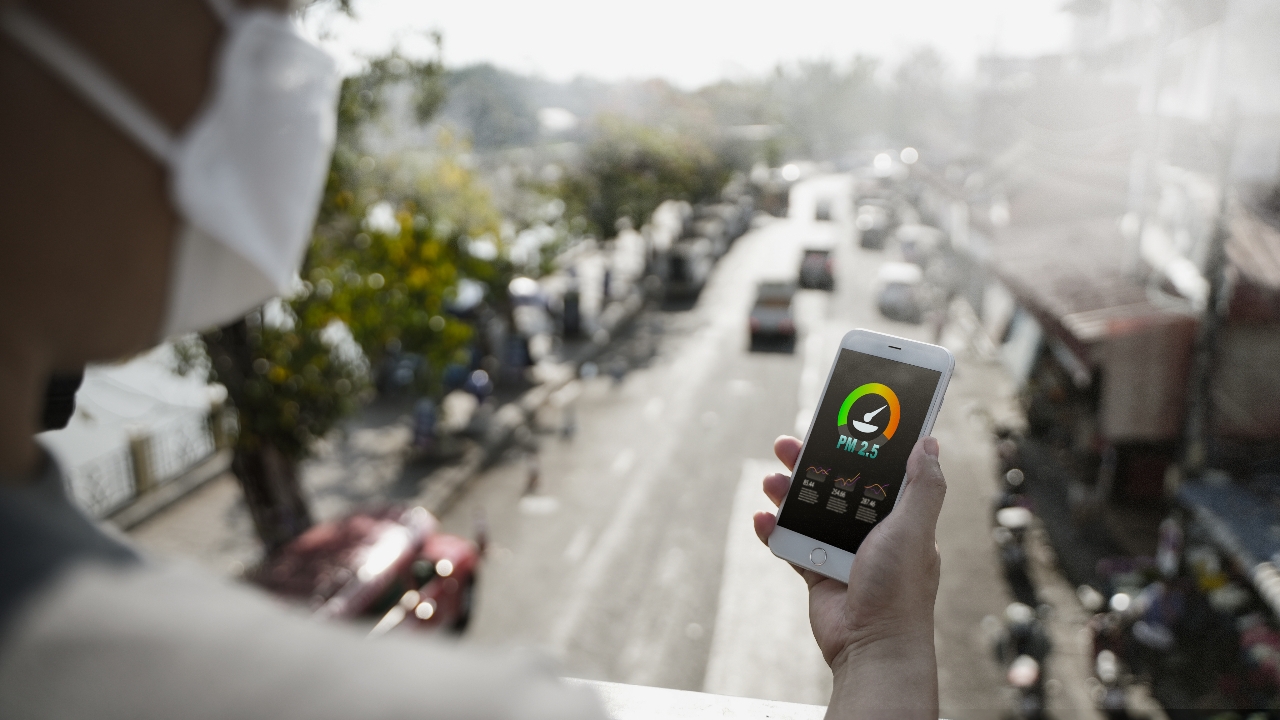
This morning's update on PM 2.5 dust levels in Bangkok found exceedances above the standard at the orange level, indicating early health impacts in 27 areas.
On 11 January 2026, the Bangkok Air Quality Information Center reported the PM 2.5 dust situation from Bangkok's air quality monitoring stations at 07:00 AM. The 24-hour average PM 2.5 concentration measured 26.1 to 50.3 micrograms per cubic meter (µg/m³), exceeding the standard of no more than 37.5 µg/m³. Twenty-seven areas were affected, with levels at the orange level indicating early health impacts.
1. Pathumwan District, in front of Samyan Mitrtown Mall: 50.3 µg/m³.
2. Chatuchak District, in front of Kasetsart University: 48.2 µg/m³.
3. Prawet District, in front of Seacon Square Department Store: 45.8 µg/m³.
4. Bang Rak District, beside the police booth in front of Bang Rak Lovely Plaza: 44.7 µg/m³.
5. Sathorn District, intersection in front of Sathorn District Office, Soi Saint Louis Road: 44.0 µg/m³.
6. Lat Krabang District, in front of Nakharin Hospital: 43.0 µg/m³.
7. Thawi Watthana District, entrance to Sanam Luang 2: 43.0 µg/m³.
8. Ratchathewi District, inside Ratchathewi District Office: 42.9 µg/m³.
9. Nong Khaem District, three-way intersection beside the police booth on Ma Charoen Road, Phetkasem 81: 42.9 µg/m³.
10. Lak Si District, inside Lak Si District Office: 42.2 µg/m³.
11. Bang Khun Thian District, inside Bang Khun Thian District Office: 41.9 µg/m³.
12. Khlong Sam Wa District, inside Khlong Sam Wa District Office: 41.8 µg/m³.
13. Bang Phlat District, inside Bang Phlat District Office: 41.6 µg/m³.
14. Bang Sue District, inside Bang Sue District Office: 41.6 µg/m³.
15. Sai Mai District, bus stop in front of Sai Mai District Office: 41.4 µg/m³.
16. Bang Khen District, inside Bang Khen District Office: 41.1 µg/m³.
17. Phasi Charoen District, in front of Siam University (near Phetkasem 36 Soi), university entrance: 41.0 µg/m³.
18. Samphanthawong District, in front of the corner at Chalerm Phrakiat Arch (Odeon Circle): 40.6 µg/m³.
19. Taling Chan District, Phutthamonthon Sai 1 Road intersecting Borommaratchachonnani Road: 40.3 µg/m³.
20. Don Mueang District, beside Don Mueang District Office: 39.9 µg/m³.
21. Bangkok Noi District, in front of Bangkok Noi Railway Police Station: 39.8 µg/m³.
22. Min Buri District, Suan Chalerm Phrakiat Rama IX Park opposite Min Buri District Office: 39.5 µg/m³.
23. Pom Prap Sattru Phai District, in front of the Office of the National Economic and Social Development Council: 39.3 µg/m³.
24. Phra Khanong District, inside Phra Khanong District Office: 39.0 µg/m³.
25. Phra Nakhon District, inside Phra Nakhon District Office: 38.8 µg/m³.
26. Nong Chok District, in front of Nong Chok District Office: 38.6 µg/m³.
27. Chalerm Phrakiat 80th Birthday Anniversary Park, Bangkok Noi District: 37.7 µg/m³.
The air quality index from Bangkok’s monitoring stations mostly indicates air quality at a level that begins to affect health.
Health advisory: Orange air quality level means early health impacts.
General public: Use protective equipment such as PM2.5 masks every time you go outdoors. Limit the time spent on strenuous outdoor activities or exercise. Watch for symptoms like coughing, difficulty breathing, or eye irritation.
At-risk groups: Use protective equipment such as PM2.5 masks whenever outdoors. Avoid strenuous outdoor activities or exercise. Follow medical advice and seek immediate medical attention if symptoms occur.
Related factors (forecast of weather conditions affecting PM 2.5 based on meteorology): Between 11-16 Jan 2026, ventilation is rated "poor/weak" with a closed surface atmospheric layer, leading to increasing dust accumulation. On 17-18 Jan, ventilation will improve to "weak/good" with influence from southern winds from the Gulf of Thailand, so dust concentration is expected to decrease. Today's weather is forecast as cool.
Satellite data from NASA shows no abnormal heat spots detected over Bangkok, indicating no unusual surface heat contributing to dust.
The Environmental Office has coordinated with all relevant agencies to tighten operations under the dust mitigation plan to alleviate the severity of PM2.5 dust and its potential health impacts. Public participation and cooperation from all sectors are encouraged to modify behavior and reduce dust-generating activities. The "5 Ways to Reduce Dust You Can Do" are: 1. Regularly clean the house by dust wiping; 2. Avoid burning waste and incense; 3. Plant trees to absorb pollution and trap dust; 4. Use public transportation; and 5. Turn off vehicle engines when parked and maintain engines to prevent excessive black smoke.
Alerts and public information encourage people to check air quality before leaving home via:
If the public spots pollution sources, they can report them via the Traffy Fondue platform.


