

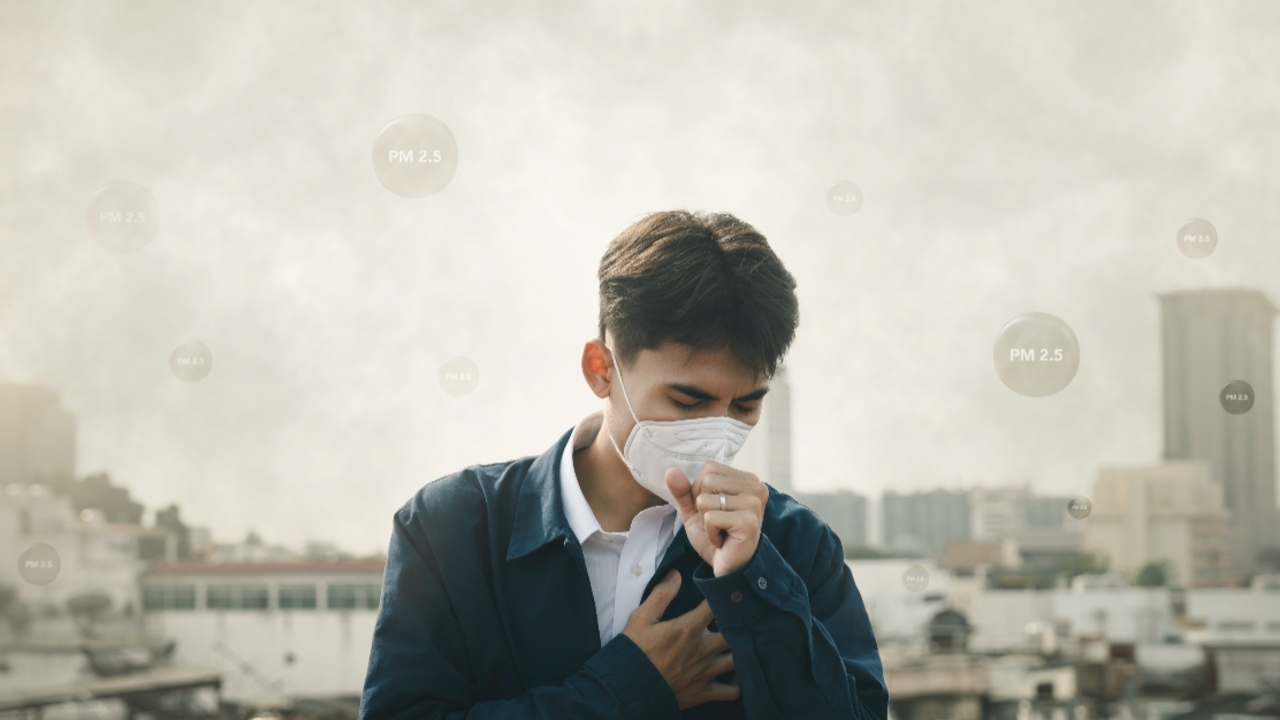
This morning in Bangkok, PM 2.5 levels were found to exceed the standard, prompting recommendations to work from home (WFH) on 12-13 January 2026 to reduce travel and prevent high pollution levels.
On 12 January 2026, the Bangkok Air Quality Information Center reported that at 07:00, the average PM 2.5 concentration in Bangkok was 38.1 micrograms per cubic meter (µg/m³), exceeding the standard of 37.5 µg/m³.
The top 12 districts with the highest PM 2.5 levels in Bangkok are:
1. Pathumwan District: 49.9 µg/m³.
2. Bang Rak District: 46.3 µg/m³.
3. Chatuchak District: 44.1 µg/m³.
4. Sathorn District: 43.2 µg/m³.
5. Prawet District: 42.8 µg/m³.
6. Lat Krabang District: 42.1 µg/m³.
7. Ratchathewi District: 42 µg/m³.
8. Bang Sue District: 41.2 µg/m³.
9. Bang Kho Laem District: 40.8 µg/m³.
10. Nong Khaem District: 40.1 µg/m³.
11. Pom Prap Sattru Phai District: 39.9 µg/m³.
12. Thawi Watthana District: 39.9 µg/m³.
Overall, particulate matter levels show a downward trend, with air quality currently rated as moderate.
Health advice: The air quality is at an orange level, which begins to affect health.
General public: Use protective equipment such as PM 2.5 masks whenever outdoors, limit time spent on strenuous outdoor activities or exercise, and monitor for symptoms like coughing, difficulty breathing, or eye irritation.
At-risk groups: Use protective equipment such as PM 2.5 masks whenever outdoors, avoid strenuous outdoor activities or exercise, follow medical advice, and seek medical attention promptly if symptoms occur.
Previously, Governor Chadchart Sittipunt of Bangkok requested cooperation from government agencies, private sectors, and businesses to have personnel work from home (WFH) on 12–13 January 2026 to reduce traffic and emissions, following forecasts that 10–17 January 2026 would be a high-risk period for accumulating pollution due to stagnant weather conditions.Read more: “Bangkok Requests WFH on 12-13 Jan as PM 2.5 Expected to Exceed Standards in Over 35 Districts”)

Meteorological data and ventilation rates (VR) indicate that between 9–17 January 2026, there will be periods of poor air dispersion, causing PM 2.5 to accumulate in many Bangkok areas, with the following trends:

The main causes of PM 2.5 pollution in Bangkok include:
Five key response measures: