

CPF advances the CONNEXT ED project into its ninth consecutive year, committed to emphasizing AI skills and leadership development to transform the learning environment toward sustainable development through the collaborative power of government agencies, led by the Office of the Basic Education Commission, the private sector, and schools.
On 15 Jan, reporters reported that Charoen Pokphand Foods Public Company Limited (CPF) is driving the CONNEXT ED project into its ninth year to reduce educational inequality, develop capable and virtuous children, and strengthen Thai youth in academics, vocational skills, and life skills. The project builds leadership and expands digital and AI skills to keep pace with learning in a technological world. It also promotes the role of teachers as learning designers, training children to think, analyze, and act independently, while teaching project management through the CP egg-laying chicken project for student lunch programs.
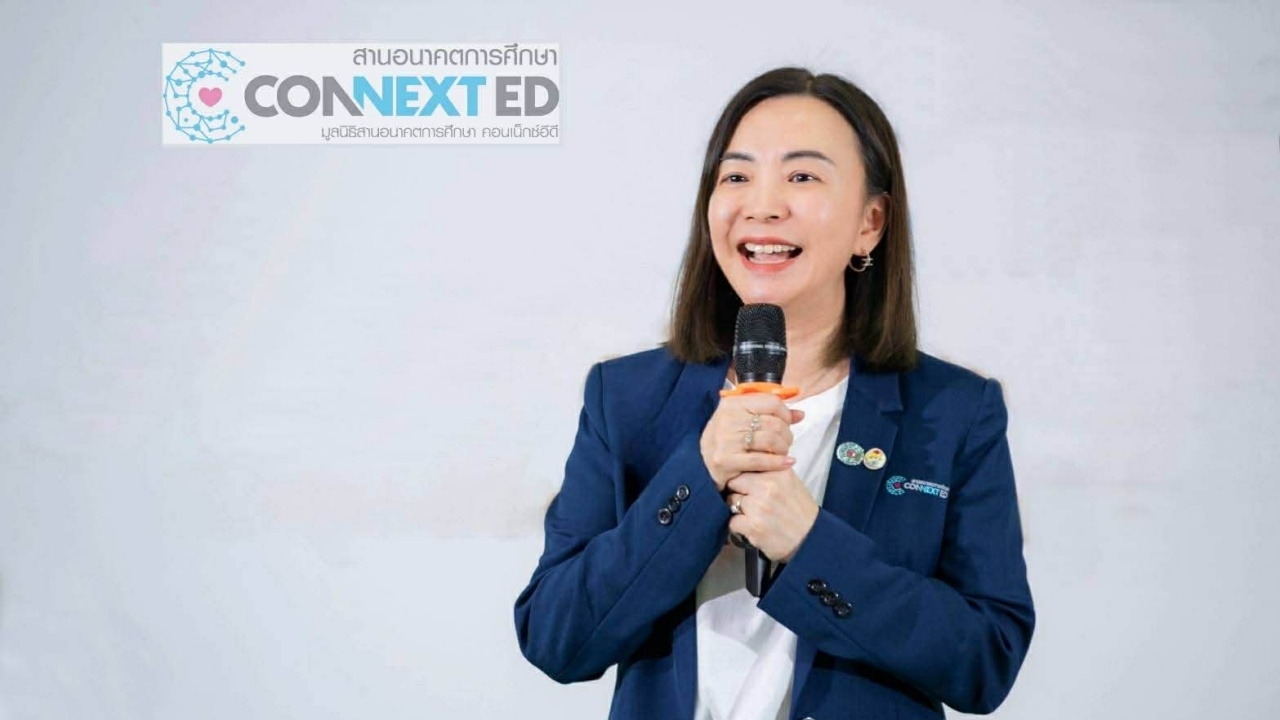
Ms. Pimolrat Reepattanawijitkul, Chairperson of the CONNEXT ED Education Future Project Management Committee, said CPF recognizes the importance of education as the core to developing children and youth to grow with quality and become key forces in economic and national development. Thus, the CONNEXT ED project has continued into its ninth year, focusing this year on building leadership and digital AI skills to prepare children and youth for modern learning environments. At the same time, it promotes life skills by giving children the opportunity to learn project management through the CP egg-laying chicken project, creating sustainable food sources in schools alongside learning project management processes.
Regarding digital and AI skills, CPF's new generation leaders, known as School Partners (SP), collaborate with school administrators and teachers to create a learning ecosystem integrating AI into real classrooms. This is driven through four main dimensions covering nine key projects: 1. Technology and digital skills, building future skills through the AI & Coding project, ICT Talent project, and support for computers and equipment; 2. Learning processes, enhancing human potential through the Coach & FA project, Active Learning project, and Learning Center project; 3. Quality of life and ethics, establishing a solid foundation via the egg-laying chicken project for student lunches and projects promoting morality, ethics, and sustainability; and 4. Communication, raising awareness and engagement through publicity projects.

Ms. Pimolrat added that a crucial mechanism for driving the project is the teachers. This year, CPF aims to support teachers in shifting their role from knowledge providers to learning process designers or Facilitators (FA). Teaching is transformed from textbook-based to Active Learning or Project-Based Learning (PBL) activities, using ICT media and equipment provided by the CONNEXT ED project to create an environment that motivates children to be curious and take initiative. It trains critical thinking skills and connects classroom knowledge to real-world contexts by incorporating knowledge from new generation leaders (SP) and external experts.
Over the past eight years, CPF has successfully increased the number of SPs working with educational institutions. Currently, there are 169 SPs (maintaining a ratio of one SP per two schools), enabling effective planning and project monitoring aimed at sustainably upgrading School Grading from Good to Great. In 2026, CPF plans to expand the Egg Buddy model by elevating the SP role to serve as mentors and partners closely supporting schools participating in the CP egg-laying chicken project for student lunches. This includes consulting on planning, project implementation review, resource management, driving tangible project outcomes, and teaching children project management skills.
The Chairperson of the CONNEXT ED Education Future Project Management Committee further stated that CPF is committed to contributing to the advancement of Thai education based on five key strategies: 1. Transparency (Disclosure), 2. Market Mechanism, 3. Developing High-Quality Leaders, 4. Child-Centric approaches, and 5. Access to Digital Infrastructures. These strategies position CONNEXT ED as a vital mechanism for developing quality Thai children. Currently, CPF oversees 304 schools across four provinces: Nakhon Ratchasima, Buriram, Chaiyaphum, and Saraburi.