

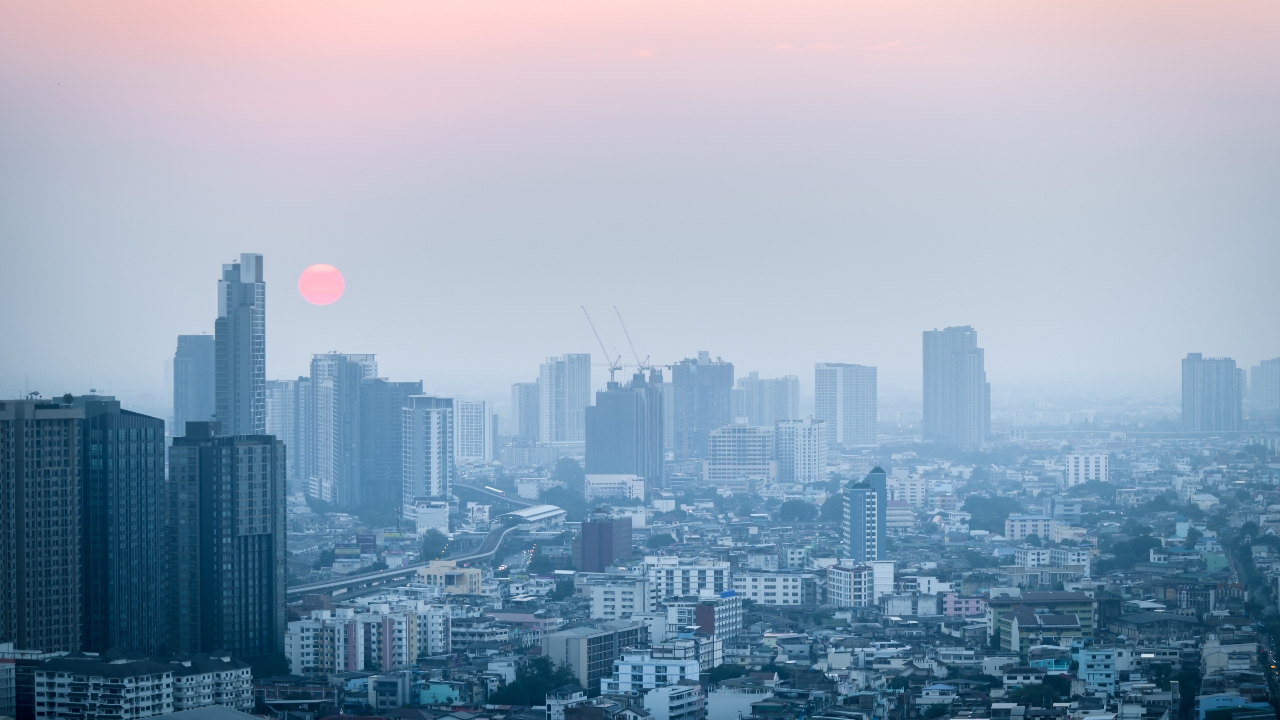
The latest PM 2.5 levels in Bangkok today show a downward trend but still exceed the standard at the orange level, beginning to affect health in 7 areas.
On 24 January 2026, the Bangkok Air Quality Data Center reported the PM 2.5 situation from Bangkok's air quality monitoring stations at 07:00. The 24-hour average PM 2.5 measurements ranged from 23.1 to 46 micrograms per cubic meter (µg/m³), exceeding the standard at the orange level, which starts to impact health (standard not exceeding 37.5 µg/m³). Seven areas were identified as exceeding the standard:
1. Lat Krabang District, in front of Nakharaphiban Hospital: measured at 46.0 µg/m³.
2. Bang Rak District, beside the police booth in front of Bang Rak Lovely Plaza: measured at 40.9 µg/m³.
3. Phra Khanong District, inside the Phra Khanong District Office: measured at 40.6 µg/m³.
4. Prawet District, in front of Seacon Square Shopping Mall: measured at 39.8 µg/m³.
5. Ratchathewi District, inside the Ratchathewi District Office: measured at 39.4 µg/m³.
6. Pathum Wan District, in front of Samyan Mitrtown Mall: measured at 39.0 µg/m³.
7. Khlong Sam Wa District, inside the Khlong Sam Wa District Office: measured at 38.4 µg/m³.
The air quality index from Bangkok's monitoring stations mostly falls within the moderate air quality level.
The Meteorological Department forecasts for Bangkok indicate cool mornings with temperatures dropping by 1-2 degrees Celsius.
Health advisory: At orange air quality levels, health effects begin to appear.
General public: Use personal protective equipment such as PM2.5 masks whenever outdoors, limit the duration of strenuous outdoor activities or exercise, and monitor for symptoms like coughing, difficulty breathing, or eye irritation.
At-risk groups: Use personal protective equipment such as PM2.5 masks whenever outdoors, avoid strenuous outdoor activities or exercise, follow medical advice, and seek medical attention promptly if symptoms appear.
Related factors (forecast of weather conditions affecting PM 2.5) from 24 to 28 January: ventilation is "poor/weak" with a closed atmospheric layer near the surface, likely causing increased dust accumulation. From 29 January to 1 February, the surface atmospheric layer will alternate between open and closed conditions, influenced by strong southerly winds from the Gulf of Thailand, resulting in moderate to good air quality in Bangkok. Today's morning temperatures are cool with a 1-2 degrees Celsius drop.
Satellite hotspot data from NASA shows no abnormal heat spots detected over Bangkok, indicating no unusual heat sources contributing to pollution.
The Bangkok Environment Office has coordinated with all relevant agencies to intensify enforcement of dust pollution control action plans to mitigate the severity of PM 2.5 pollution and its potential health impacts. They also encourage public participation and cooperation from all sectors to change behaviors and reduce activities that cause dust pollution. The "5 Ways to Reduce Dust—You Can Do It" campaign includes: 1. Regularly clean homes by dusting; 2. Avoid burning waste and incense; 3. Plant trees to absorb pollutants and trap dust; 4. Use public transportation; and 5. Turn off engines when parked and maintain engines to avoid excessive black smoke emissions.
Public warnings and advisories encourage checking air quality before leaving home via:
If the public observes pollution sources, they can report tips via Traffy Fondue.


