

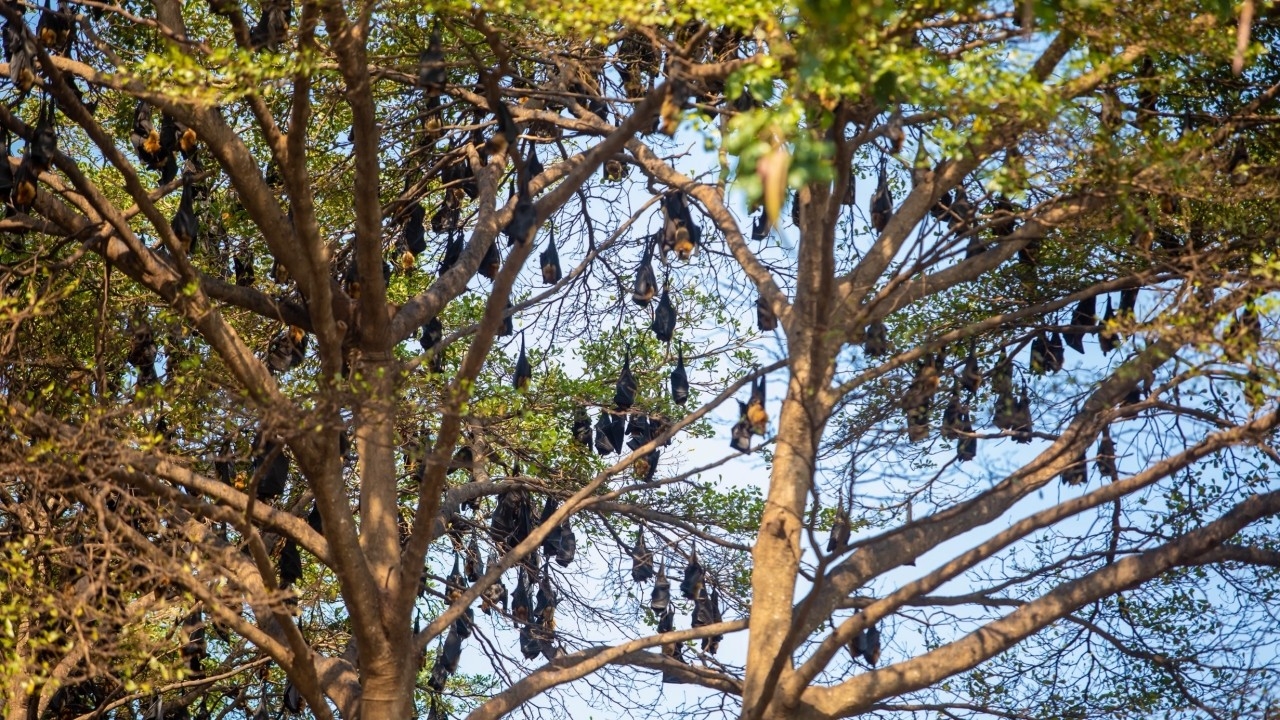
Chonburi – Residents fear disease transmission after discovering thousands of fruit bats roosting on large trees in an alley in Pattaya Naklua. They urge relevant authorities to investigate following reports of a Nipah virus outbreak.
There have been reports of a Nipah virus outbreak in West Bengal, India, which is more severe than COVID-19. So far, five cases have been confirmed, with over 180 close contacts under quarantine and monitoring. The virus can spread from animals to humans through contact with animal droppings and secretions of carriers such as fruit bats, pigs, horses, cats, goats, and sheep, which may have contracted the virus from fruit bats. Human-to-human transmission can occur through contact with infected bodily fluids like blood or saliva.

Meanwhile, residents in Soi Pattaya Naklua 20, Moo 5, Naklua Subdistrict, Bang Lamung District, Chonburi, where a large colony of fruit bats has lived on big trees for decades, have become concerned following news about the Nipah virus outbreak in India. They worry these bats could be carriers spreading the disease.

On 25 January 2026, reporters visited the site and found thousands of fruit bats tightly roosting on large trees along the roadside, especially during morning and evening. The road below was covered with bat droppings. These bats have inhabited the area for many years. Landowners had previously attempted to cut down trees to drive them away, but when branches regrew, the bats returned to roost again.

Mrs. Prasong Kongpangdee, a local resident, said she feels afraid and worries about disease transmission over time. She urged the relevant authorities to inspect the area in this alley to relocate the bats. If left for too long, it could pose health risks, especially amid reports of the Nipah virus outbreak and infections linked to bats.