

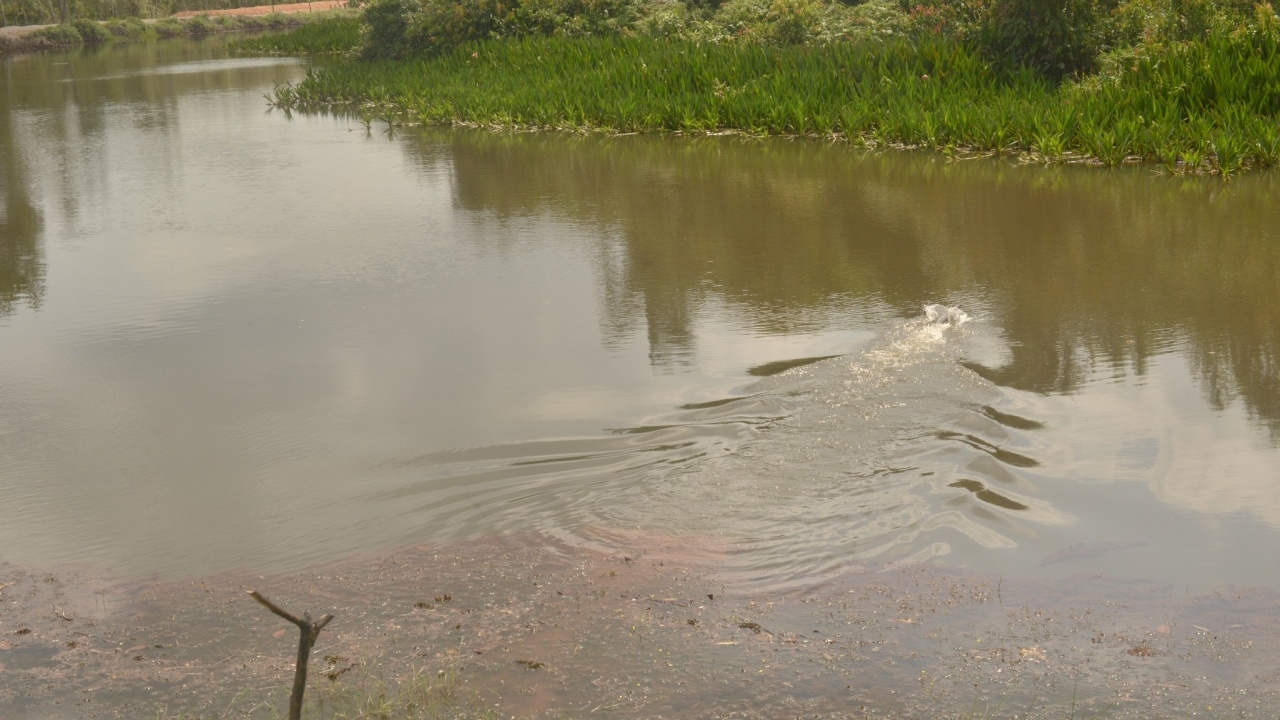
The Department of National Parks highlights the health of Thailand's southern peat swamp forest ecosystem after discovering False Gharials in the wild, estimating no fewer than two individuals. Officials are stepping up quality patrols and preparing conservation plans.
On 15 Feb 2026, Mr. Sukhee Boonsang, Director of the Wildlife Conservation Office, shared the welcome news following a wildlife research team's confirmation of the discovery. False Gharial (False Gharial) in the wild in Tak Bai District, Narathiwat Province, supported by clear photographic and video evidence. This ends doubts about the False Gharial population in Thailand, previously believed to have been extinct in its natural habitat for a long time.
This significant discovery occurred on 25 Jan 2026 when Mr. Nattawut Yuenchon, a local resident, recorded a False Gharial approximately 3 meters long appearing at dusk along a canal. Subsequently, a team from the Peat Swamp-Halabala Wildlife Research Station found another False Gharial about 1.5 meters long nearby. These findings indicate that at least two False Gharials with different sizes inhabit the Tak Bai peat swamp ecosystem, reflecting a population structure with potential for future breeding.

Historically, the False Gharial was a distinctive reptile of Southeast Asia, with a range covering southern Thailand, Malaysia, Sumatra, and Borneo in Indonesia. However, over recent decades, the global population has sharply declined due to peat swamp destruction for agriculture, dam construction, and illegal hunting. In Thailand, scientific data over decades had only recorded traces oranecdotal accountsbut had never officially documented live individuals in the wild until now, leading to the species being considered critically endangered or possibly extinct in Thailand's natural habitats.
Currently, the global status of the False Gharial remains critical. The International Union for Conservation of Nature (IUCN) lists it as "Endangered" on its Red List, estimating no more than 2,500 mature individuals worldwide. It is also listed in Appendix I of the Convention on International Trade in Endangered Species (CITES), which strictly regulates its trade and possession.
Mr. Sukhee said wildlife researchers identified the discovery of False Gharials in the main canal flowing through the upper peat swamp in Narathiwat Province as proof that Thailand's southern peat swamp ecosystem remains sufficiently intact to serve as a last refuge for these globally rare animals.
Moving forward, the research team will collaborate with the Chalerm Phrakiat Somdet Phra Theparat Ratchasuda Wildlife Sanctuary to enhance smart patrols and conduct in-depth studies to develop sustainable conservation plans involving local communities, ensuring that False Gharials continue to coexist with Thailand's forests.
Thanks to the Facebook page of the Department of National Parks, Wildlife and Plant Conservation.