

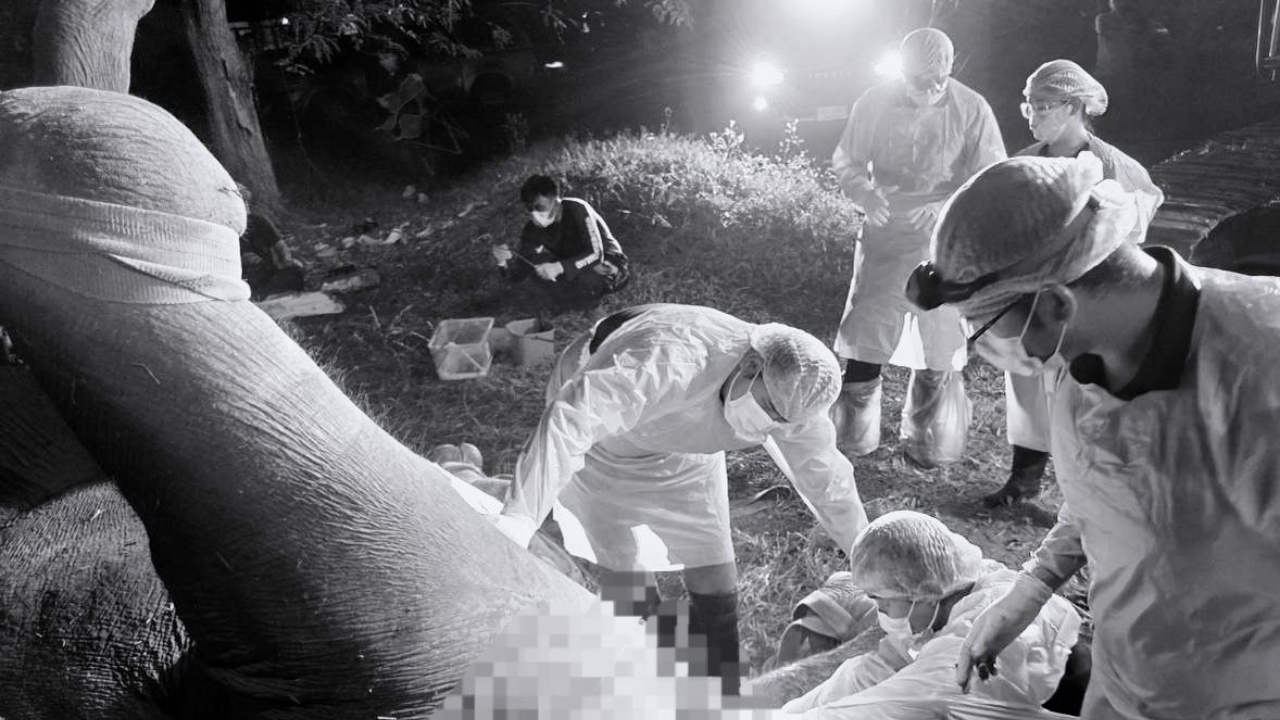
A veterinary team conducted an autopsy. The 'Khao Chakan wild elephant mother'. She passed away peacefully before internal organ samples were collected for detailed examination to determine the cause.
On 15 February 2026, Mr. Sukhee Boonsang, Director of the Wildlife Conservation Office, reported on the progress regarding treatment of the injured wild elephant by the Wildlife Conservation Division, Protected Areas Regional Office 2 (Sriracha). He stated that the veterinary team had been treating a female wild elephant injured in the left front leg in Village 17, Non Somphon Subdistrict, Phra Phloeng District, Khao Chakan District, Sa Kaeo Province.
The latest report states that the wild elephant mother peacefully collapsed at 18:00 on 14 February despite the staff and veterinary team's best efforts to save and treat her. After her collapse, the veterinarians conducted an autopsy and collected samples to diagnose the cause of death in detail.
It was found that this wild elephant mother was at least 40 years old, about 240 centimeters tall, and weighed approximately 2,000 to 2,500 kilograms. Physical examination revealed no external wounds or signs of abuse, and it was confirmed that the elephant was not pregnant.
However, internal examination revealed significant abnormalities including a fracture in the left front thigh bone, causing localized muscle bleeding and early tissue necrosis. Additionally, the liver was swollen and inflamed with rounded edges, the lungs appeared pink with fresh red areas, the kidneys were enlarged beyond normal size, and there was an excess amount of fluid in the pericardial sac.
Officials collected important organ samples—heart, kidneys, lungs, liver, spleen, and muscles—for urgent laboratory analysis. The elephant carcass was buried following scientific protocols, with lime powder sprinkled to prevent disease spread, at the Khao Takrub Forest Protection Unit within Khao Ang Rue Nai Wildlife Sanctuary.
Thanks to the Facebook page of the Department of National Parks, Wildlife and Plant Conservation.