

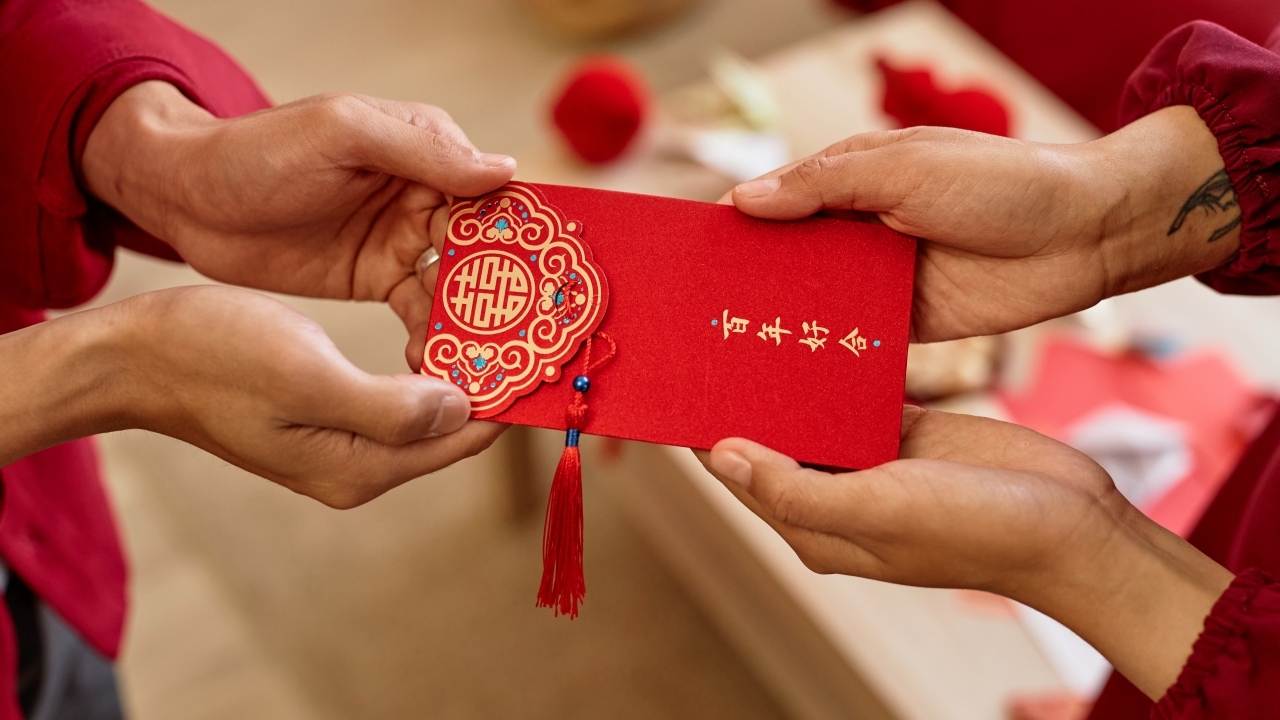
North Bangkok Poll reveals survey results on the "Chinese New Year Festival" showing that young people still value red envelopes but tend to give less, modernizing rituals while emphasizing preserving their core meaning. The study highlights evolving customs alongside tradition.
On 16 Feb 2026 GMT+7, Assistant Professor Dr. Sanit Siriwisitsakul, head of the North Bangkok Poll survey center at North Bangkok University, disclosed the results of a public opinion survey conducted from 9 to 14 February 2026 GMT+7. The survey included 1,015 respondents nationwide, covering all regions, focusing on the topic "Red Envelopes and the Digital World: Chinese New Year Practices in the Modern Era."
When asked whether they have Chinese ancestry or celebrate Chinese New Year, the findings showed that 45.6% of Thais with Chinese heritage celebrate the festival, 31.1% do not celebrate, 18.2% are ethnic Thais without Chinese ancestry but still celebrate, and 5.1% are ethnic Chinese who celebrate Chinese New Year.
Regarding how they celebrate Chinese New Year, 39.7% perform some rituals, 28.1% do not hold ceremonies but send greetings or give red envelopes, 20.1% focus on sharing meals together, and 12.1% carry out full ancestral and deity worship rituals.
When asked about their intentions for giving red envelopes this year, 40.2% said they would not give any, 27.4% would give the same amount as before, 19.7% planned to give less, and 12.7% intended to give more than the previous year.
The most common form of red envelope giving was cash in red envelopes at 36.9%, 33.2% did not give at all, 19.2% used both cash and digital methods, 10.1% transferred via Mobile Banking or QR codes, and 0.4% used e-Wallet transfers.
When asked about feelings regarding receiving digital red envelopes, 34.7% found it convenient but felt it lacked the feeling of a traditional red envelope, 24.1% disliked it because it lacked atmosphere, 21.1% felt it was equivalent to cash in every way, and 20.1% were unsure.
Regarding the most important meaning of the "red envelope," 36.7% said it is a significant social custom, 27.3% viewed it as a symbol of good luck, 22.1% saw it as an expression of love and bonding, and 13.9% considered it a financial burden.
When asked about the current importance of Chinese New Year, 47.2% believed it remains as important as before, 39.2% said it has declined in importance, and 13.6% felt its importance has increased.
Finally, when asked how the younger generation should continue Chinese New Year traditions, 38.7% suggested modernizing while preserving the essence, 29.3% chose to practice only the important parts, 21.1% emphasized family relationships over rituals, and 10.9% believed in strictly following traditional customs.