

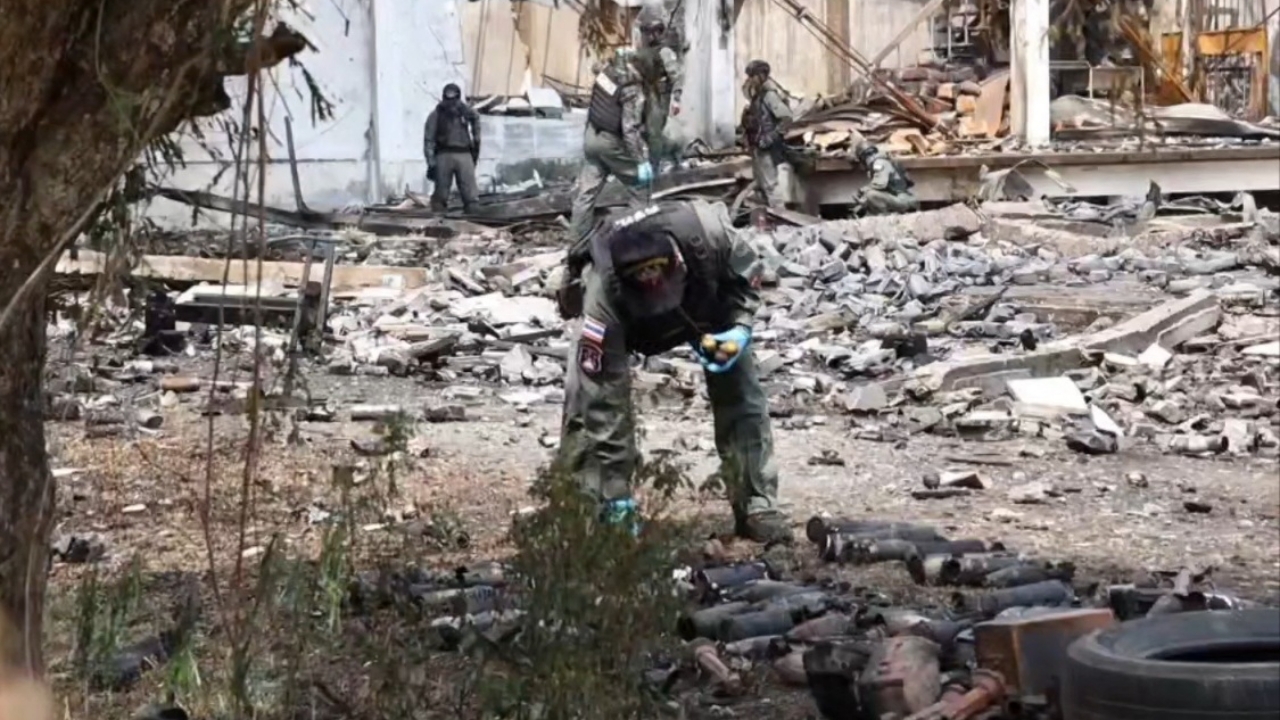
An explosion at Border Police Ammunition Depot 21 in Surin damaged 12 local homes. Authorities are quickly surveying and providing aid. The depot is housed in a building nearly 40 years old, where weapons are stored according to tactical procedures. Officials have requested that images from inside the camp not be shared publicly to protect security.
On 25 Feb 2026 GMT+7, Pol. Lt. Gen. Rungroj Thakoorpunyasiri, Commander of the Border Police, Surin Governor Chamroen Wanphet, Col. Akkasit Pakirata, Deputy Commander of Military Circle 25, Pol. Col. Jakkarin Undee, Commander of Border Police 21, and other relevant agencies held a joint press conference about the ammunition depot fire at Border Police 21 (Surin Phakdi Camp) in Surin Province.
Surin Governor Chamroen Wanphet stated that a special task force was established to manage the situation since the incident occurred. Fire was brought under control by 23:30. No reignition has been detected since then. One injury was reported—a Border Police officer on guard about 100 meters from the site. His condition is stable, and he was discharged home last night.

Regarding damage to local homes, a community about 500 meters from the explosion site experienced minor structural impacts. Twelve houses in Village 20, Chenieng Subdistrict, Mueang District, Surin Province were affected, mainly with damaged ceilings, glass, and light fixtures. The damage is minor and will be addressed promptly using emergency government funds according to Ministry of Finance regulations. The district chief, local administration, and subdistrict organizations will conduct surveys to ensure affected residents receive assistance swiftly.
Additionally, shrapnel and debris from the explosion scattered into nearby rice fields. Authorities have cordoned off the area to conduct inspections before allowing residents to return safely.
Regarding the fire's cause, expert investigators are currently examining the scene. The bomb disposal team has surveyed the area and designated hazardous zones, awaiting forensic teams to conduct further analysis.

Pol. Lt. Gen. Rungroj Thakoorpunyasiri, Commander of the Border Police (CBP), explained that the area belongs to Border Police Command 21, which reports directly to the Army and is a highly sensitive security zone. He requested media and the public to refrain from sharing confidential images or internal camp footage publicly, as such dissemination could benefit adversaries and harm overall security. He also warned against spreading unverified or false information (Fake News) about the incident’s cause, as it may cause public panic and damage the situation's overall management.
As the unit commander, he said the cause is being thoroughly analyzed with Army operations units. He confirmed the information presented by the Surin Governor, who is the incident commander, during last night's briefing. The situation is now under control through cooperation between the military and Border Police. The next step is an official investigation collecting all evidence—testimonial, documentary, and forensic—in collaboration with provincial police and forensic teams.
He confirmed that the building and ammunition storage methods comply with military tactics. The storage system meets all safety standards. Although the depot building was constructed in 1987 and the munitions have long service lives, whether the building or ammunition age contributed to the incident is for experts and responsible personnel to determine. The building structure, storage layout, guard rotations, and security systems follow systematic tactical standards identical across all Border Police regions and units, including companies that handle weapons and explosives, with designated storage and training areas adhering strictly to tactical security protocols.

When asked about the last inspection of the building and weapon storage, Pol. Lt. Gen. Rungroj said regular reports are submitted weekly and monthly with photographic evidence. Security teams report, and commanders at all levels conduct inspections and submit photographic reports. However, these images cannot be publicly disclosed. He affirmed that all procedures follow tactical schedules and safety principles.
Regarding differences in safety standards across locations due to varying construction or repair budgets, Pol. Lt. Gen. Rungroj acknowledged that building conditions differ depending on budget and construction era. Buildings from 30 to 40 years ago naturally differ from modern ones and may show some wear. Nonetheless, the ammunition storage system and standards remain uniform everywhere.
When asked about specialized equipment such as sprinkler systems or temperature monitoring inside the depot and whether these are consistent across locations, Pol. Lt. Gen. Rungroj gave a brief response. “They correspond to the condition on site.”
Regarding the impact on border security missions and plans for replacing damaged weapons, Pol. Lt. Gen. Rungroj stated that officials must first clear the area and conduct a detailed inventory of damaged arms and ammunition. However, tactically, the unit remains ready as weapon and ammunition rotation systems are in place to maintain preparedness. If shortages occur, funds can be allocated or support requested from nearby companies or commands immediately, without affecting security operations or border area surveillance.

