

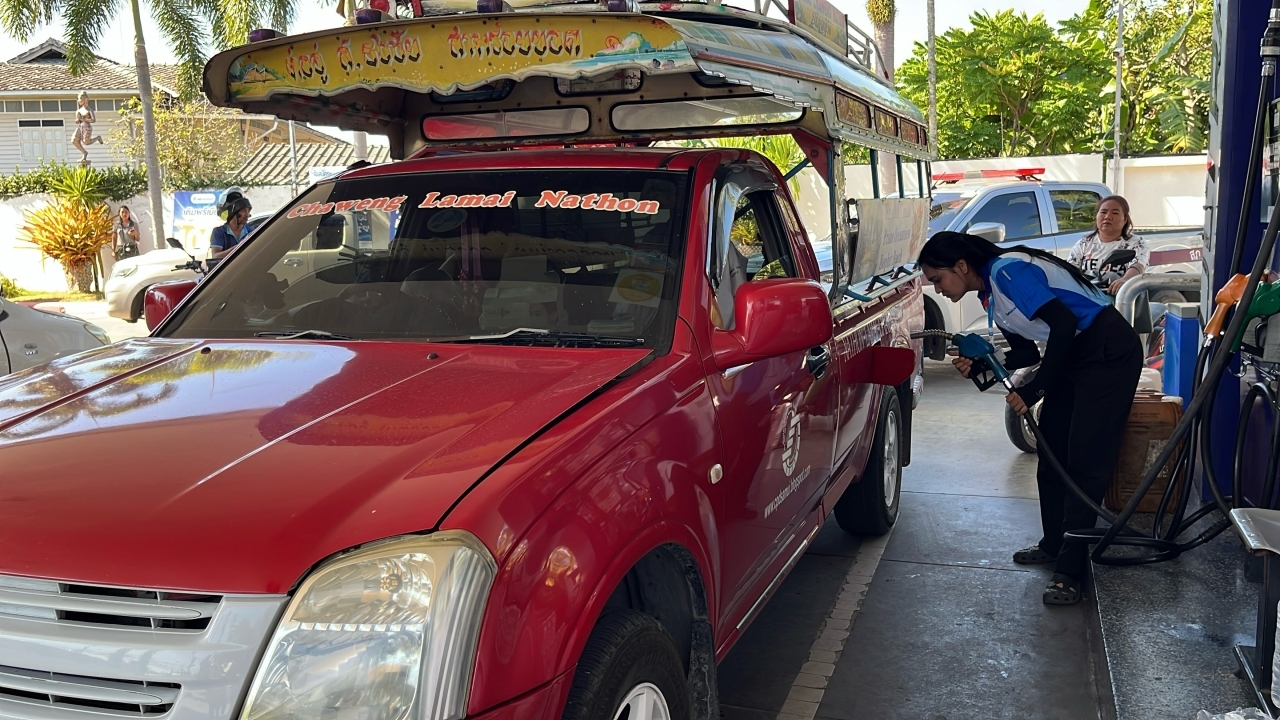
Conflict in the Middle East has caused residents and business operators on Koh Samui to worry about fuel shortages, leading to long queues of vehicles waiting to refuel, with lines stretching for kilometers, while gas stations have had to order additional fuel supplies to meet demand.
On 4 March 2026, reporters covering the area of Koh Samui District, Surat Thani Province, observed that many residents, public transport operators, and marine tour business owners queued their vehicles to refuel, forming lines stretching for kilometers. This marked the third consecutive day of residents flocking to gas stations, resulting in diesel running out at almost every station on the island. The panic stemmed from fears of fuel shortages and potential price increases, despite government agencies assuring that fuel supplies remain sufficient. However, residents continue to worry.

In Koh Samui District itself, a fuel truck carrying all types of fuel arrives daily by ferry—one trip per day—to deliver fuel to the island's gas stations according to their orders, which vary. If high demand exhausts the day's fuel supply, customers must return to refuel the following afternoon. This has caused long queues of vehicles waiting to refuel over the past three days.
Mr. Sommai Wisit, a songthaew (shared taxi) owner on Koh Samui and one of those waiting in line to refuel, said he waited about three hours today to get fuel for operating his vehicle to serve both Thai and foreign passengers the next day. However, he had to stop running today due to insufficient fuel. He believes that the fuel shortage at stations is likely due to operators buying large amounts to stock up, reducing the fuel available for daily circulation. He also acknowledged concerns that a real fuel shortage would impact tourism-related sectors on Koh Samui, including public transport and tour businesses, and urged relevant authorities to prepare measures to address the situation.
Inquiries with various gas stations on Koh Samui revealed that some have increased their fuel orders from one to two ten-wheel trucks per day to accommodate the current surge in demand.

