

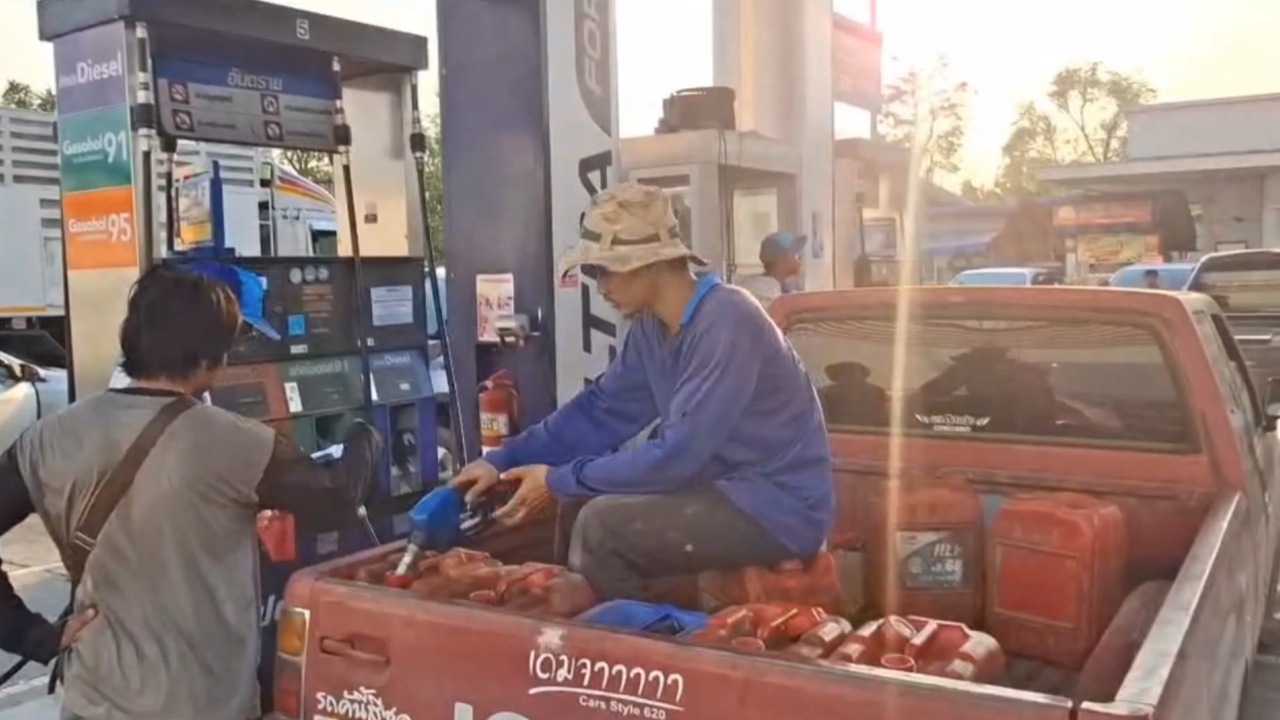
Phichit farmers drive 30 km across districts to queue for diesel fuel to power their orchard machinery amid a diesel shortage.
On 12 Mar 2026 GMT+7, reports indicated that the diesel shortage in Phichit province has worsened. Nearly every district displays 'Out of Fuel' signs. Pomelo orchard farmers must drive over 30 kilometers across districts to queue for fuel tickets. Meanwhile, stations limit fuel amounts and await deliveries from fuel depots.
Currently, Phichit province is severely affected by diesel shortages. Almost all gas stations in nearly every district have posted 'Diesel Out of Stock' signs, causing great hardship for residents and the agricultural sector. Stations that still have fuel manage distribution by issuing queue tickets while waiting for tanker trucks coming from fuel depots in Saraburi province and Wachirabarami district in Phichit.

Bancha, a pomelo orchard farmer in Wang Samrong subdistrict, Taphan Hin district, told reporters while queuing at a major station in Thap Khlo district that he must drive over 30 km because major brand stations in Taphan Hin lack sufficient fuel. Some stations that have fuel limit customers to 500 baht per vehicle and prohibit filling separate containers or jerrycans.
He said he drives his pickup truck to Thap Khlo to queue and fill the tank, budgeting 3,000 baht. He uses the fuel from his vehicle tank to transfer into the Kubota engine that powers water pumps for his pomelo orchard and rice fields. Without fuel, the crops would be ruined, Bancha explained.

At the Thap Khlo station, queue tickets are issued to reduce crowding and maintain order. Today, the limit is set at 100 queues, with the expectation that incoming fuel deliveries will suffice for all ticket holders.
However, farmers remain concerned that if the situation continues, it will have long-term impacts on agricultural costs and crop yields.