

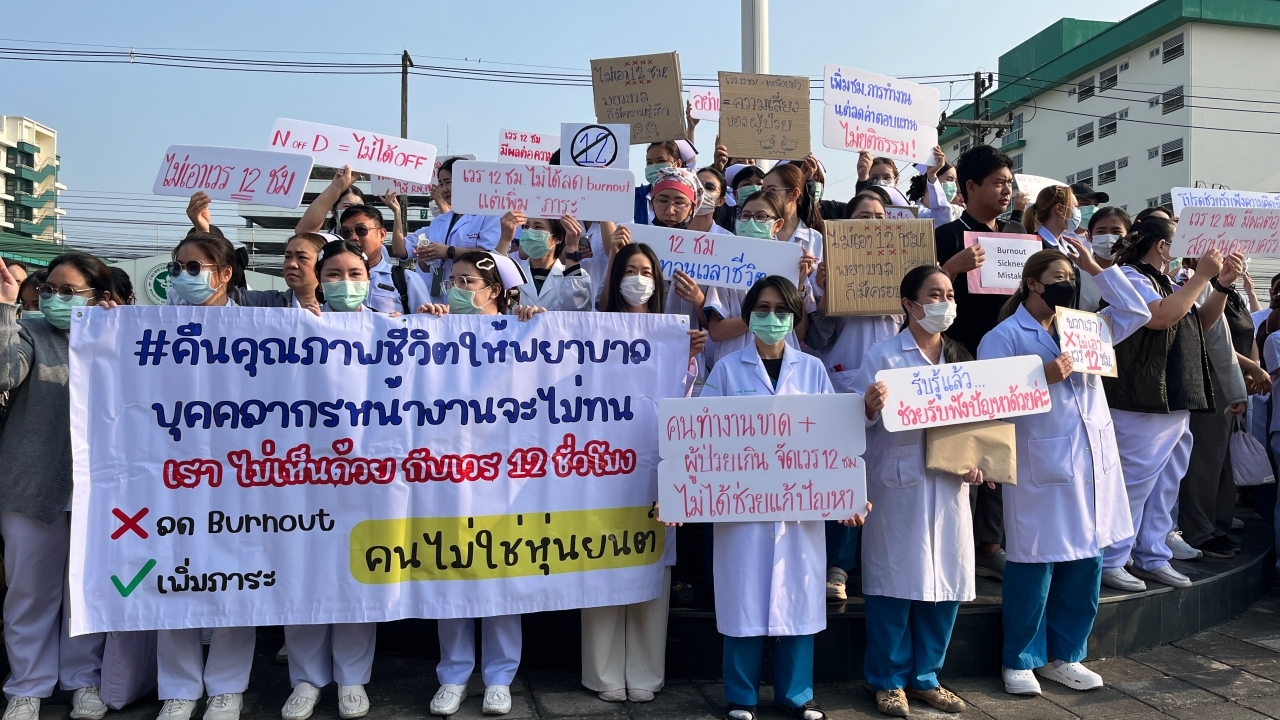
Nurses at Chiang Rai Prachanukroh Hospital held signs opposing the new 12-hour shift limit, urging management to reconsider. They pointed out staffing shortages and misguided solutions that may cause even greater fatigue than before.
On 16 March 2026, reporters described a lively atmosphere at the flagpole area of Chiang Rai Prachanukroh Hospital since the morning. Over 300 professional nurses gathered to express their opposition to the new limit of no more than 12 working hours per day. They argued the policy does not align with the actual workload in public hospitals. Meanwhile, the deputy director received their letter, assuring willingness to listen and emphasizing voluntariness.

This event followed the Nursing Council's announcement of a new standard effective 11 March 2026, setting nurses' work hours to no more than 12 hours per day (including overtime) and no more than 52 hours per week to reduce fatigue. The policy emphasizes an 8-hour regular shift, with overtime capped at 4 hours and a mandatory rest period of at least 11 hours between shifts. Key points include prohibiting continuous work exceeding 12 hours per day, limiting weekly hours to 52, and avoiding quick return shifts to ensure patient safety and nurse well-being. However, nurses raised concerns about insufficient staffing, which may make compliance difficult in some areas.
Nopparat Komat, a skilled professional nurse representing those affected, highlighted management issues. Although the policy aims to give nurses more rest, in reality the current nurse staffing is “insufficient” to organize shifts under the new system.
“Our nursing staff is small compared to the workload and number of beds in public hospitals, which differs greatly from the private sector. Enforcing the 12-hour limit would make scheduling impossible. Nurses would become more exhausted trying to keep up with pressured time constraints. We ask management to listen and maintain the previous system, allowing 8- or 16-hour shifts to be alternated as suited to the work situation,” Nopparat said.

Meanwhile, Chatsuda Saengdao, a nurse anesthetist and representative of the protesting nurses, emphasized the social and personal impact, especially on nurses who have caregiving responsibilities for children and families.
“Finishing work at 8 p.m. disrupts family life, especially for single mothers. How can we pick up children from school at that hour? Four o'clock in the afternoon should be the time when mothers care for their children, but this policy forces us to leave family duties for a system that is unmanageable. We urge management to recognize the small nurses and carefully reconsider these impacts,” Chatsuda said with frustration.
Dr. Premchai Tirrangkul, deputy director of medical affairs, who personally received the letter, reassured the nurses that the policy is voluntary depending on each unit's context.
“We understand that each ward faces different challenges. The communicated policy is voluntary. Units facing difficulties do not have to implement changes immediately. I also confirm 100% that no nurses participating in today's gathering will face punishment or score deductions because your voices are something we are ready to listen to,” Dr. Premchai affirmed.
Most recently, Chiang Rai Prachanukroh Hospital issued an official statement online titled “The Voices of Frontline Workers Always Matter,” thanking all nurses for their dedication. The administration opened the Som Pring Phuang Kaew meeting room to invite representatives for discussions to find solutions fitting the actual workload, aiming for maximum satisfaction and efficiency in patient care.