

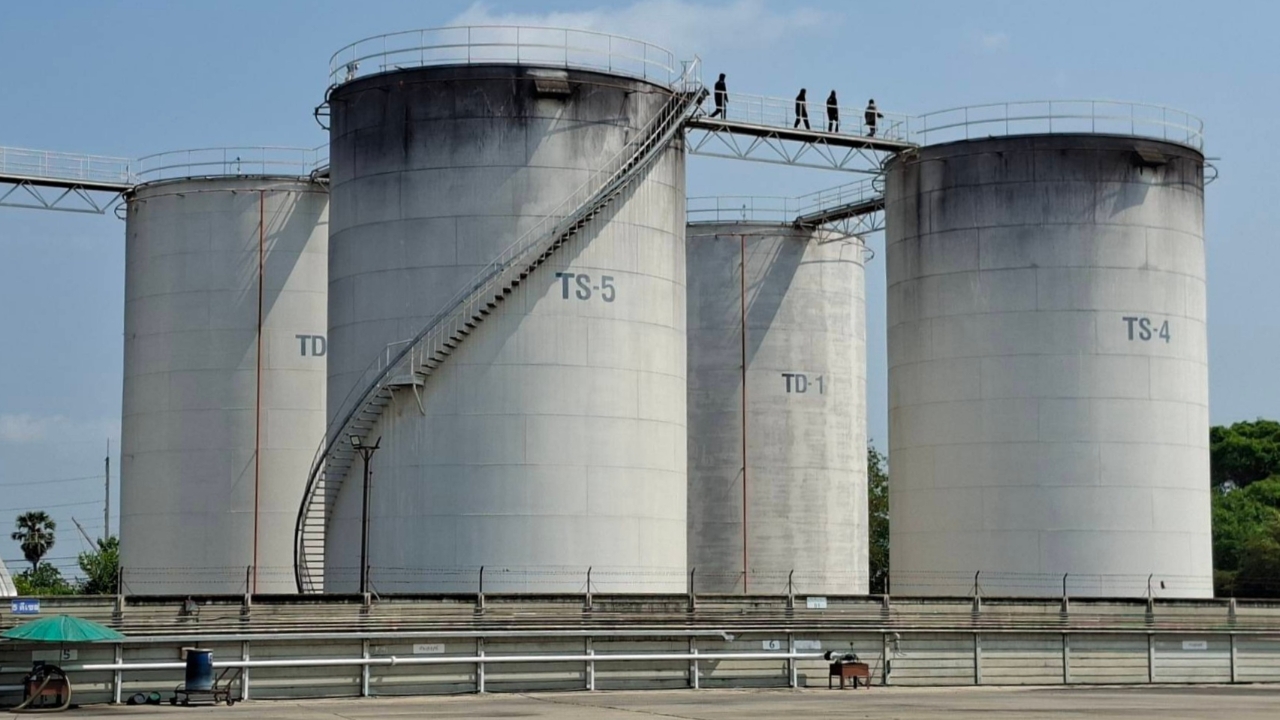
The Consumer Protection Police inspected an oil company in Ang Thong Province after complaints about selling diesel at 40.50 baht per liter, above the official price. They found 331,000 liters of fuel in stock. The company claimed they bought it at a high price but failed to show any documents.
On 19 Mar 2026 GMT+7, Pol. Lt. Gen. Nattasak Chaowanasai, Commissioner of the Crime Suppression Division, ordered Pol. Maj. Gen. Khongkrit Lertsitthikul, Commander of the Consumer Protection Police Division, Pol. Col. Thanathat Sripipat, Acting Chief of Investigation Division 2, and Pol. Lt. Chamroen Kamma, Investigator of Division 2, to lead a team along with officials from the Ang Thong Provincial Energy Office and the Ang Thong Provincial Commerce Office to inspect an oil distribution company in Talat Kruat Subdistrict, Mueang Ang Thong District.

This inspection followed reports received by Police Division 2 and Singburi Commerce Office that a gas station in Singburi Province was charging higher than normal prices to customers. Investigation revealed that the gas station purchased fuel from an oil distribution company in Talat Kruat Subdistrict, Mueang Ang Thong District. Authorities then inspected the oil company, where Mr. Sinchai, 57, the warehouse manager, led the inspection.
Inspection found about 48,000 liters of low-flammability fuel (diesel) stored in tanks, approximately 210,000 liters of high-flammability fuel (Gasohol 95), and about 73,000 liters of high-flammability fuel (Gasohol 91), totaling 331,000 liters of fuel. The total value of the fuel found was 12,520,400 baht.

A company sales employee stated that diesel was sold to customers in Singburi and nearby provinces at 40.50 baht per liter, a price higher than normal. The company claimed they purchased diesel at 39.50 baht per liter, but when asked to provide purchase and payment documents, none were presented.

Officials collected fuel samples to send for quality testing at the Department of Energy Business and for tax inspection at the Excise Department to verify if the fuel falls under excise tax obligations. If violations are found, legal actions will follow.