

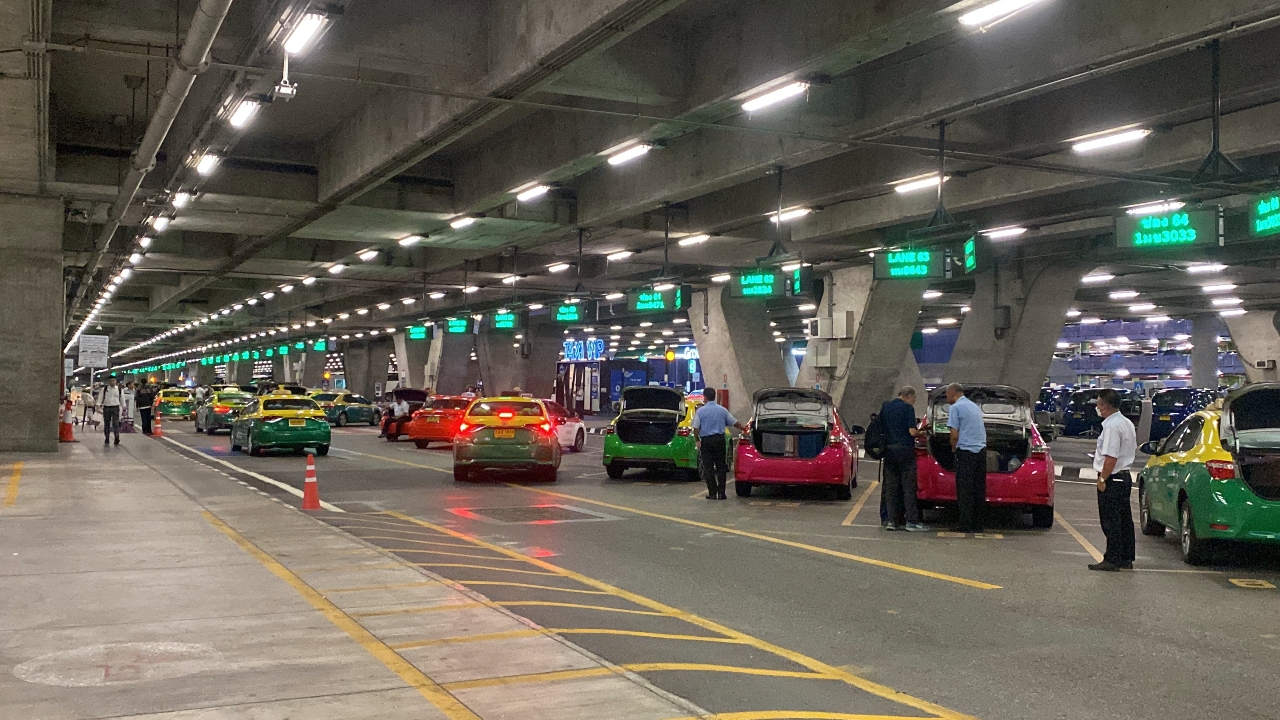
Taxis at Suvarnabhumi Airport have begun gradually suspending services due to a fuel crisis. Drivers say they are not afraid of high fuel prices but worry about running out of fuel. Taxi supervisors confirm there are still enough taxis available for service.
According to Mr. Pallop Chayinthu, president of the Suvarnabhumi Taxi Coordination Association, SUV taxis—large vans serving Suvarnabhumi Airport—have started to suspend services because they cannot find fuel, especially when passengers request long-distance trips. Drivers fear running out of fuel mid-route without the ability to refuel, which may reduce the number of taxis serving the airport.
Currently, Suvarnabhumi Airport has about 5,000 to 6,000 taxi association members, but only around 2,500 are actively operating. Due to the fuel shortage, some members have stopped running. Those still operating may reduce service hours, such as working only in the morning since refueling at night is difficult, and may limit service to short routes out of fear of running out of fuel without being able to refill.

“The current impact on taxis is not from high fuel prices but from fuel shortages and inability to refuel. We want the government to help, but we must wait for the official government with full authority to take office. The association plans to submit several proposals to the government, including changing the fare system from meters to an app-based calculation,” he said.
On 19 Mar 2026 GMT+7, reporters visited the Suvarnabhumi taxi parking lot to interview SUV taxi drivers. Mr. Paisan, an SUV driver using a diesel Toyota Fortuner, said he has been affected. Last night, after driving from Rama 2 to Rama 3, he found no diesel at any station until Rama 9. After dropping off passengers from Mahachai, he had to search for fuel. Although fuel prices have risen slightly, if they increase by another 3 baht, it will seriously affect drivers. Without fuel, he cannot pick up customers, which greatly impacts income. He currently avoids traveling to provinces, fearing lack of fuel.

Mr. Bodin Sangthong, another SUV driver using a diesel Fortuner, said he has not yet been personally affected as he hasn't traveled out of town. However, if he must travel, he calculates whether he has enough fuel since he cannot be sure if fuel will be available ahead. He said, “Would you go if you didn’t know when or where you could refuel? I wouldn't want to go. If I run out of fuel, I don't know when I'd get to queue for fuel.”
“Taking passengers to provinces used to be an opportunity, but now fuel scarcity causes us to refuse trips, reducing income. We aren’t afraid of high fuel prices but fear fuel unavailability. Currently, 700 baht worth of fuel is enough for some trips, but after two rounds, we must figure out where to refuel. If fuel is available, we’re lucky; if not, we must stop or avoid queuing,” he added.

Taxi supervisors stated that of the approximately 2,000 taxis actively operating, most use LPG or NGV gas, with some electric vehicles. SUVs, which are large vans, constitute a small portion of service vehicles, so the impact is limited. Some vehicles have also reached the end of their service life and have stopped operating. They assured that there are still enough taxis available to serve passengers arriving at the airport.