

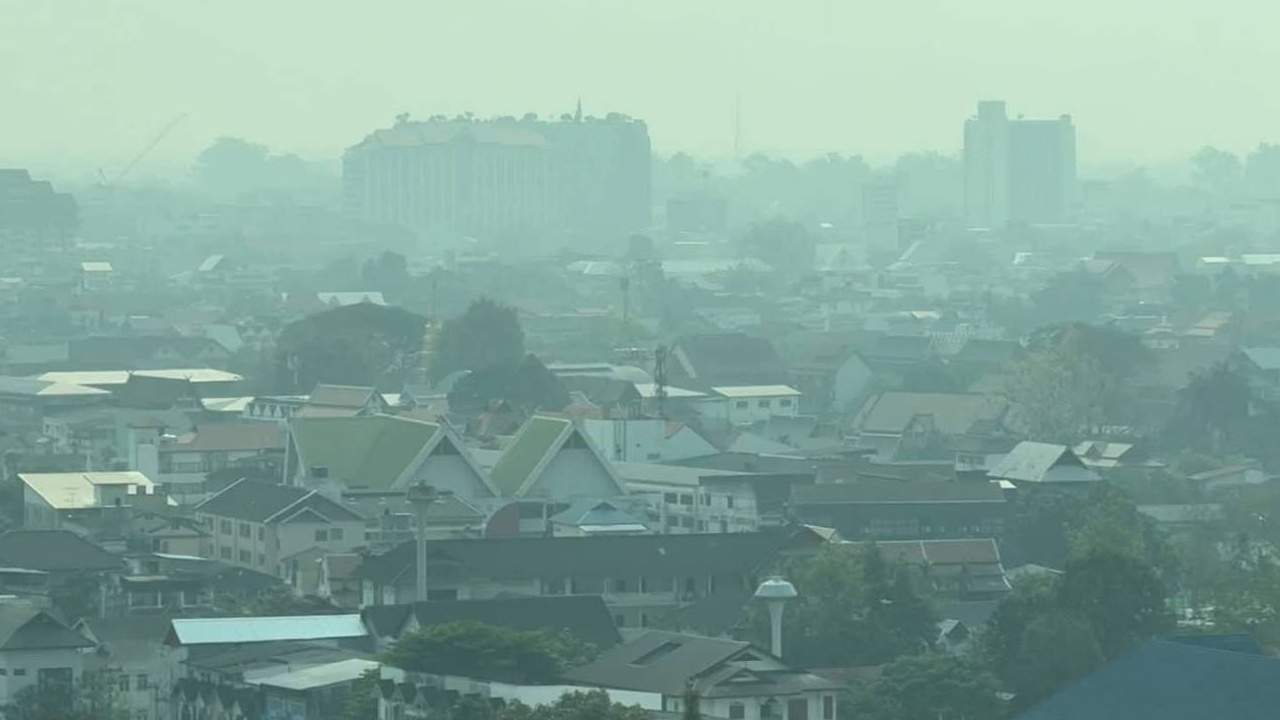
Wildfires in Chiang Mai are spreading rapidly. Recently, 158 hotspots have been detected across the province. PM 2.5 dust levels have started to rise sharply, and white smoke is now covering Chiang Mai city.
On 24 March 2026, reports indicate the wildfire situation in Chiang Mai is deteriorating rapidly due to hotter, drier weather, delayed rains, and ongoing illegal forest burning. As a result, wildfires are simultaneously spreading throughout the province.
According to the latest data from the Chiang Mai Smoke and Wildfire Command Center, this morning 158 hotspots were detected across multiple areas, a fivefold increase from the 33 spots found at the same time yesterday. Mae Taeng and Chiang Dao districts have the most severe fires with 29 and 28 hotspots respectively, followed by Doi Saket with 14, Mae Wang 11, Samoeng 11, Hang Dong 10, and nine other districts affected, totaling 15 districts. Since 1 Jan to 23 Mar 2026, there have been 967 cumulative hotspots.
The Chiang Mai Smoke and Wildfire Command Center is coordinating with local areas to urgently address the fires on the ground and is also working with aerial teams. They have requested helicopter support from the Ministry of Natural Resources and Environment to help scoop water to extinguish fires in areas inaccessible by foot.
Today, the Ministry’s helicopter has been deployed to fight wildfires in Sri Lanna National Park, where the fires are deep in dense forest with steep terrain. Ground teams face difficulty and high risk reaching these spots, so helicopter support is crucial to contain the fires.
In Nong Han subdistrict, San Sai district, wildfires spread rapidly in steep terrain. The Provincial Disaster Prevention and Mitigation Department’s helicopter was called in to assist ground teams at two points. The fires have now been brought under control, with firebreaks being created and patrol teams deployed.
The expanding wildfires, especially around Chiang Mai city, have caused white smoke to drift over the urban area, which lies in a basin. This traps the smoke in the air, causing rapid deterioration in air quality with pollution levels rising sharply and expected to worsen.
As of 13:00, data from the Pollution Control Department’s air quality monitoring station in Chang Phueak subdistrict, Mueang district, Chiang Mai shows the Air Quality Index (AQI) has risen above standards to 104, with PM 2.5 levels at 38.8 micrograms per cubic meter. In Hang Dong subdistrict, Hod district, AQI reached 157 with PM 2.5 at 58.7 micrograms per cubic meter.
Today, Chiang Mai city is covered in white smoke haze with a strong burning odor, clearly affecting residents with symptoms like eye, throat, and nose irritation. People with allergies may experience skin rashes on the face and body. Residents in affected areas are advised to protect their health by wearing masks and avoiding prolonged outdoor exposure.