

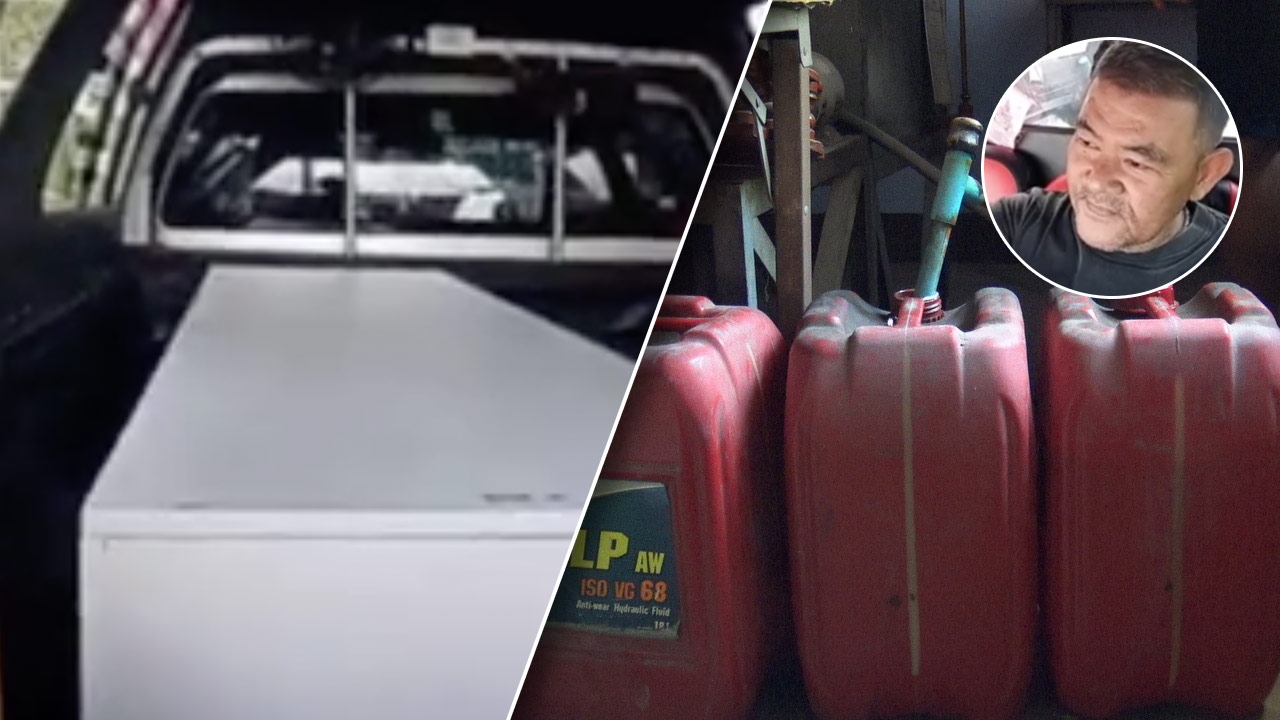
Chonburi – The entire gas station was shocked after a mortician, fed up with being refused diesel to cremate a body, returned with the deceased in a coffin and fuel cans to prove he was not hoarding fuel.
On 29 March 2026 in Chonburi province, reporters described the fuel situation as a mortician recorded a video expressing his frustration. He had gone to buy diesel to fill cans for cremating a deceased person, but the station refused to fill the cans. Later, he brought the deceased in a coffin along with three fuel cans in a hearse to the station’s parking lot to confirm that the fuel he wanted was truly for cremation, not hoarding. Eventually, the station filled the cans as requested.
Reporters later visited a temple along Route 344 in Ban Bueng municipality, Ban Bueng district, to meet the clip owner, Mr. Preecha, 48, who is the cremation officer at the temple. He explained that the deceased’s family agreed to have the body cremated because they had limited income, and the hospital needed space to store bodies of new arrivals. Meanwhile, local rescue units were clearing the cemetery, making burial inconvenient until the clearance finished, which would take a long time. A benefactor kindly provided fuel for the cremation.
He then went to the gas station to ask if they could fill the cans for cremation fuel, but the station refused. Despite repeated requests, the station did not agree. This morning, he brought the coffin with the deceased from the hospital along with three 18-liter fuel cans previously purchased from the station to prove his intent was not to hoard fuel. During the live broadcast, a staff member was seen talking to the station manager for about 1-2 minutes before returning to say they would fill the cans.

Mr. Preecha further revealed that he has worked as a mortician since 2005, back when the temple’s cremation oven used charcoal. When it was upgraded to an electric oven fueled by diesel, he has regularly bought diesel in cans from this station. The recent fuel shortage caused by the war made diesel scarce, but cremation fuel is essential. When refused fuel for his cans, he understood the suspicion of hoarding but insisted he was buying fuel solely for cremation. Today, having to cremate a deceased person, he brought the coffin from the hospital to the station and opened it to prove it was a real corpse, confirming no fuel hoarding. This reflects the challenges morticians face, contrasting with news reports of vehicles and machinery being refused fuel at stations.