

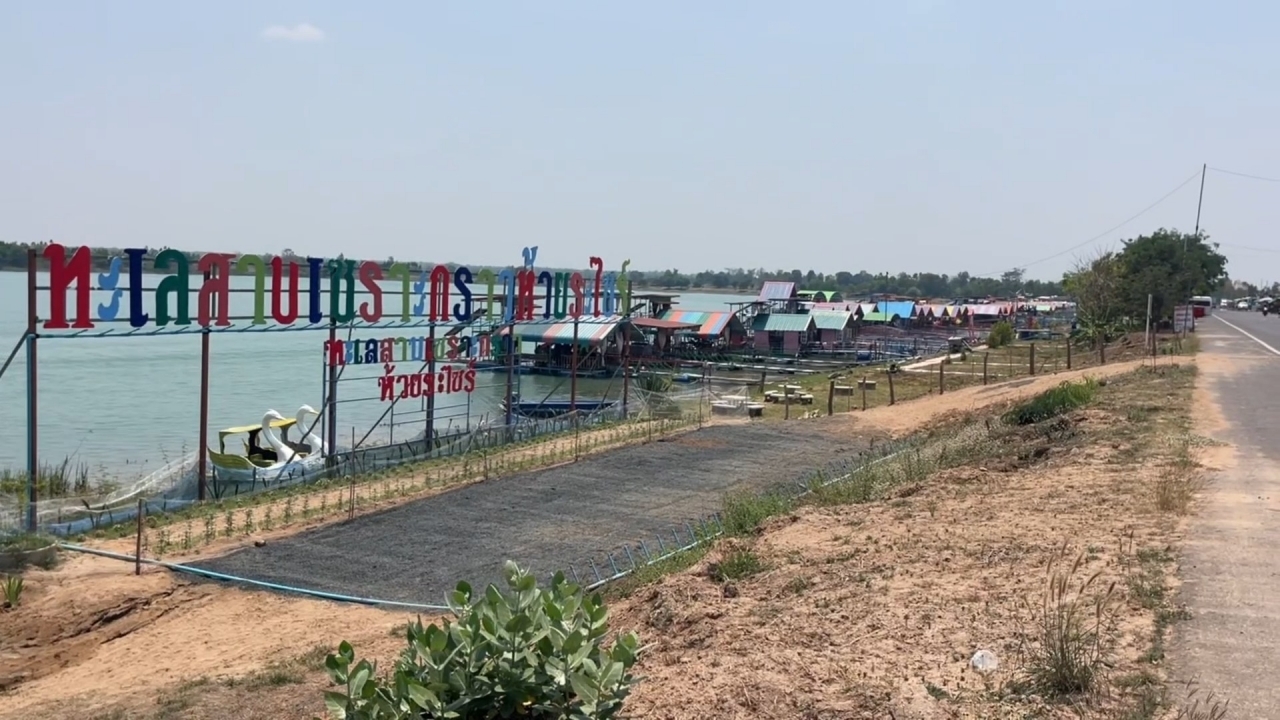
Surin - The surge in fuel prices has caused tourism to slump at Sero Krao Lake and Huai Rasai. Income from floating raft businesses has dropped by more than half, with fewer tourists compared to the same period last year. The situation has reversed dramatically, prompting calls for the government to urgently address the high fuel prices that have worsened the economy and caused widespread hardship among the people.
On 29 March 2026, reporters reported that rising fuel prices have increased the cost of living, causing people to hesitate to leave their homes. This has led to a domino effect of negative impacts on shops and restaurants across the board.
This is especially true for popular cooling-off tourist spots such as Sero Krao Lake and Huai Rasai in Swai Subdistrict, Mueang Surin District, Surin Province. Normally, from March to April each year, families bring their children to swim and cool off at these locations, which are crowded during school holidays. Rafts are fully booked, boosting income for local shops. But this year, during the same period—including weekends—visitor numbers have been very low. Rafts are mostly empty with few customers; some shops have had no customers all day. They still have to bear the costs of employees, food ingredients, and venue fees.

Ms. Pornchanok Poonmun, 36, owner of Indy Raft, said that usually all rafts in the area are fully booked, but this year they are empty. Some get customers while others do not, a stark contrast to last year. The situation has completely reversed, with fewer customers than in any previous year. March is typically very busy, unlike last year. The main cause is high fuel prices. Income has dropped by more than half—from 80-90% last year to less than 50% this year. What they earn barely covers purchasing costs, leaving nothing to save, unlike in previous years. All shops in the area are struggling alike.

She wants the government to fix the fuel and economic problems, as the rising prices of goods have increased costs to unsustainable levels. They have had to raise food prices by 5 to 10 baht per dish, causing a chain reaction of negative effects. No one wants to invest now as the situation is very bad.