

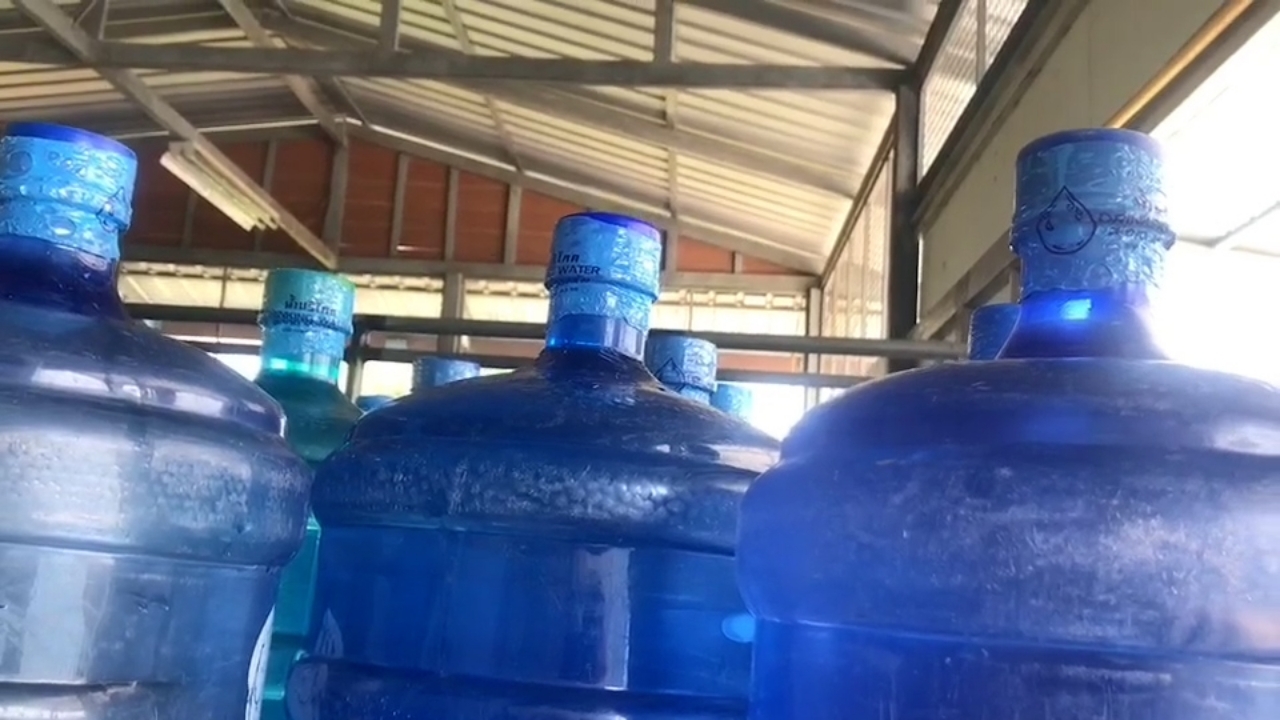
In Surin, the owner of a drinking water factory in Sangha district reports that soaring fuel costs have cut income by more than half, dropping from hundreds of thousands to just 50,000-60,000 baht monthly. The owner plans to raise the price of water tanks to 15 baht due to rising transport and plastic bottle costs that have steadily increased beyond manageable levels.
On 29 March 2026, reporters covering the route 24 area in Sangha district, Surin province, found that drinking water factory operators are severely affected by continuously rising fuel prices.
Mr. Paisan Jankhiao, 60, owner of the Thananthip drinking water factory located at 156/1 Sala Village, Moo 3, Ban Chob subdistrict, Sangha district, Surin province, revealed that he has been in the drinking water business for over nine years. Previously, he earned over a hundred thousand baht per month, but current income has fallen to about 50,000-60,000 baht monthly, a decline of more than half. This is due to the steadily rising fuel costs, including expenses for transporting water to customers and the increasing prices of raw materials such as plastic bottles and water tanks.

Mr. Paisan said that the small water tank price was originally 10 baht, then gradually increased to 12 baht following rising costs. However, with fuel prices now rising by about 6 baht per liter, the transport expenses have been directly impacted. Deliveries in Sangha district occur two to three times daily. He now must prepare to raise the water tank price to 15 baht per tank because of significantly increased costs, especially the heavy impact of fuel prices. He appealed to the government to urgently address fuel price issues to alleviate difficulties faced by small business operators and local residents in border areas, enabling them to continue their businesses and daily lives as usual as soon as possible.

The rising fuel prices continue to broadly affect various operators in the Thai-Cambodian border area, who inevitably face increased costs.