

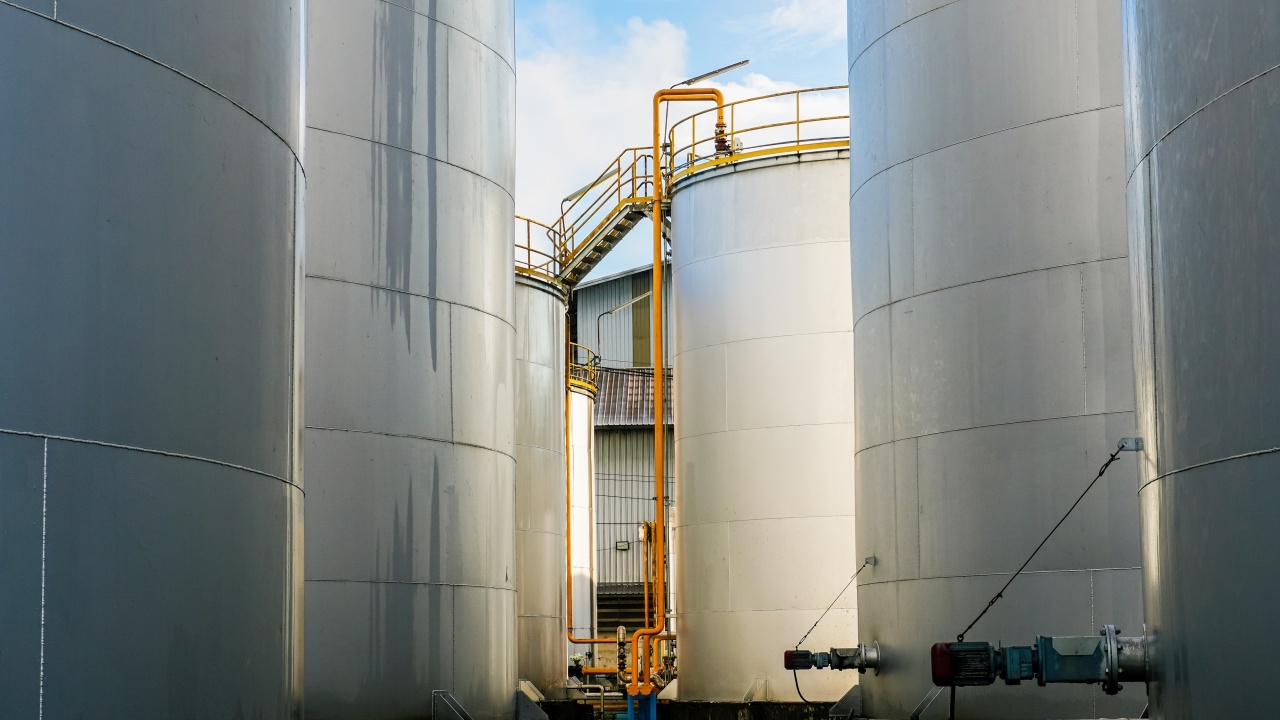
(Illustrative image)
The Department of Special Investigation (DSI), along with investigators, is preparing to inspect a major oil depot in Surat Thani Province after detecting irregularities involving large oil storage in March.
On 2 April 2026, officials from the Department of Special Investigation, together with investigators from Surat Thani Provincial Police, prepared to examine evidence and interview relevant personnel at an oil depot owned by an oil trader under Section 7, located at the mouth of the Tapi River in Surat Thani Municipality. This follows an operation on 1 April led by Police Lieutenant General Rutthapon Naowarat, Minister of Justice, alongside Lieutenant General Adul Boonthamcharoen, Deputy Minister of Defence; Police General Thatchai Pitanilabut, Deputy Commissioner of Police and Director of the Fuel Crime Suppression Center; Major General Suwitcha Jindakhum, Deputy Commander of Region 8 Police; and Major General Suwat Suksri, Commander of Surat Thani Provincial Police. They joined forces with relevant agencies to inspect oil depots operated by traders under Sections 7 and 10 of the Fuel Trade Act 2000. These large traders are responsible for fuel transport in upper Southern Thailand, covering six locations, to implement Prime Ministerial Order No. 3/2026 dated 20 March 2026 aimed at resolving and preventing fuel shortages, coordinating with related agencies.
During the site inspection, an irregularity was found at one oil depot concerning gasoline sales. In March, gasoline sales were about 400,000 liters, significantly lower than February’s approximately 1,700,000 liters. Meanwhile, diesel sales in March were around 10,000,000 liters, exceeding February’s 4,800,000 liters by roughly 100%. This was abnormal since nationwide fuel sales in March rose by only about 20% compared to February.
Moreover, data shows that the oil depot in Surat Thani belongs to traders under Sections 7 and 10 who supply fuel to smaller retailers in upper Southern Thailand. During the government's fuel price control policy, severe fuel shortages occurred, yet normal orders from refineries continued. Authorities thus coordinated this inspection to gather information and conduct investigations. Should evidence of wrongdoing emerge, the case will be transferred to the Department of Special Investigation for prosecution under special investigation laws within the criminal code, which carry heavy penalties and may extend to anti-money laundering actions.