

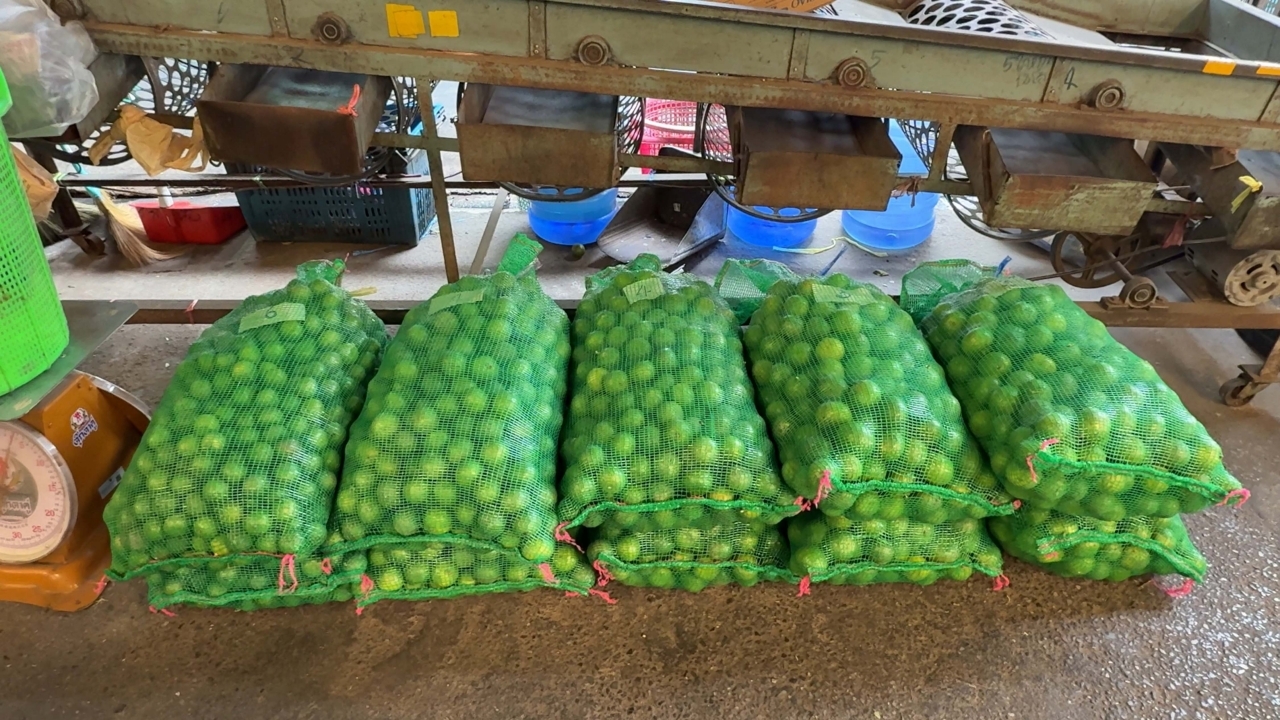
In Khon Kaen, soaring oil prices have driven lime prices up to nearly 8 baht each. Vendors report this is the highest price in four years due to expensive fuel, which has pushed transportation costs up by 1,000 baht per trip. They say, “We are exhausted and can hardly afford these transportation expenses.”Tags: [Khon Kaen, lime prices, oil prices, transportation costs, vendors]
The ripple effects from the Middle East conflict have caused oil prices to skyrocket relentlessly. Expensive fuel leads to rising prices for goods, impacting the cost of living in an interconnected economic cycle. People are facing tighter budgets and must bear unavoidable daily expenses that continue to increase.Tags: [Middle East conflict, oil prices, cost of living, economy, inflation]
At 8:00 a.m. on 3 April 2026, reporters visited Sri Muang Thong Market in Khon Kaen Municipality, the largest wholesale vegetable market in Khon Kaen province. They found that lime prices have risen to their highest in 3-4 years—2,000 baht per sack, averaging 8 baht per lime. Vendors explained that the increase is mainly due to transportation costs rising by about 1,000 baht per trip, as diesel prices have climbed to 47.74 baht per liter.Tags: [Khon Kaen, Sri Muang Thong Market, lime prices, diesel price, transportation costs]

Ms. Sasivimon Saelim, 50, owner of Oh Lime Shop in Khon Kaen, said lime prices are quite high, the highest in 3-4 years. The largest sized limes average 8 baht each because they are carefully selected for size. If buying directly from orchards without size selection, prices are about 4 baht per lime.Tags: [Sasivimon Saelim, lime sizes, lime prices, Khon Kaen]
“Large-sized limes carefully selected from the orchard cost 1,500 baht per sack, but now because of high fuel and transportation costs, we have to sell them at 2,000 baht per sack. Each sack contains about 300 limes. Regular lime buyers understand the expensive situation but still complain. Some who used to buy the Ramphai lime variety have switched to the Phichit lime variety,” she said.Tags: [lime varieties, transportation costs, prices, vendors]
Ms. Sasivimon added that customers who buy limes to resell tend to use the Phichit lime variety, while those who cook or own restaurants still use the Ramphai lime but may reduce quantities. For example, where they once bought 2-3 sacks daily, now they buy only one sack and use lime powder as a substitute. The main reason for the price hike is increased diesel and transportation costs, which have risen by 1,000 baht per trip—from 5,500 baht to 6,500 baht. When divided by the number of lime sacks per trip, transportation adds about 60 baht per sack.Tags: [lime buyers, lime varieties, transportation costs, price impact]

“We are very tired from transportation costs that are nearly unbearable. Previously, filling fuel cost about 2,000 baht for a round trip, but now it has nearly doubled. If prices reach 50 baht per liter, we may pause operations, revise plans, or find partners running the same route to share fuel costs and coordinate deliveries. We must adapt because high transportation costs lead to expensive limes, which follows market dynamics,” she said.Tags: [transportation challenges, fuel costs, market adaptation, lime prices]