

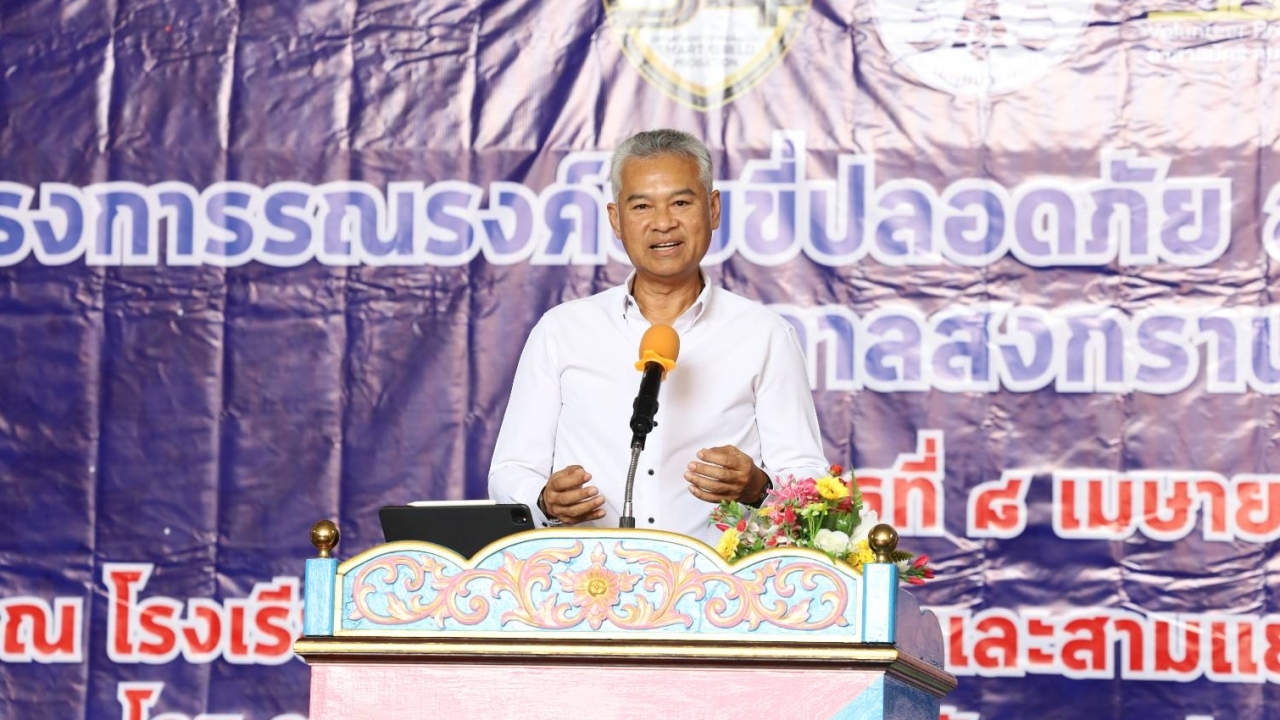
The Director-General of the Department of Probation revealed that on the fourth day of the 2026 Songkran Festival, there were 1,463 drunk driving cases, bringing the cumulative total to 3,076 cases. The top three provinces with the highest drunk driving cases were: 1. Samut Prakan Province.
On 14 April 2026, Police Lieutenant Colonel Piya Raksakul, Director-General of the Department of Probation, disclosed the monitoring results of cases during the 2026 Songkran Festival. On 13 April, the fourth day of intensified control measures, a total of 1,544 cases entered the probation process.
These consisted of 1,463 drunk driving cases, accounting for 94.7%; 1 reckless driving case, accounting for 0.1%; 79 drugged driving cases, accounting for 5.1%; and 1 racing case, accounting for 0.1%.
The cumulative total over the four days from 10 to 13 April was 3,294 cases, divided as follows: 3,076 drunk driving cases, or 93.4%; 4 reckless driving cases, or 0.1%; 213 drugged driving cases, or 6.47%; and 1 racing case, or 0.03%.
The top three provinces with the highest number of drunk driving cases were: 1. Samut Prakan with 317 cases, 2. Chiang Mai with 276 cases, and 3. Nonthaburi with 266 cases.
The Director-General of the Department of Probation stated that the department places great importance on rehabilitating offenders and preventing road accidents. It has taken proactive measures by collaborating with partners across sectors to conduct ongoing campaigns under the themes “Drive Safely, Reduce Speed, Reduce Accidents” and “Probation Works Together to Create a Safe Society, Reduce Road Hazards.” Offenders were engaged in community service at nine public service points with 345 participants. Additionally, there was one activity to improve landscapes in accident-prone areas involving 13 participants, and a legal and alcohol hazard awareness training session aimed at fostering awareness and behavioral change among offenders, attended by 23 participants.
“The Department of Probation not only cares for offenders but also prioritizes reintegrating them into society by providing opportunities to contribute positively. This transforms their role from offenders into key drivers of road safety and collaborators in building a sustainably safe society,” the Director-General concluded.