

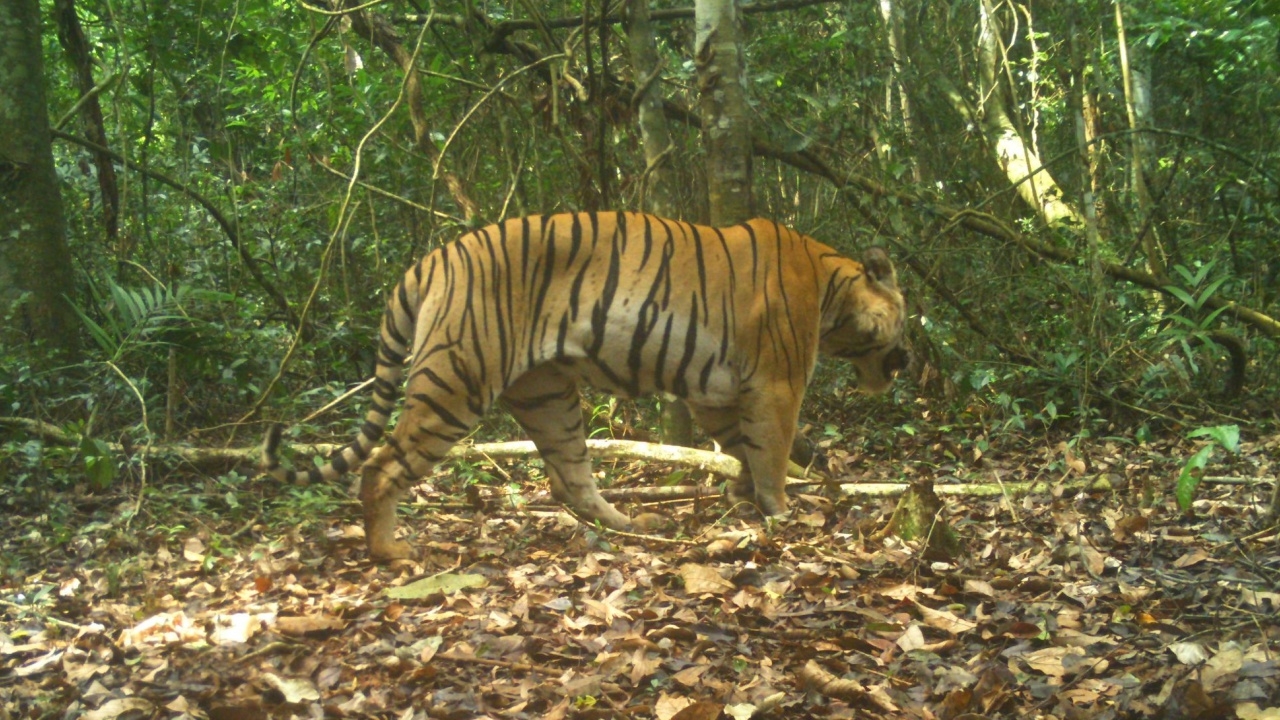
"Srikosa," tiger TLT-119M of Dong Phayayen-Khao Yai, has died naturally. Researchers discovered his collar emitting a signal along with skeletal remains, identifying him as a key individual in the tiger population tracking database within this ecosystem.
On 17 Apr 2026 GMT+7, the Facebook page of the Department of National Parks, Wildlife and Plant Conservation posted news of the death of "Srikosa" the tiger of Dong Phayayen-Khao Yai. The message stated that the research team at Dong Phayayen-Khao Yai Research Station confirmed the death of "Srikosa," or TLT-119M, a male tiger considered a significant individual in the tiger population tracking database of the Dong Phayayen-Khao Yai ecosystem.
From database code to a meaningful name
TLT-119M first appeared on camera trap records in 2019 within Thap Lan and Pang Sida National Parks. In April last year, he was fitted with a satellite collar to study his spatial behavior and ecology and was officially named "Srikosa."
Data from the collar revealed the life of a powerful young tiger — Srikosa held a vast hunting territory covering both parks, cared for two female tigers, and most notably fathered three cubs with the Thap Lan female (TLT-106F). Camera traps captured the female proudly walking with a full belly.
First signs before his passing
Images from camera traps in January showed worrying signs as Srikosa had swelling on his left elbow and was walking on three legs. Such an injury for a predator dependent on its physical condition implies a much harder fight for survival.
The final chapter deep in the forest
In April, when researchers checked the last coordinates transmitted by the collar, they found skeletal remains still wearing the satellite collar around the neck. A thorough survey found no signs of poaching or human threats. However, pangolin scales were scattered nearby, suggesting pangolin was Srikosa's last meal, consistent with his weakened state from the leg injury.
An unending cycle
Srikosa’s loss reflects the harsh realities faced by tigers competing for territory. Yet in the circle of life, he fulfilled his role fully by leaving behind at least three offspring in this forest. He passed away peacefully in the land he loved. His cubs will grow and hunt in the territory their father once marked, allowing the forest’s life cycle to continue.
Thanks to information from the Facebook page of the Department of National Parks, Wildlife and Plant Conservation