

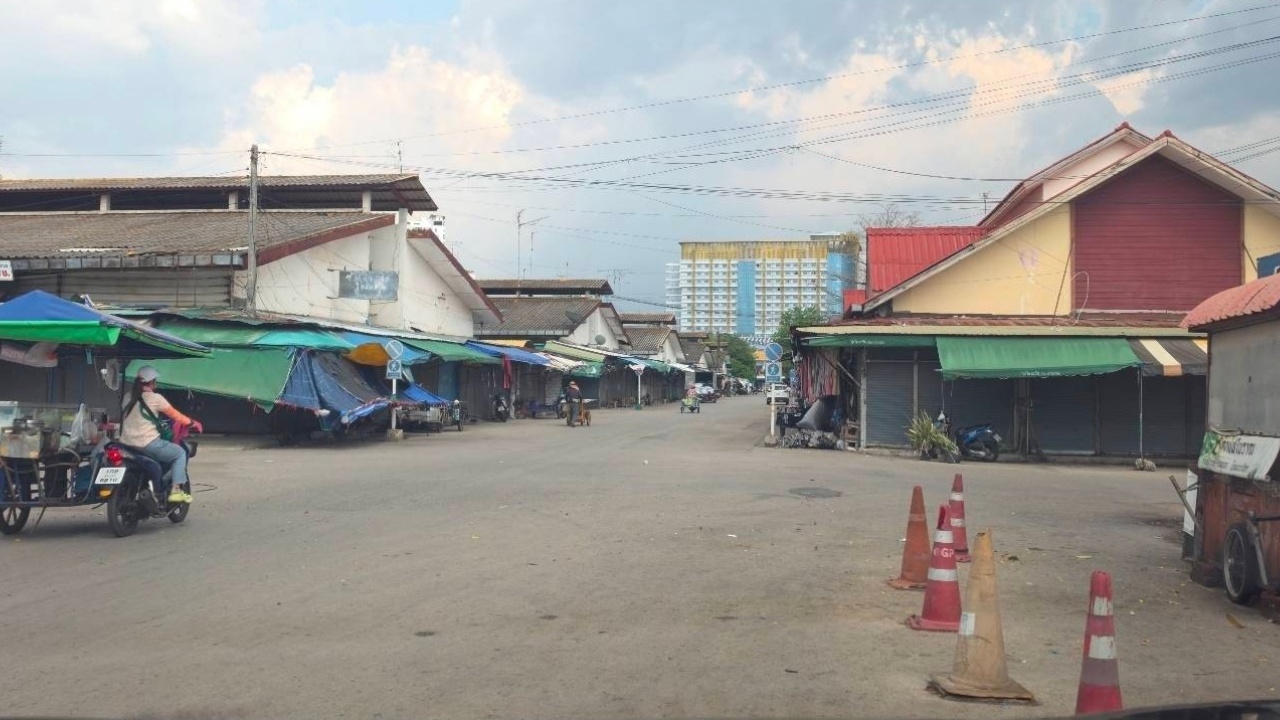
Rong Kluea Market is very quiet; many shops have reluctantly closed temporarily. Van operators complain their income has fallen short of expenses, forcing them to switch to cargo hauling and delivery work to earn more.
On 27 Apr 2026 GMT+7, reporters observed a drastic change in the once-bustling Rong Kluea Market in Aranyaprathet District, Sa Kaeo Province, a key border trade center in Thailand. Formerly crowded with tens of thousands of tourists and merchants daily, it has now become quiet. Many shops remain open quietly awaiting customers, while others have had to close temporarily due to unsustainable costs.

A field survey found about 70-80% of shops still open. However, foot traffic has clearly decreased. Many walkways are noticeably empty, unlike usual times packed with Thai and foreign buyers. Multiple business owners agreed their incomes have dropped sharply, with some days nearly no customers at all. Meanwhile, rent, labor wages, utilities, and other costs remain constant, forcing many families to struggle to survive.

Mr. Boontian, 69, a van operator serving the Sa Kaeo border, said he used to mainly transport passengers, especially tourists and traders coming to and from Rong Kluea Market. But as travel declined steadily, so did his income, which is no longer enough to cover daily expenses.
“Now I can’t survive by carrying passengers alone. Income isn’t sufficient. I’ve had to adapt by taking cargo hauling and delivery jobs to have money for daily expenses and support my family.”
Boontian added he hopes the market regains its former vibrancy because when people come to shop or visit, all local occupations benefit—not just traders but also drivers, laborers, and workers.

Mr. Manoch, 49, another operator of van and tuk-tuk services, said the current situation clearly impacts the local economy. Rong Kluea Market is an important hub connecting international trade. When travel declines or restrictions arise, people hesitate to use its services. Previously, the market was lively with constant passengers; now it is very quiet. Many have had to find side jobs, some hauling goods, others working elsewhere, because relying solely on van income is no longer enough.
As a border resident, he wants the border checkpoint reopened or trade restarted soon to revive the local economy. But if that cannot happen quickly, everyone must continue adapting and finding ways to survive.