

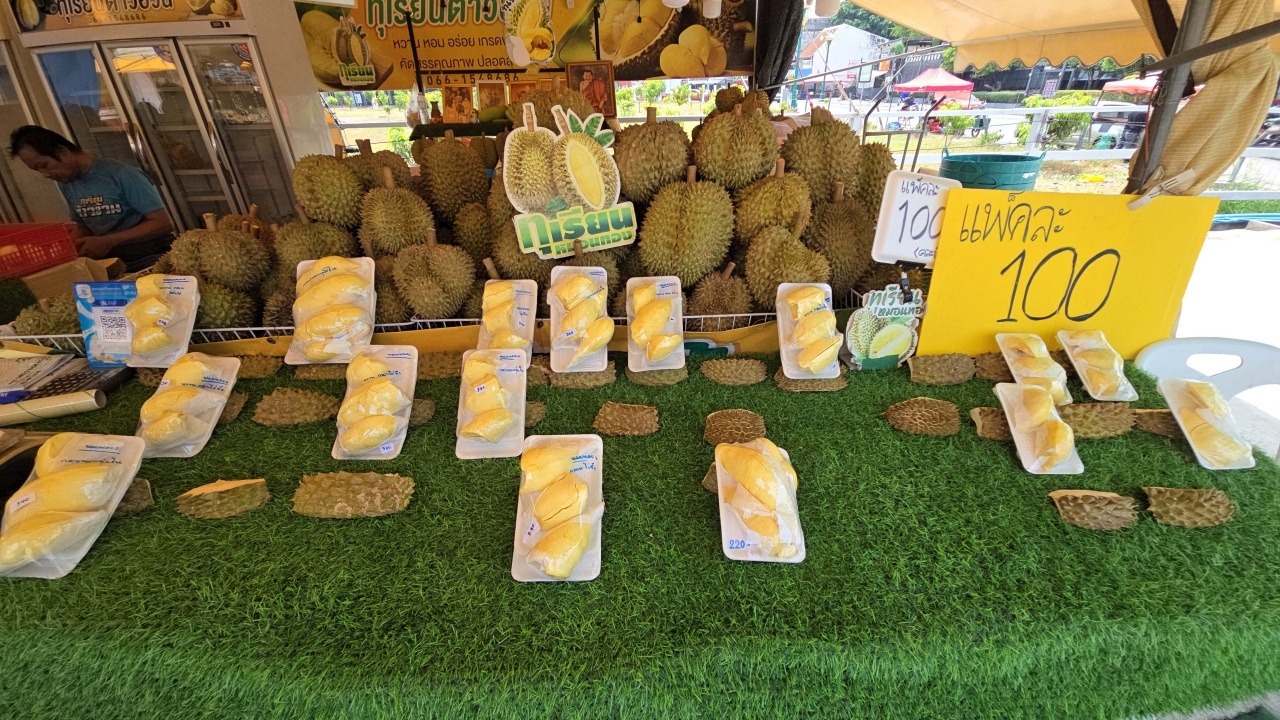
Khon Kaen small traders disagree with the Ministry of Commerce's decision to engage a famous influencer to live-stream selling durians at 100 baht each. They believe this will ruin the market and could impact the average price and market structure in the long term. They note that customers now focus on cheap goods and urge for a solution that supports both sellers and buyers.
At 11:00 AM on 28 April 2026, reporters visited durian stalls at the Khon Kaen Train Market following a controversy over the Minister of Commerce and influencer Pimrypie live-selling durians at 100 baht each. In the livestream, Pimrypie claimed these were grade A durians. Later, the Ministry of Commerce clarified that this was a promotion by online sellers to promote domestic durian consumption. The durians were of a lower grade, not export grade, with good quality but less attractive shape. The price per kilogram is lower than export grade, currently averaging 140–150 baht per kilogram, which aligns with market mechanisms and product quality during the season.

A survey of the durian sales atmosphere found it less lively than last year. Each stall offered promotions with packs priced at 100 baht to give customers options to buy for consumption. Many customers are concerned about expenses and have shifted to more economical buying behaviors. Stall owners unanimously said selling 100-baht packs is easier than selling individual fruits or larger packs. They believe the controversy over 100-baht durians will definitely affect market prices because customers now focus on quantity, value, and low prices to meet their needs.
Ms. Puk Pimsorn, 33, a seller, said her store sources durians from orchards. From the store's perspective, selling durians at 100 baht each is impossible regardless of grade, as the price per kilogram already exceeds 100 baht. Even selling at 100 baht per kilogram by fruit would cause losses.
She explained that selling durians at 100 baht each will definitely impact market prices, making it impossible for others to sell without losses. Because the government supports sellers offering low prices, others cannot compete, and customers turn to cheaper options. When sales drop, damage and losses occur. Durian prices now are not very high, but customer numbers have dropped significantly compared to last year since durians are abundant and sold in many places, spreading customers out. She hopes prices are controlled to avoid being too low, as the store buys at high cost; selling cheaply would be unprofitable and selling at 100 baht per fruit would cause severe losses.
Ms. Sommai Panasri, 55, owner of Tiao Ouan Durian Shop, said selling durians at 100 baht each will cause sellers charging normal prices to lose sales. Good quality durians will lose customers because buyers flock to cheaper options. Additionally, the current poor economy, high fuel prices, and expensive transportation further affect durian shops, making sales quiet. Since Songkran until now, business has been very slow, risking losses. The shop has invested 200,000–300,000 baht and is now just trying to survive. The 100-baht durian sales are believed to further impact durian shops by reducing their sales even more.

Although these are said to be lower-grade durians, if the price is cheap, customers will buy them. Nowadays, some customers do not prioritize quality but focus on quantity and low prices first.
The durian sales atmosphere this year is much quieter than last year due to various economic factors, including energy costs, especially high fuel prices. Personally, she does not want durians to be sold below cost because it would hurt other durian shops, causing customers to buy only cheap goods. This also affects other expenses such as stall fees and employee wages.
She wishes to appeal to the Minister of Commerce to oversee trade so that both sellers and consumers can sustain their livelihoods.