

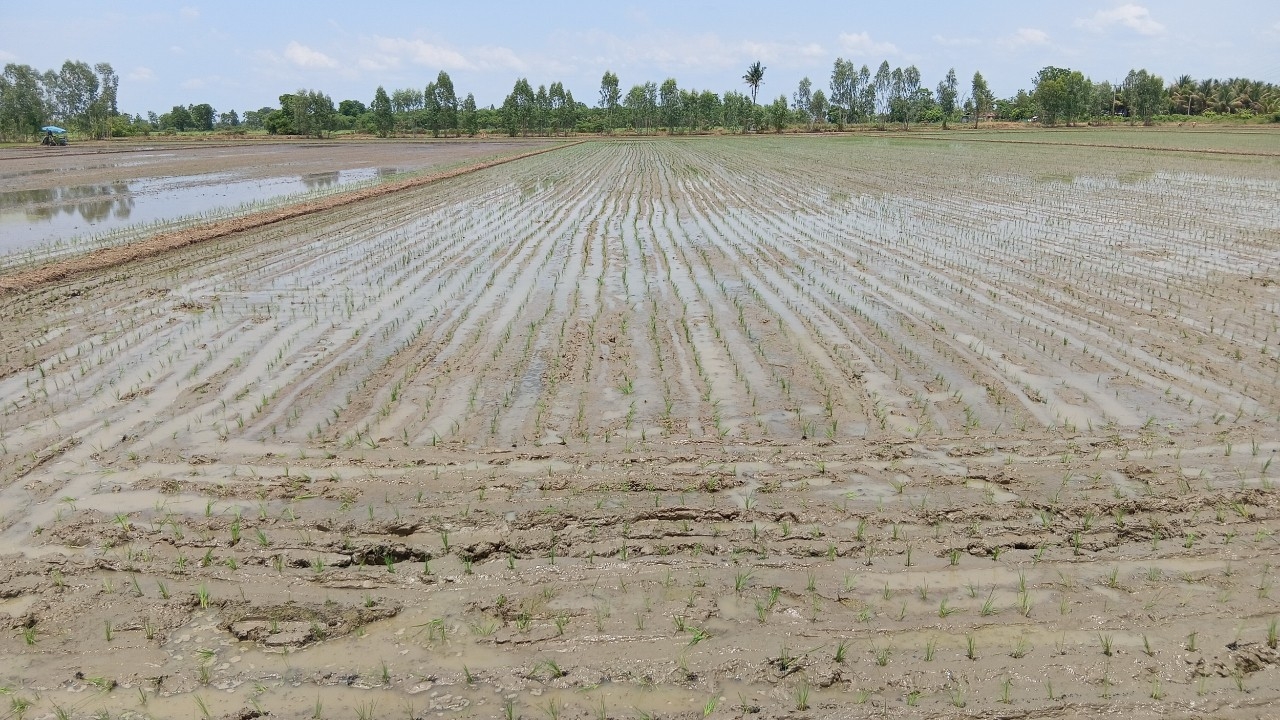
Farmers take auspicious timing to sow rice on "Royal Plowing Day 2026," believing it is a lucky day to begin planting, hoping the crops will grow well and yield good, pest-free harvests.
On 13 May 2026 GMT+7, it was reported that "Royal Plowing Day" is an important day for farmers, marking the auspicious time to start rice planting as the rainy season approaches. It is traditionally believed that rice sown on this day will grow well and produce a good harvest free from pests. Farmers in various areas, including Ang Thong, Nakhon Sawan, and Kamphaeng Phet provinces, have placed rice seeds into seed-sowing machines to scatter them over prepared rice fields that are ready for planting.

According to Somchai Buathet, a farmer from Wang Ma subdistrict, Ladyao district, Nakhon Sawan province, he sowed dry-field rice in anticipation of the rains. He said today is a good day as it is Royal Plowing Day, a tradition passed down since ancient times. Sowing rice on the day of the Royal Plowing Ceremony is believed to bring good fortune and to honor Mae Posop, the sacred rice goddess who protects the rice fields, helping to ensure abundant water and fertile crops without insect, bird, or rodent damage. This also ensures a full, abundant harvest and good prices for the rice.

Meanwhile, Surinthorn Panna, owner of a rice transplanting machine in Kamphaeng Phet, revealed that landowners want to have their fields transplanted on Royal Plowing Day because it is auspicious. Customers hope for good yields with no pest disturbances. Transplanting is preferred over broadcasting because it allows easier weed control; after transplanting, water can be immediately drawn into the fields, making it easier to manage grass in the furrows.

On Royal Plowing Day, many customers request transplanting services, so much so that the demand exceeds capacity. To avoid disappointing customers, some jobs are subcontracted to other transplanting machines. The transplanting fee is 1,100 baht per rai, and 1,300 baht per rai if seedlings are used. This is the lowest price offered, as they aim to support farmers.

Currently, farmers are planting less due to rising costs—fuel prices have increased, fertilizers are more expensive, and all harvesting costs have risen, while paddy rice prices have fallen. Therefore, farmers have reduced their planting areas yearly. Where they once transplanted 2,000 to 3,000 rai, it now totals just over 1,000 rai. Next season, transplanting fees will likely decrease to encourage more farmers to plant rice.