

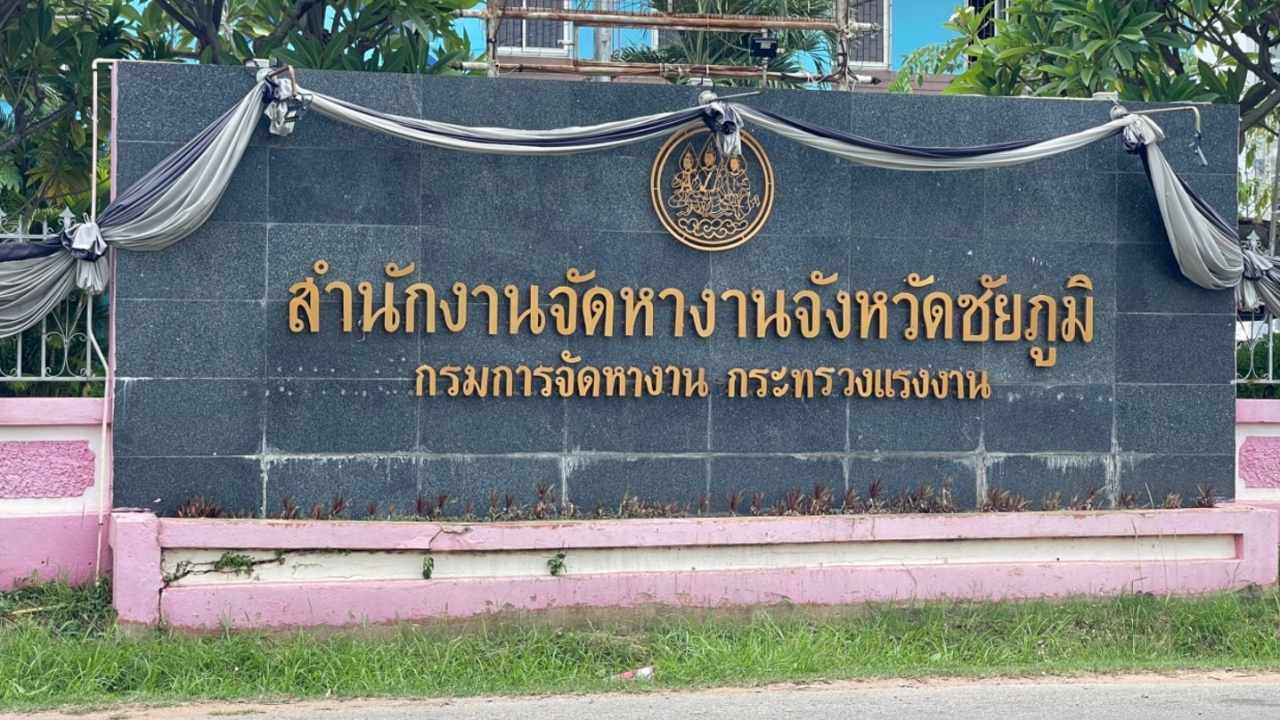
The Chaiyaphum Provincial Employment Office revealed that South Korea has blacklisted four Thai provinces due to a high rate of workers fleeing employers, which has undermined trust and affected other workers' opportunities to work legally.
Regarding South Korea, the Department of Employment received confirmation that labor imports from four Thai provinces—Udon Thani, Khon Kaen, Maha Sarakham, and Chaiyaphum—have been blacklisted and suspended for one full year, from 1 January 2026 to 31 December 2026, as previously reported.Read the news: “South Korea blacklists 4 Thai provinces, bans agricultural and fishery labor imports.”)

Most recently, on 12 May 2026, Mrs. Chutima Jumungmo, Chaiyaphum Provincial Employment Officer, disclosed that in fiscal year 2026, from 1 September 2025 to present, 119 workers from Chaiyaphum have traveled to work seasonally in agriculture and fisheries under the MOU (E-8 visa) program. Approximately 10 workers from Chaiyaphum have fled their employers, prompting South Korea to blacklist seasonal agricultural and fishery laborers (E-8 visa holders) who violate rules. This blacklist does not apply to other sectors but may escalate into a broader labor crisis, damaging Thailand’s reputation.
The case of workers fleeing from Chaiyaphum affects the reputation of workers from the province applying for jobs abroad. The originating country has blacklisted them due to perceived lack of discipline and fleeing employers, resulting in reduced labor quotas for Chaiyaphum. So far, the four blacklisted provinces are Udon Thani, Khon Kaen, Maha Sarakham, and Chaiyaphum.

Mrs. Chutima Jumungmo The Chaiyaphum Provincial Employment Office also urges workers planning to work overseas to do so legally. If anyone is recruited for work abroad, they should verify with the Employment Office whether the recruitment agency is legally authorized to avoid being scammed before paying any fees. Once employed abroad, workers must adhere to their employment agreements.
Additionally, workers in South Korea must not flee their employers. Those caught violating their employment contracts and South Korean law face penalties including arrest, imprisonment, deportation, and blacklisting, which bars them from returning to work abroad again.