

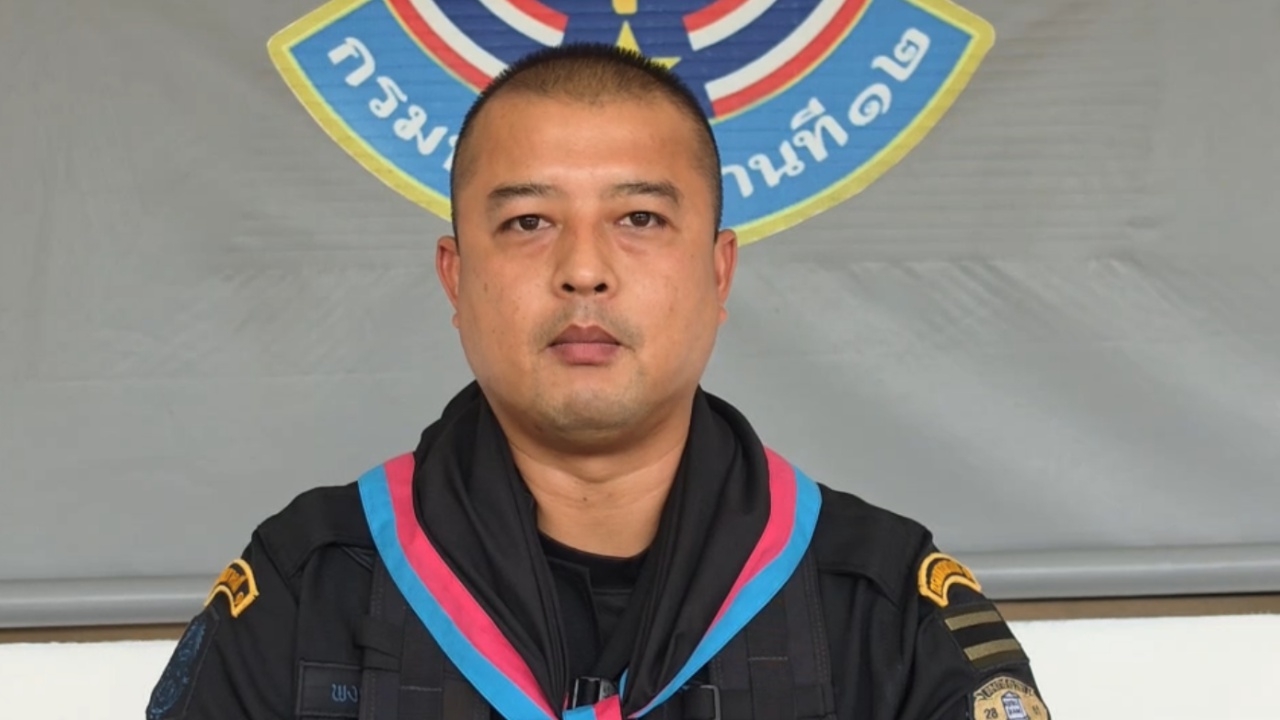
The commander of the control unit of the 12th Ranger Regiment has ordered a fact-finding investigation following villagers of Nong Ya Kaeo becoming outraged and gathering to demand justice after a village security volunteer was severely beaten by military personnel. Initially, officials claimed the detainee exhibited suspicious behavior and resisted during an operation to intercept illegal border crossings, leading to a scuffle involving grappling and struggling.
On 18 May 2026 in Sa Kaeo Province, reporters reported that tensions rose in the border area of Nong Ya Kaeo village, Khok Sung district, Sa Kaeo Province. A man named Surach Chobsanoi, 37, known as Oh, a member of the Village Security Volunteer (ชรบ.) team, was physically assaulted by border military personnel at the Nong Ya Kaeo checkpoint, resulting in severe injuries requiring treatment at Aranyaprathet Hospital.
Amid widespread dissatisfaction among villagers, relatives, and fellow Village Security Volunteers, groups have assembled to demand the perpetrators take responsibility and provide a clear explanation to the public.
Reporters visiting Nong Ya Kaeo village found an atmosphere of tension and wariness. Many villagers were gathered in groups discussing the incident. Several confirmed that the recent gathering was not intended to expel soldiers from the area but to call for accountability and to prevent any further use of excessive force. Mrs. Janphen, 50, a Village Security Volunteer at Nong Ya Kaeo, told reporters that the community was deeply shaken by the incident, especially since the victim’s condition was critical, nearly fatal. She noted that on the morning after the incident, the victim vomited large amounts of blood and experienced convulsions.
“If no one had found him that day, he might have died right there. When we arrived, he was vomiting blood all over the floor and could only say, ‘I’m going to die.’ We were very shocked and immediately performed CPR and called for an ambulance,” Janphen said.
Janphen said that upon hearing the victim had vomited blood, she rushed to check on him in his sleepwear. She found him extremely weak, with blood pooled in the bathroom and on the floor. He began convulsing, so she provided first aid while waiting for emergency personnel to transport him to the hospital. Janphen added that what unsettled villagers most was that no relevant officials came to speak with or explain the situation to the victim’s family immediately after the incident. She believed that if the authorities had acknowledged the situation or met with village leaders and relatives, it might have eased tensions.
“We are not saying all soldiers are bad. Those who did wrong are responsible, but they should come forward and take accountability instead of staying silent, because villagers remain suspicious,” she said.
Villagers also questioned the conduct of the officials involved, insisting that if the victim was truly connected to drugs, he should have been arrested and prosecuted according to law, not beaten to severe injury. “We are not defending wrongdoers. If he had drugs or was involved with drugs, then arrest him and hand him over to the police so the law can handle it. But he shouldn’t be beaten nearly to death like this,” villagers said.
Several villagers emphasized that the incident did not occur deep inside the border area but rather near the village entrance. This increased villagers’ fear because it is a common area used daily for travel and livelihood activities.
Ms. Tongmee, 74, a resident of Nong Ya Kaeo, said that after the incident, many villagers have been afraid to leave their homes at night. Those whose occupations involve catching frogs, fishing, or gathering forest products at night feel especially anxious about a repeat incident.
“Everyone is scared because they fear being harmed like this again. They no longer feel confident going out to earn a living at night,” Tongmee said.
When asked if the incident affected their feelings toward the military, Tongmee replied that villagers could distinguish that not all soldiers behave this way, as many soldiers have continued to support and care for the border community well.
“We don’t hate all soldiers. There are good soldiers, but those who did wrong must take responsibility,” Tongmee said. Meanwhile, the victim’s condition remains critical under close hospital care in Aranyaprathet. Relatives reported doctors indicated severe internal injuries requiring continuous monitoring due to the high-risk condition.
Villagers continue to call on relevant authorities to promptly conduct a transparent investigation and take legal action against those involved to restore confidence and reduce fear among border residents.
Most recently, Colonel Pongsakorn Suengam, commander of the control unit of the 12th Ranger Regiment, explained the case of the local man injured during military detention. The incident occurred during an operation to stop illegal border crossings. Officials said the detainee acted suspiciously and resisted, causing a scuffle involving grappling. An investigation is ongoing to determine whether excessive force was used.
The injured man was sent to Aranyaprathet Hospital, where his condition has improved and he can communicate. The military has provided support and prepared compensation for the family from the first day. The commander affirmed that fairness will be ensured for both sides. If any personnel are found guilty, disciplinary and legal actions will be taken without shielding subordinates.
Additionally, the personnel involved have been reassigned away from the area. The military has also held discussions to understand and address concerns of villagers who gathered to seek justice, aiming to ease tensions in the border area.