

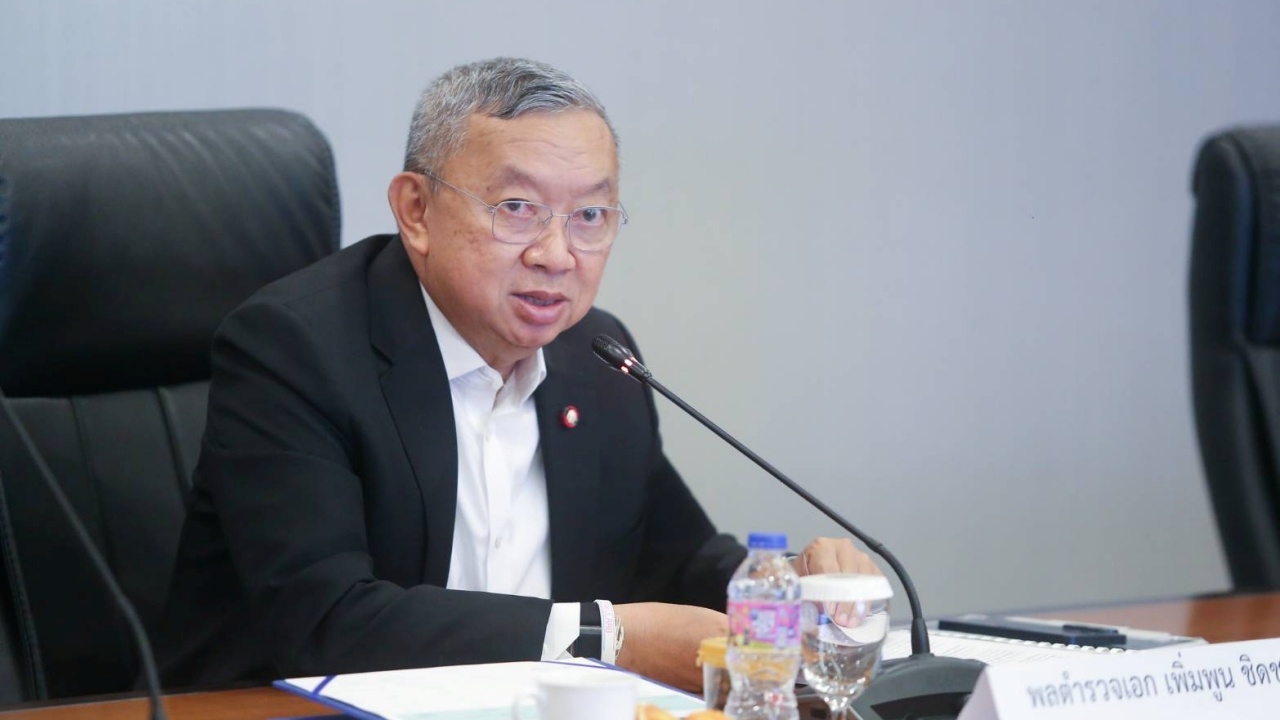
The inaugural meeting of the national board "Thailand Zero Dropout Plus" was held to accelerate efforts to address the issue of children dropping out of school. It noted that over the past three years, the number has decreased to 600,000. Preparations are underway to elevate the initiative to "ASEAN Zero Dropout 2030" as Thailand takes on the ASEAN chairmanship.
On 22 May 2026, at Meeting Room 301, Government House Building 1, Police General Permpoon Chidchob chaired the first 2026 meeting of the Thailand Zero Dropout Plus (TZD+) national committee. This followed Prime Minister Anutin Charnvirakul's signing of an order on 12 May 2026 appointing the committee to oversee and drive a systematic approach to resolving the problem of children and youth outside the education system. This aligns with the government's policy to ensure that all Thai people, across all age groups, have equal, comprehensive access to education rights, promoting learning suited to individual aptitudes and income generation during study, to reduce educational inequality and enhance the country's human resource quality.

Police General Permpoon said that over the past three years, the Thailand Zero Dropout initiative has been upgraded to "Thailand Zero Dropout Plus" or TZD+, which not only aims to help children and youth who have dropped out return to learning but also emphasizes prevention of dropout. The program expands care to children and youth in crisis or temporarily out of the system through more flexible learning methods.
Currently, integrated national data shows that 603,095 children and youth aged 3–18 are not registered in the education system, down from 1,025,514 at the first data linkage in December 2023. This reflects the results of collaboration among relevant agencies under four key measures: monitoring, searching, assisting, and referring children and youth back into the education system and flexible learning.
"Thailand is facing a full-scale demographic crisis. Every child and youth is a precious human resource that the country cannot afford to lose,"

Police General Permpoon added that in 2025, the number of elderly entering the system was twice the number of newborns. Meanwhile, over 603,095 children and youth remain outside the education system, and more than 594,277 NEET youth aged 16–20 are neither in education, employment, nor training. These figures highlight economic opportunity costs that the country must urgently address.
The meeting approved the next phase of Thailand Zero Dropout Plus implementation through five key strategies: 1. Linking early childhood data; 2. Developing a flexible education system; 3. Integrating the "10 Plus" policy into the education system to promote "Learning Anywhere" and "Learning Passport," a credit accumulation system supporting learning anytime, anywhere; 4. Creating a lifelong learning ecosystem for the workforce and NEET groups; 5. Establishing indicators and incentive systems with national agencies to drive concrete, sustainable progress toward Thailand Zero Dropout Plus goals.

Additionally, the meeting approved the appointment of a subcommittee on developing flexible and integrated education management systems to address the problem of children and youth outside the education system. The subcommittee is chaired by Mr. Siripong Angkasakulkiat, Deputy Minister of Transport, with Ms. Theerapha Pairohkul, advisor to the Minister of Education, as vice-chair, to expedite effective, continuous flexible education delivery and coordinate work across all sectors.

At the same time, Thailand is preparing to elevate the Thailand Zero Dropout initiative to the "ASEAN Zero Dropout 2030" level, leveraging its role as ASEAN chair in 2028. The plan invites all 11 ASEAN member countries to set regional targets for reducing children and youth outside education under the theme "All for Education, Education for All," marking the 40th anniversary of the Jomtien Declaration on Education for All.

Furthermore, the meeting approved establishing the "Prime Minister’s TZD+ Awards" to honor provinces, local administrative organizations, educational institutions, learning units, private sector, and partner networks with outstanding achievements in systematically and sustainably addressing the problem of children and youth outside the education system. Award recipients will receive a trophy from the Prime Minister, with the ceremony scheduled for July 2026, aiming to motivate and expand successful models that ensure no child or youth loses educational opportunities.
