

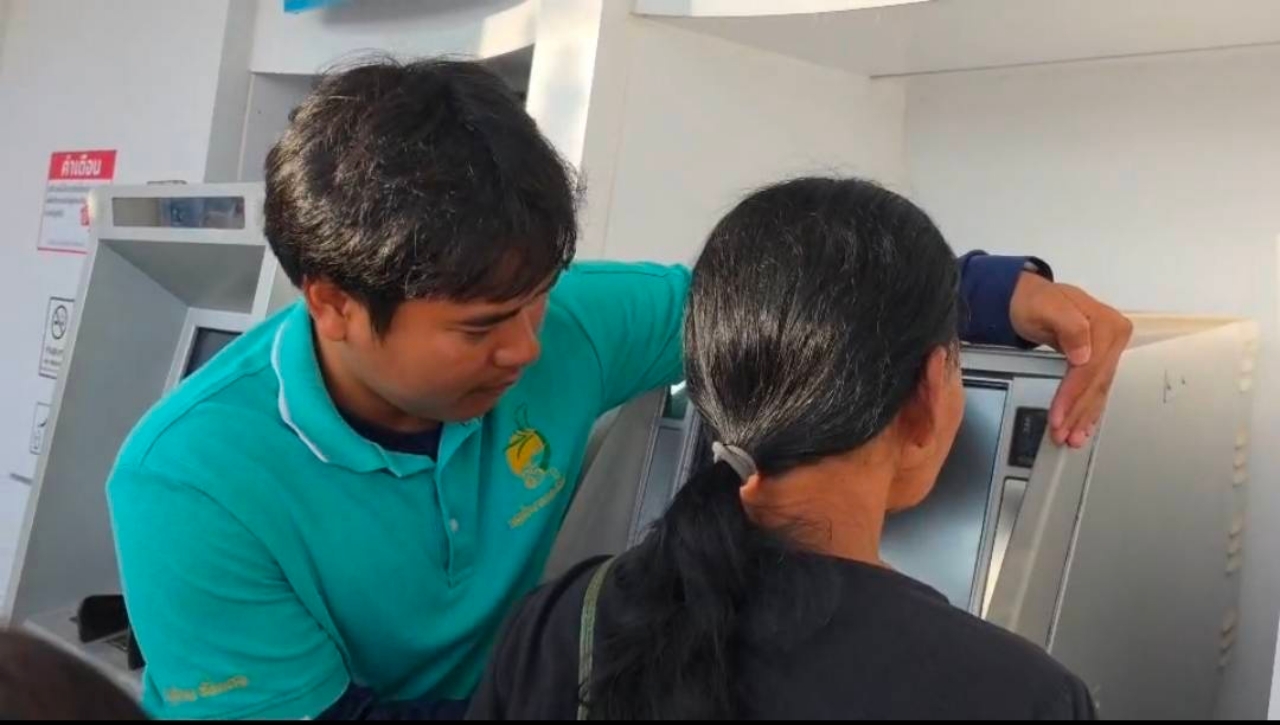
In Sa Kaeo, residents have flocked to queue outside the bank from 5 a.m., hoping to scan their faces to receive the Thai Chuey Thai Plus benefit of 4,000 baht. Many complained about the complicated system; elderly people found it difficult to use, and some even purchased new phones to participate.
On 25 May 2026, a reporter observed that early in the morning outside the Krungthai Bank Sa Kaeo branch, many people gathered to queue for identity verification and facial scanning to receive government aid through the Thai Chuey Thai Plus program via the Pao Tang app and digital wallet. Many arrived as early as 5 a.m., before the bank opened, fearing they might miss their turn or face system problems as had happened before.
Some people even spread mats to sit and eat in front of the bank while waiting. Some families came together, including children, grandchildren, and elderly members, to assist with paperwork and mobile phone use. Many admitted they did not understand the modern technology steps, especially facial scanning, identity verification, and installing various applications.
An elderly woman said she arrived early fearing she wouldn't get a queue number. She said, “I scanned many times but still didn’t pass, even though it’s really my own face. Some joked that my face might turn up.” This reflects the fatigue caused by complicated steps, especially among elderly people unfamiliar with technology.

Some people shared they had previously used phones with physical buttons but had to buy new smartphones specifically for registration and facial scanning. Others relied on children or acquaintances to help because they could not manage the process themselves.
Most citizens agreed that the government should offer simpler methods for the elderly or rural residents, such as using ID cards combined with verification by officials, instead of solely requiring facial scans. Many felt the system was still unstable; some failed multiple scans, wasting time and causing stress, especially elderly couples living alone without children nearby. Most said, “I still don’t really know how to do it and always have to ask others,” and hoped the government would adjust the system to be suitable for all ages.
Additionally, during conversations, many people expressed opinions on the government aid money. While 1,000 baht per month helps ease expenses somewhat, it is insufficient for current living costs. They wished the government would extend the aid to 10 months, like past measures, to stimulate the economy and support people while recovery remains incomplete. Most said they would buy rice, dried foods like fish sauce, shrimp paste, fermented fish, various seasonings, and cover family expenses. They also thanked the government for continuing aid programs, noting that although the amount isn’t large, it’s better than nothing.

However, despite complaints about the complicated system, some accepted that facial scanning and identity verification might be necessary nowadays to prevent fraudsters and call center scams, which are widespread. They said, “It’s slow but safe,” but stressed the government should urgently improve the system to be user-friendly, stable, and better accommodate the elderly.
Observations showed that although many people arrived early to use the service, the facial scanning and identity verification process progressed slowly. Initially, only a few succeeded, causing growing concern and frustration over the steps. Meanwhile, Krungthai Bank staff continued to assist and advise citizens amid the long queues stretching from early morning into late morning.