

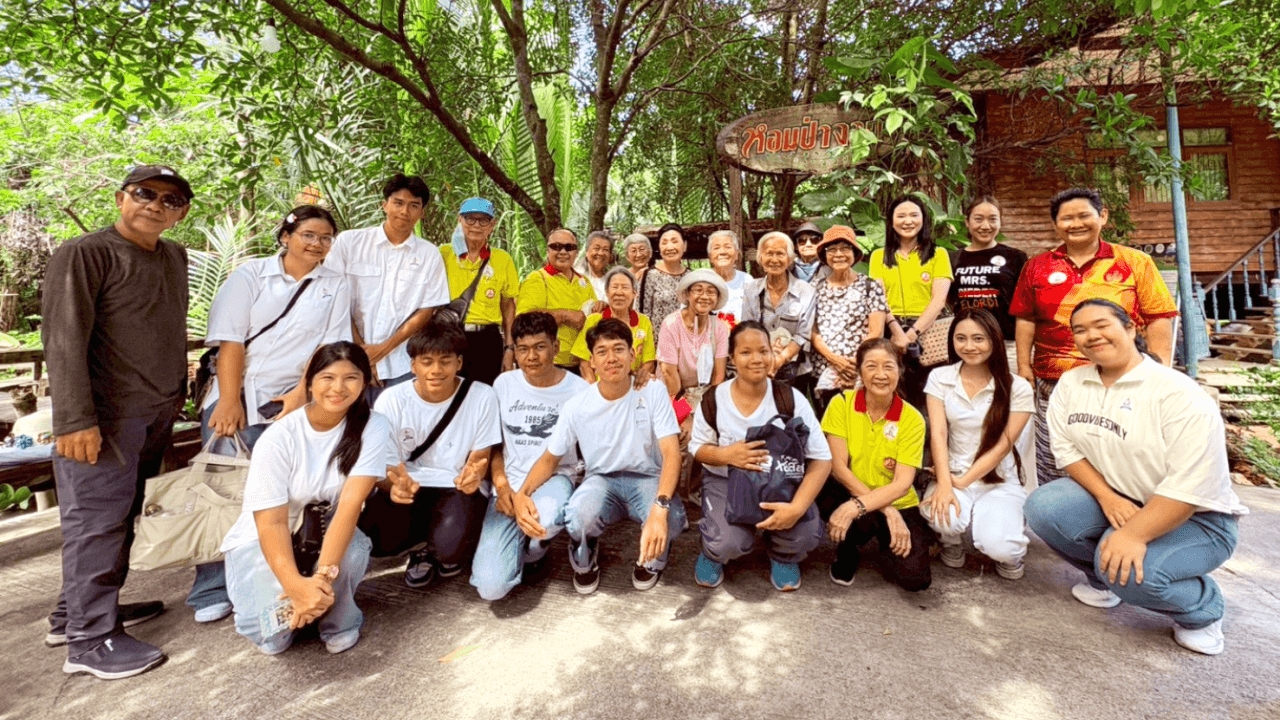
"Lun La Bang Kachao" trip A trip inviting "seniors and youth" to care for Bangkok's lungs. This is a conservation tourism model by the Thammasat University Supplementary Education Association, also fostering youth who love their local area.
Reporters say the Thammasat University Supplementary Education Association, the Office of Sustainable Tourism Development Areas (OTSA), Wat Songtham School under the Samut Prakan Secondary Educational Service Area Office, the Thai Betta Fish Museum, and the Big Trees Foundation jointly organized a small trip named "Lun La Bang Kachao" on Saturday, 23 May 2026, from 07:00 to 12:30 GMT+7.

The activities took participants from Thammasat University Tha Prachan campus to experience the Bang Kachao community lifestyle by visiting the Thai Betta Fish Museum, rowing boats through the nipa palm forest, trying nipa palm snack making, drinking herbal water at "Hom Pa Jak," and ending with coffee by the canal at Bangkajao Craft, a community-run café.
All money paid by tourists is directly circulated back to local community businesses. Rowing and making snacks help sustain the nipa palm forest. A highlight of the project is selecting nine "Bang Kachao Environmental Youth Ambassadors" aged 16–18 to volunteer in elderly care during the trip, supported by volunteer youth from Wat Songtham School, Phra Pradaeng District, near Bang Kachao.
The youth selected receive scholarships and certificates, learn to share their community stories, and gain opportunities to develop work skills and interact with people of different ages. They also exchange knowledge and experiences with participating elders. This connects three generations in one day: knowledgeable seniors, energetic youth, and the rooted community.

Dr. Thassawan Preedawipat, Vice President for Planning and Development of the Thammasat University Supplementary Education Association and a researcher at RUBEA, Faculty of Architecture, Chulalongkorn University, said Bang Kachao is Bangkok’s green lung, and its survival depends on community income from caring for the forest, canals, and their way of life. This trip is just a small beginning supported by civil society, academia, government, community, and youth working together to create a truly sustainable model.
Furthermore, the project aligns with the United Nations Sustainable Development Goals (SDGs) related to education, sustainable cities, climate action, terrestrial ecosystems, and partnerships for development. Those interested in joining the trip, becoming environmental youth ambassadors, or organizations wishing to support the project’s expansion can contact the Thammasat University Supplementary Education Association via their Facebook page.