

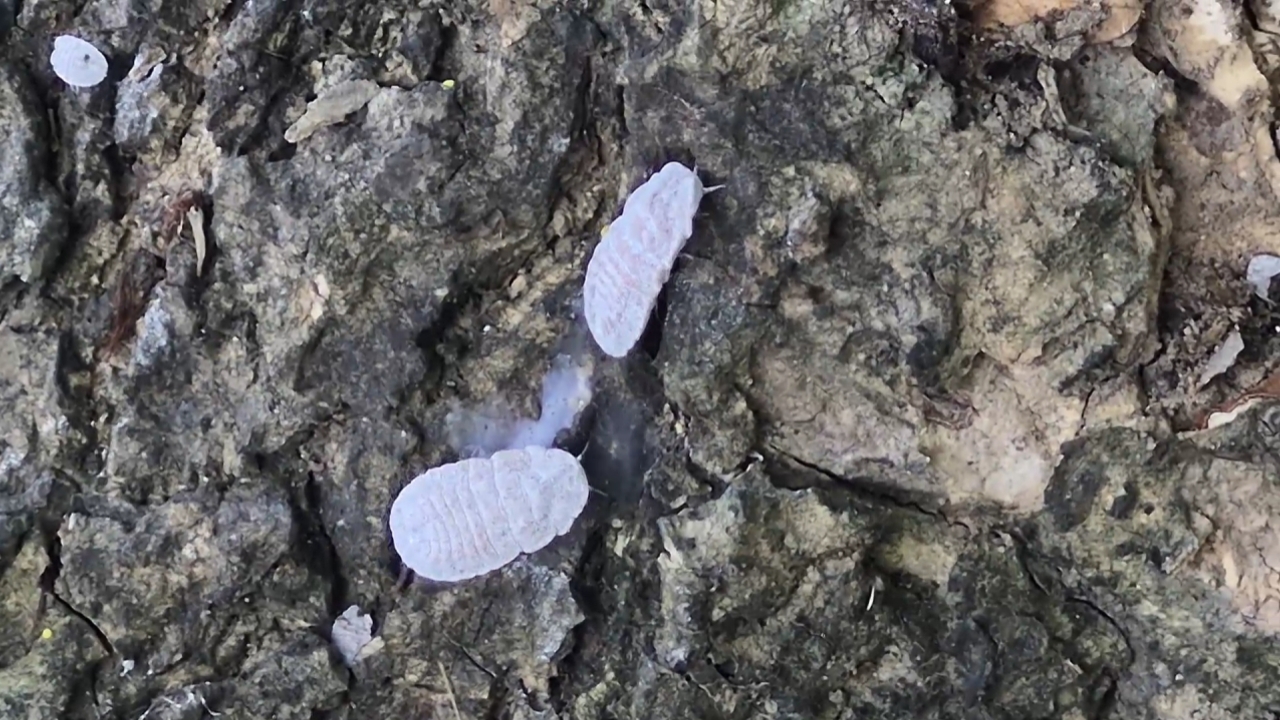
Warning issued after consuming “giant scale insects” causes poisoning; 12 subdistrict officials suffer nausea, vomiting, and diarrhea, with some hospitalized.
From a case reported on the Facebook page ofNgao Rescue Teamposted an urgent warning: “Urgent!!! Warning that villagers who ate this type of insect experienced dizziness, nausea, vomiting, numbness on the face, arms, and hands, and diarrhea in several cases.” The post included a video of a white insect called the giant scale insect. After posting, there were various comments.
Upon inquiry with the Ngao rescue team, it was learned that the incident occurred in Ban Huad, Ngao District. A woman bought fried giant scale insects, mistaking them for cicada eggs. Shortly after eating, she experienced dizziness, nausea, vomiting, and numbness in her face, hands, and arms. She sought help from the rescue team, who took her to Ngao Hospital, where her condition is now stable.

The latest update at 11:00 on 25 May 2026 GMT+7, a reporter visited Ban Huad Subdistrict Administrative Organization (SAO), Village No. 6, Ban Huad, Ngao District, Lampang Province, and found 12 people suffering from food poisoning symptoms. All were officials of the SAO.
An interview with Mr. Poramet Boonma, 33, an administrative officer at Ban Huad SAO, revealed that the insects are found on the Rain Tree (Samanea saman) in front of the SAO building. He showed the reporter the insects, which were numerous and crawling everywhere.

Mr. Poramet explained that the insect is called the “giant scale insect,” sometimes referred to by locals as cicada eggs due to their similarity. Two to three days ago, a technical officer collected some and preserved them with salt for a side dish but experienced no symptoms.
However, yesterday at noon (27 May), many of these insects were collected to be fried and shared almost throughout the SAO, including the SAO president, director of engineering, and other staff, mostly from the engineering department.
Some ate a lot, others less, varying by individual. Mr. Poramet ate fewer than ten insects and had no symptoms. Some who ate less than an hour before showed diarrhea, vomiting, and dizziness. In total, 12 people showed symptoms: 4 women and 8 men.

By 1 p.m., two of the 12 had to be hospitalized—one man and one woman. Both had mild symptoms; doctors prescribed medication, and they were sent home to rest. Later that evening, a female SAO official developed severe diarrhea and vomiting and was hospitalized at Ngao Hospital. The rest, including the SAO president and engineering director, mostly had mild diarrhea and slight dizziness and were not seriously ill.

Locals have traditionally eaten these insects without issue, so it is unclear if the problem relates to the insects feeding on the Rain Tree, which has laxative properties. The insects may have absorbed these effects, causing diarrhea. Confirmation awaits inspection by relevant authorities.
