

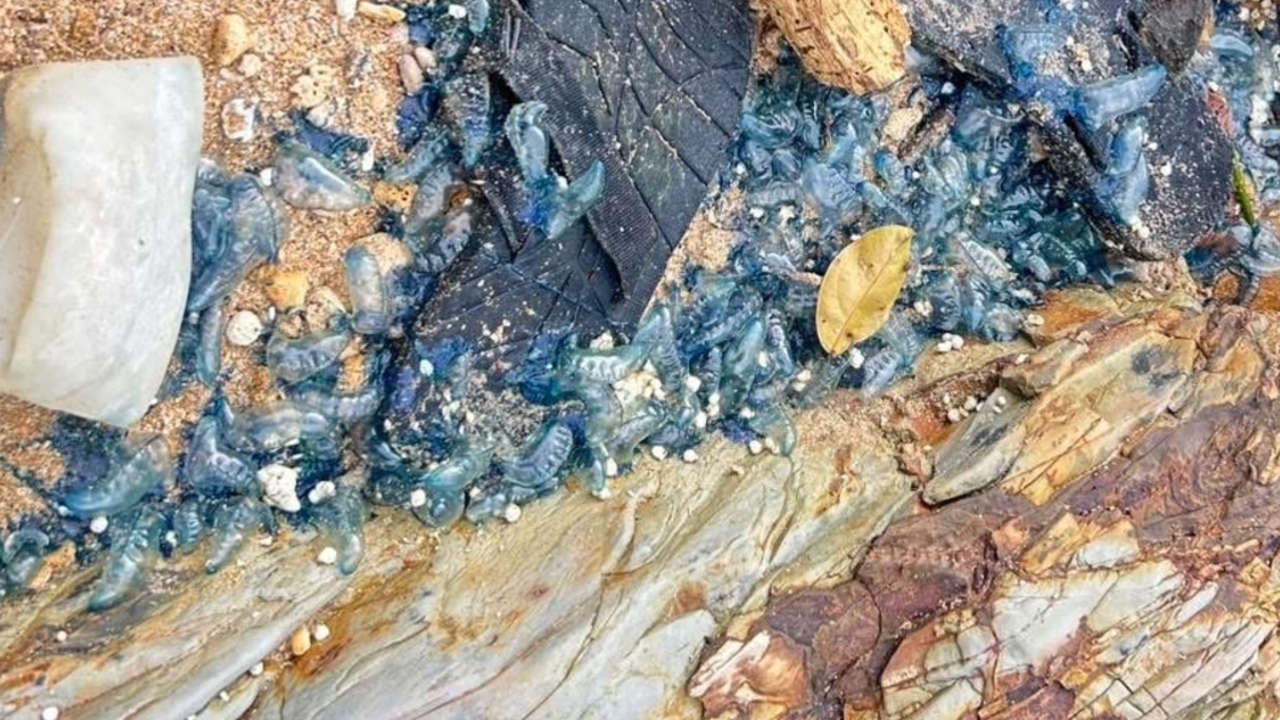
'Portuguese Man O' War' jellyfish have been washed ashore at Laem Tonod Beach, prompting a temporary closure and warnings to tourists not to touch them, as they can still release venom after death.
On 10 June 2026, it was reported that the fan page ofMu Ko Lanta National Parkin Ko Lanta District, Krabi Province, issued a warning after discovering numerous 'Portuguese Man O' War' jellyfish carcasses washed ashore along the entire stretch of Laem Tonod Beach within the park. This has raised concerns because these jellyfish are dangerous upon contact. Although sightings of this species have occurred occasionally in the past, they were only in small numbers, unlike this incident where so many carcasses cover the beach that it appears jellyfish-colored.

A reporter contacted Mr. Pramot Kaewnam, head of the national park, who said that this morning officials surveyed the beach and found many washed-up Portuguese Man O' War jellyfish carcasses. While such sightings sometimes occur during rough seas, he admitted this is the largest quantity seen to date. The exact cause remains unknown.
Initially, authorities have warned tourists not to swim in the area, especially at Laem Tonod Beach, and have temporarily closed the beach to expedite cleanup efforts. They expect more jellyfish to arrive.

Officials have also been ordered to inspect all islands and beaches within the park's jurisdiction for the presence of this jellyfish species. The Portuguese Man O' War is dangerous to those who touch it; even after death, it can still release venom. Contact may cause burning pain, rashes, difficulty breathing, or loss of consciousness.
Therefore, tourists and locals are strictly warned not to touch these jellyfish. If spotted, they should immediately notify park officials and wear shoes while walking on the beach to avoid direct contact.
